Quiet shared-room setup
Quiet Corner Ideas for Shared Rooms With Noise and Movement
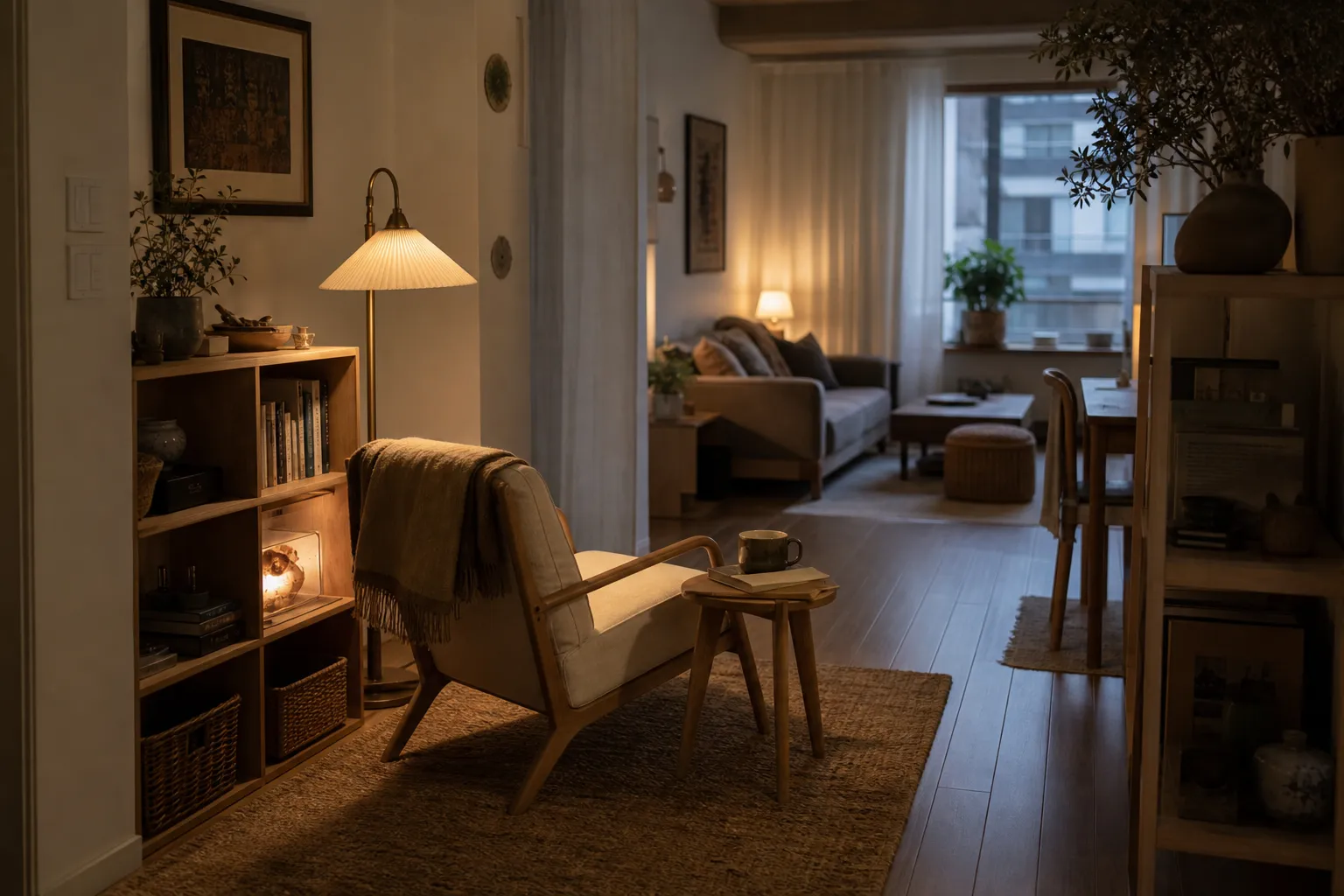
A good quiet corner in shared room is not a sealed-off silent place. It is a better-positioned nook: less exposed to foot traffic, less visually busy, and softened with materials that reduce harsh reflections nearby. Start with the least crossed corner, angle the seat away from the main path, place a dense rug under and around it, choose upholstered seating or cushions, and add one soft edge such as a shelf, curtain, or fabric divider. If needed, use low-volume masking sound, but treat it as cover, not noise removal.
The realistic goal is not silence. It is a corner that feels easier to use for reading, tea, homework, calls, or short rest while the shared room continues to function.
broader context
Broader context
Use the broader page when you need more context before this narrower page.
Choose the Corner Before Buying Anything
In a shared living room, family room, studio, or open-plan kitchen area, the quietest spot is often not the prettiest empty corner. It is the one least interrupted by people, pets, doors, TV sightlines, kitchen traffic, and call-taking.
Look for a place that avoids:
- the direct path between doorways;
- the space beside the television or speakers;
- the edge of the kitchen work area;
- the swing of a door, drawer, or cabinet;
- the route pets use to run, sleep, or watch the room;
- a wall shared with a loud appliance, stair, hallway, or neighbor, if another option exists.
A shared living room quiet nook usually works better when the seat is turned slightly away from movement. Facing the whole room can feel open, but it also makes every passing person part of your view. A chair angled toward a wall, window, shelf, plant grouping, or low table often feels more settled.
If the only available corner is near household noise, start with orientation anyway. Put the chair so its back or side faces the busiest route. Add a small surface for a cup, book, notebook, or headphones so the nook does not spill into the walking path. Often, the useful boundary is very simple: a seat, a rug, a lamp, and one clear edge.
Build Sound Softening in Layers
Most everyday decor changes do not block sound from traveling through a room. They can, however, change how sharp, echoey, or exposed a corner feels. Room-acoustics research separates sound absorption inside a space from sound insulation between spaces. Soft, porous, or textured materials can reduce some reflected sound near the person sitting there; they do not turn an open corner into a separate room.
Work close to the seat first.
Start with the floor
A dense rug is one of the easiest first steps, especially on wood, tile, laminate, or concrete. Choose one large enough to sit under the chair and extend into the foot area. If people walk past the nook, letting the rug cover that edge may also soften the feel of nearby footfall.
A thin decorative mat is mostly visual. A denser rug, ideally with a suitable pad, gives more useful softening underfoot. It will not stop voices, TV, doors, or kitchen sounds, but it can help with less echo in shared room conditions where the floor is one of the largest hard surfaces.
Choose a soft seat over a hard one
An upholstered chair, floor cushion, padded bench, or textile-covered seat usually suits a small quiet space in shared room conditions better than a hard wooden or metal chair. It adds comfort and reduces the hard surface area immediately around the sitter.
Keep the corner spare enough to stay usable: one cushion for support, one throw if the room is cool, perhaps a fabric-covered footstool if it does not block the path. Too many objects can make a shared corner feel cluttered and contested rather than restful.
Soften the wall or window side
If the corner sits near windows or glass doors, curtains can help because glass is reflective and outside noise often enters through openings and weak points. Heavy curtains may soften the interior feel and reduce glare and echo near the nook. Larger window changes, such as inserts or glazing upgrades, are a different level of cost and commitment, and their performance depends on the existing window and installation.
If the corner is against a bare wall, a textile wall hanging, fabric panel, or acoustic-style panel may reduce reflections near the seat. Placement still matters. A panel on the wrong surface will not do much. In many homes, the first gain comes from reducing a cluster of bare hard surfaces rather than buying a specialized product immediately.
Use Furniture as a Visual Boundary, Not a False Wall
Passing movement can be as distracting as sound because it keeps pulling the eye back into the room. A visual boundary tells the household, “this is a sitting corner,” without pretending the room has become private.
Good partial boundaries include:
- a low bookcase beside the chair;
- a filled shelf along a shared wall;
- a narrow cabinet with a closed back;
- a folding fabric or felt divider;
- a curtain on a properly installed track or rod;
- a tall plant used mainly for visual softness;
- a low screen that blocks the busiest sightline.
A filled shelf can define the nook and add irregular surfaces that soften the feel of a bare wall. It should not be described as wall sound blocking. Books, baskets, and objects can make a corner feel less exposed; they do not stop household voices from crossing an open room.
For a partial acoustic boundary, fabric and felt dividers are usually more fitting than hard screens. They can soften the edge around the nook and reduce the sense of being fully visible. They will not block a phone call, blender, barking dog, or television in the same room.
Keep the boundary breathable in a household sense. Shared rooms still need sightlines for children, pets, guests, and ordinary movement. A corner that makes everyone else tiptoe around it is unlikely to last.
Add Masking Only If It Suits the Room
Noise masking is different from blocking noise. A small fan-like sound, low water sound, or steady speaker sound can cover some intermittent household noise for people who like that kind of background. It does not remove the source, and it may not suit every household member, pet, or neighbor.
Use masking softly and locally. The sound should sit near the nook, not compete with the TV or fill the whole room. If someone else is taking calls nearby, masking may make the room more confusing. Headphones can be a better personal option when the rest of the room needs to stay unchanged.
Avoid using smoke, candles, incense, or scent as “noise solutions.” They do not address sound or movement, and they add ventilation and household sensitivity questions. If ambience matters, start with light, texture, and order: a warm lamp, a clean surface, a folded blanket, and a clear place to sit.
Match the Setup to the Noise You Actually Have
A quiet corner with household noise needs different choices depending on what bothers you most.
Echo from hard floors and walls
More useful changes: dense rug, upholstered chair, curtains, cushions, textile wall layer.
What not to expect: these changes will not stop voices from entering the corner.
Passing movement
More useful changes: turn chair away from traffic, add shelf or fabric divider, define the rug area.
What not to expect: a divider will not make the nook private in a busy room.
TV or music in the same room
More useful changes: increase distance, angle chair away, use headphones or gentle masking if agreed.
What not to expect: decor will not cancel a nearby speaker.
Kitchen noise
More useful changes: choose the farthest corner, avoid appliance walls, use a visual boundary.
What not to expect: soft furnishings cannot block blender, dishes, or extractor noise.
Outside traffic or neighbors
More useful changes: add curtains as a low-commitment layer; consider window or building-level fixes separately.
What not to expect: interior textiles cannot replace proper sound insulation.
Calls and conversations
More useful changes: change seat orientation, agree on call zones, use personal headphones.
What not to expect: a bookcase or rug will not make speech disappear.
This is where common search language can mislead. Phrases like “noise cancelling rugs” or “soundproof corner” overstate what ordinary decor can do. In a shared room, the more useful language is modest: muffle footfall, reduce echo, create a visual edge, mask some sound, and make one seat feel less exposed.
Shared Room Checks Before You Settle the Nook
A quiet corner should not make the room harder to live in. Before calling the layout finished, walk through the room as if you are carrying laundry, a tray, a pet leash, or a child’s toy basket.
Check that:
- exits and main paths remain clear;
- door swings, cabinet doors, and window access still work;
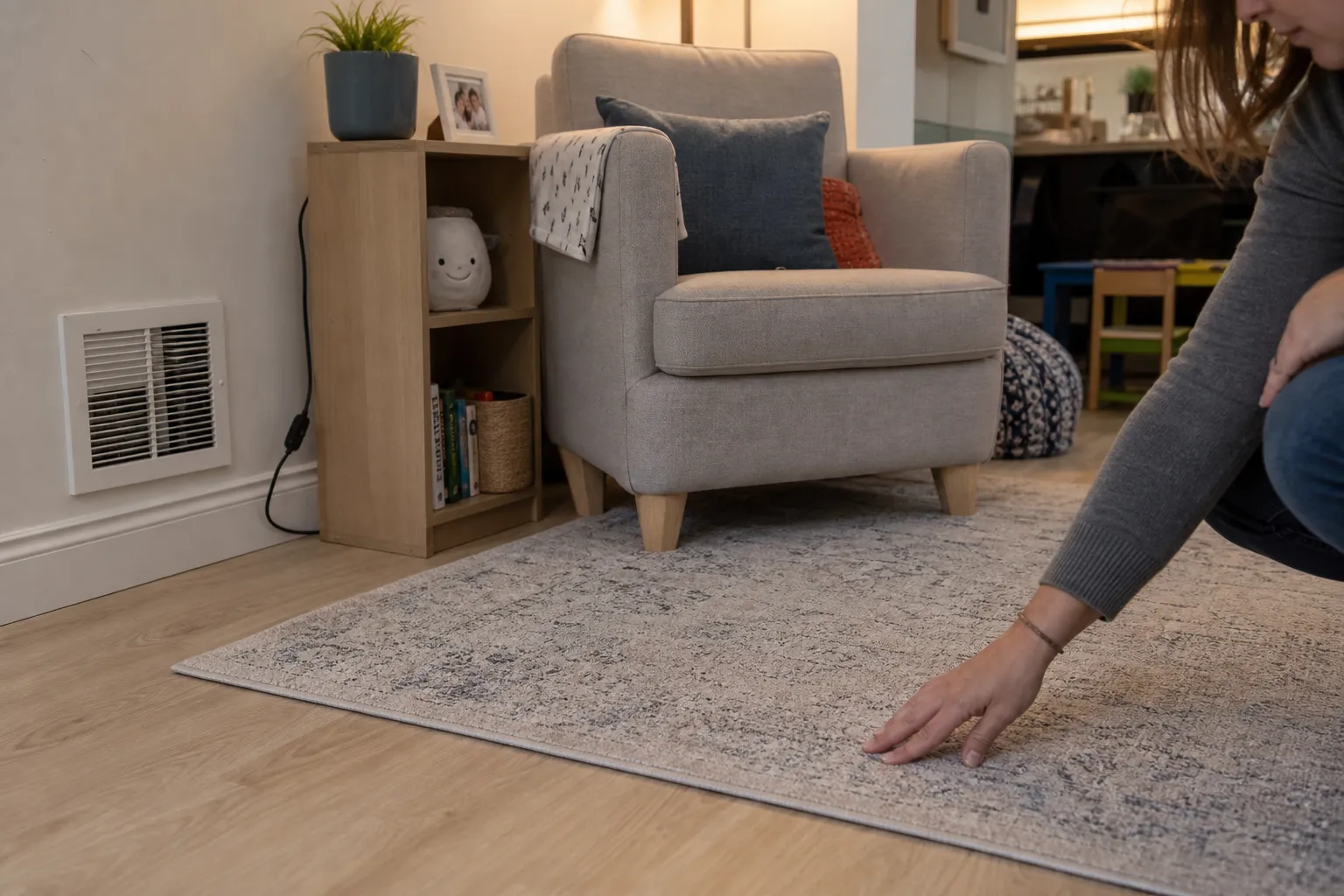
- vents, heaters, radiators, and ventilation openings are not covered;
- tall shelves, bookcases, and dividers are steady and secured where needed;
- curtain rods, wall hangings, and panels are installed with hardware suitable for their weight;
- cords from lamps, speakers, fountains, or masking devices do not cross walking paths;
- rugs lie flat or have suitable grip so edges do not curl in a busy route;
- textiles can be cleaned, shaken, vacuumed, or washed as appropriate;
- the corner does not block a pet’s usual path, food area, or resting place.
Textile care is part of the design. Rugs, curtains, panels, cushions, and throws collect dust and household debris. In a shared room, choose materials you can maintain without making the nook precious. Washable covers, vacuumable rugs, and simple curtain access are often better than delicate layers that look quiet but become a chore.
Seasonal comfort changes the answer too. A heavy throw and thick curtain may feel right in winter but too closed in summer. In warmer months, keep the visual boundary and rug if they still work, but lighten the fabric weight, improve airflow, and avoid blocking windows used for ventilation.
A Simple Setup That Usually Works
For most shared homes, assemble the corner in this order:
- Pick the least crossed corner, not just the emptiest one.
- Angle the chair away from the main movement line.
- Place a dense rug under the chair and foot area.
- Use upholstered seating or add one or two soft textile layers.
- Add a small table and warm lamp so the nook has a clear purpose.
- Put a filled shelf, low cabinet, curtain, or fabric divider on the most exposed side.
- Add curtains or a textile wall layer if nearby surfaces are bare and reflective.
- Try gentle masking only if it does not bother others.
- Recheck paths, vents, heat sources, cords, and stability.
The useful version usually looks ordinary: a chair that belongs, a rug that gathers the space, a soft edge that reduces exposure, and enough openness that the room still works for everyone. It does not ask the household to become silent. It gives one seat a little more shelter inside a room that continues to be shared.
Quick FAQ
Can a quiet corner in a shared room block noise?
Not in the way a separate room or built wall can. A corner setup can soften reflections, reduce visual exposure, and make nearby sounds feel less sharp. It cannot block speech, TV, appliances, or exterior noise in a reliable way.
What should I add first?
Start with placement and orientation. Then add a dense rug and a soft seat. Those changes are usually more useful than buying a divider first.
Are room dividers worth using?
They can be useful when the problem is exposure and movement. Choose fabric, felt, or a shelf-style boundary if you want a softer edge. Do not expect a divider to perform like a constructed wall.
Is white noise a good idea for a shared room?
Only if the household agrees and the sound stays low. It may help cover small interruptions for some people, but it can annoy others or interfere with calls and TV.
What is the most common mistake?
Treating the corner like a private room. A shared room still needs clear paths, airflow, stable furniture, and household courtesy. The corner works best when it feels defined without taking over the room.