Quiet Room Setup
Small Quiet Corner Ideas for Reading, Resting, and Sitting Still
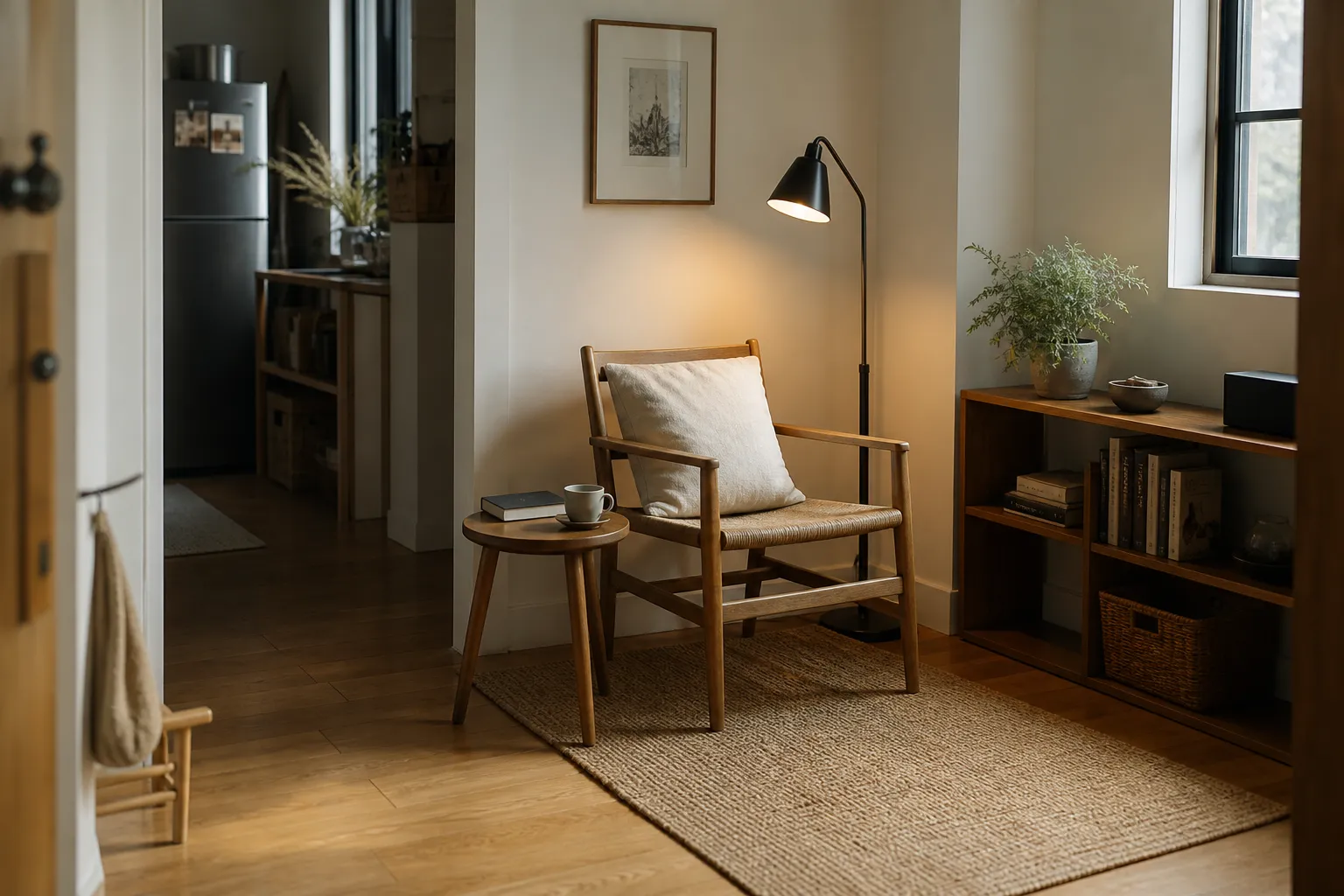
A small quiet corner does not need its own room. Start with a corner away from the main path through the home, add one comfortable seat, give it soft but usable light, keep a small surface within reach, and remove the objects that crowd the view or the floor.
The best Small Quiet Corner Ideas are practical before they are decorative: a chair for reading, a cushion for sitting still, a low table for a book or cup, and enough open space that the area feels intentional rather than stored-in. Keep cords out of the walking path, leave air room around screens or shelves, and avoid making the corner so enclosed that it becomes stale or awkward to use.
broader context
Broader context
Use the broader page when you need more context before this narrower page.
Choose the corner before choosing the objects
The best spot is usually not the prettiest empty corner. It is the one that receives the fewest interruptions.
Start with movement. If people cross in front of the spot to reach a door, kitchen, bathroom, sofa, laundry area, or balcony, the corner will rarely feel settled. In a small apartment, a better place may be the far side of a bedroom, the end of a living-room wall, a landing, or the space beside a bookcase. Even a slight setback from the main walkway can make the seat feel more deliberate.
Then look at visual exposure. A quiet corner for reading does not have to be hidden, but it should not place the sitter in the middle of everyone’s view. A wall, low shelf, curtain, or simple folding screen can give enough privacy without turning the area into a box. In a narrow room, skip heavy dividers. A light textile, a plant kept to the side, or a low storage piece may define the area with less bulk.
A quick test
- Can someone walk through the room without brushing past the seat?
- Can the sitter look up without facing the busiest part of the home first?
- Can a lamp, book, and cup sit nearby without blocking movement?
If the answer is mostly yes, the corner is a good candidate. If not, even beautiful objects may not make it useful.
Match the seat to the way you will use the corner
Seating anchors the space. The right choice depends less on style and more on what you plan to do there.
For reading, a chair with back support is often more practical than a floor cushion. Reading usually needs a stable position, a place to rest the book, and light that reaches the page. A compact armchair, cushioned dining chair, low lounge chair, or firm upholstered seat can work if it fits the room and feels comfortable for the time you expect to spend there.
For resting or sitting still, the seat can be lower and simpler. A floor cushion, folded mat, low bench, or small stool may be enough if the person using it can get down and stand back up comfortably. In a shared home, movable seating often works better than a fixed setup. A cushion can be stacked away, a stool can double as a side table, and a small chair can shift with seasonal light.
Avoid the common small-space mistake: buying the deepest chair that will physically fit. A large seat can swallow the whole corner and leave no room for a lamp, side surface, or clear foot space. A slightly smaller chair with a nearby table is often more usable than a generous chair with nowhere to place a book.
Give the corner a landing place. This can be a small table, stool, wall shelf, window ledge, or the top of a low cabinet. It only needs to hold the current book, a cup, reading glasses, or a lamp switch. Without a surface, the floor becomes storage, and the corner quickly loses its purpose.
Use gentle light that still works
A small reading nook needs light that is calm but not too dim to use.
For reading, place the light where it reaches the page without shining directly into the eyes. A small floor lamp behind the shoulder, a table lamp beside the chair, or a wall-mounted light can all work. If the corner is near a window, notice how the light changes. Morning brightness, afternoon glare, and evening shadow can make the same spot feel very different.
For resting or quiet sitting, the light can be lower, but the route into the corner should still be visible. A corner that looks peaceful in a photograph may be inconvenient in daily life if it is too dark.
If a lamp has a visible cord, run it along the wall rather than across the floor. Place lightweight lamps where they are less likely to be knocked over when someone reaches for a book or cup.
Natural-feeling materials often work well with warm, indirect light: wood, linen, cotton, wool, bamboo, paper, clay, and matte ceramics. Their value here is practical and visual. They reduce glare, soften the look of the corner, and tend to age in a way that suits lived-in rooms. A paper shade, woven mat, plain cushion, or ceramic cup can be enough. The aim is not to create a display; it is to make the corner easy to return to.
Simplify the view before adding decor
A low stimulation corner is usually made by subtraction first.
Sit in the proposed spot and look forward. If the first things you see are tangled chargers, laundry, parcels, a crowded shelf, or a work screen, the corner may still feel busy even with a comfortable chair. Move the most distracting items out of the direct view if possible. If they cannot move, soften the sightline with a plain cloth, closed storage box, low screen, or rearranged shelf.
Most homes only need
- one seat;
- one light source;
- one small surface for books or tea;
- one textile, such as a cushion, throw, or mat;
- one plant or natural object, if it is easy to maintain;
- one small storage place for the current book or notebook.
That is enough to begin. More objects can be added later, but the first version should be easy to clean and easy to reset. A chair beside a lamp and a small stack of books tells the room what the corner is for. A cushion beside a low table does the same. Too many symbolic or decorative pieces can make the space feel staged instead of usable.
Plants can be pleasant, but they should not crowd the main view or make the corner harder to maintain. One healthy plant to the side is usually more useful than several pots that block light, shed leaves onto books, or narrow the walking path. If the corner is dim, place greenery carefully or skip it.
Notice sound, air, and small daily annoyances
A quiet corner does not have to be silent. It does need some distance from the most regular interruptions.
Sound often comes from predictable places: a television wall, kitchen appliances, street-facing windows, shared hallways, laundry machines, or doors that open often. If you have a choice, place the corner away from these sources. If you do not, use small adjustments. A bookcase, textile curtain, rug, or upholstered chair may make the area feel less exposed, though they should not be expected to perform like dedicated acoustic treatment. The realistic goal is to soften the edge of the space, not make it soundproof.
Air movement matters, especially in alcoves, screened corners, and closet-like spaces. Do not block vents, windows, or returns with cushions, shelves, or screens. If you use scent, keep it light and optional. Smoke, strong fragrance, or still air can make a small corner unpleasant for some people, so the corner should work without scent.
Daily friction is the quiet reason many corners fail. If the blanket always falls on the floor, the lamp switch is hard to reach, the table is too low, the chair blocks a drawer, or the rug edge catches a foot, the corner becomes annoying. Fix those details before adding more atmosphere.
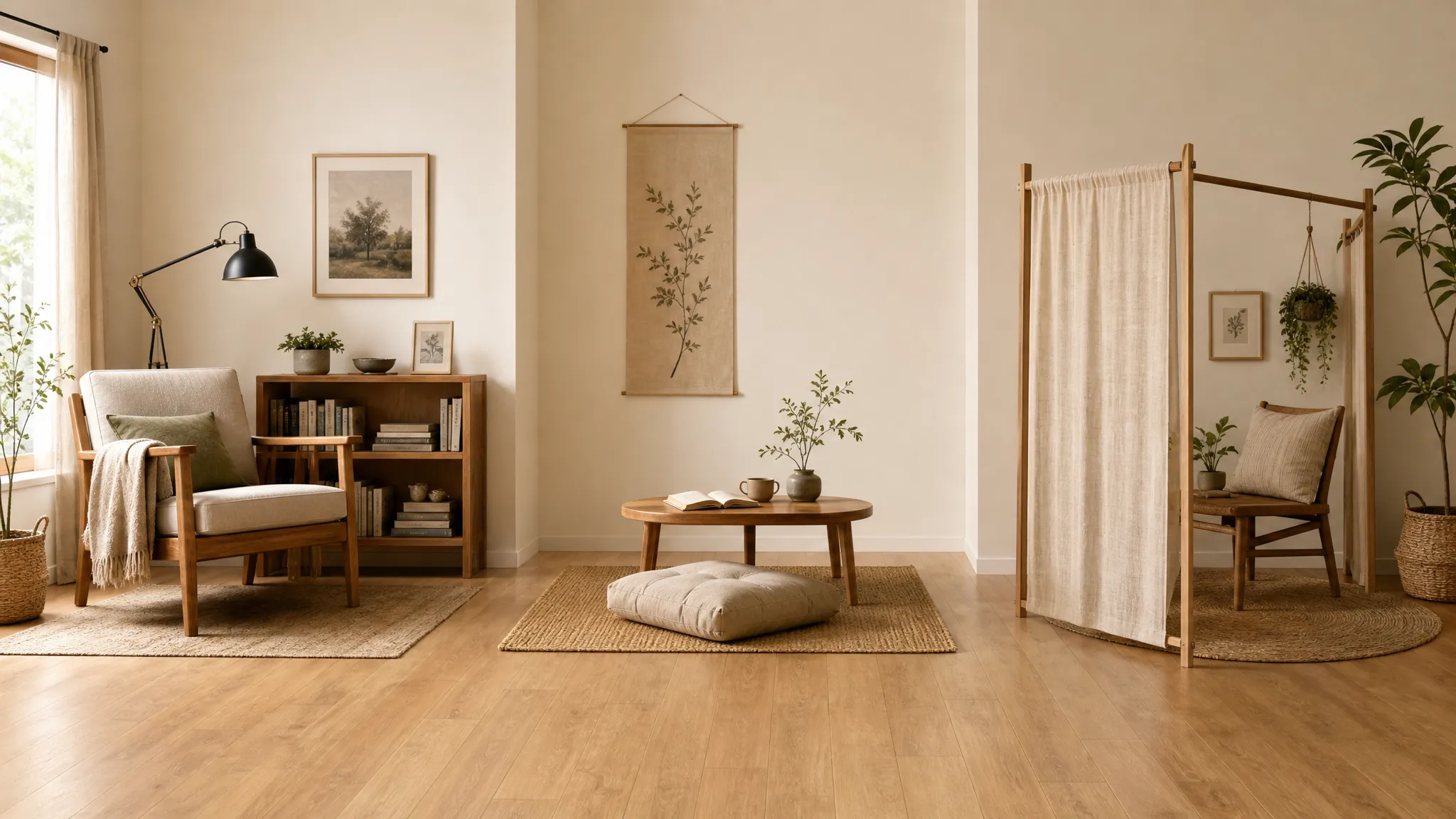
Three small layouts that work in ordinary homes
1. Chair and shelf
Place a compact chair beside a wall or bookcase. Add a lamp and a small shelf or stool within arm’s reach. Keep only the current books nearby.
Best for: reading, tea, evening sitting.
Watch for: chair depth, lamp cord placement, and the shelf becoming clutter storage.
2. Floor cushion and low table
Use a mat or cushion near a wall, with a low table for a book, cup, or small tray. This works when the user is comfortable sitting low and the room benefits from movable furniture.
Best for: short rests, quiet tea, seasonal window light.
Watch for: ease of standing up, floor drafts, and keeping the cushion out of busy paths.
3. Lightly screened corner
Use a folding screen, curtain, open shelf, or tall plant placed to the side rather than directly in front. Add one seat, one lamp, and one small surface. Keep the enclosure incomplete so the corner does not feel cramped.
Best for: shared living rooms, studio apartments, multipurpose bedrooms.
Watch for: blocked air movement, heavy visual barriers, and making the room feel smaller.
What changes the answer
The right quiet corner depends on the limits of the home. A sunny window corner may be ideal in winter and too bright in summer. A floor cushion may suit one person and be awkward for another. A screen may help in a shared room but overwhelm a narrow one. A plant may soften a view but become clutter if the corner is already tight.
The main variables are simple
- Traffic: choose distance from movement before choosing decor.
- Seat type: match the seat to reading, resting, or low sitting.
- Light: make it gentle but still useful.
- Surface: include a place for a book, cup, or glasses.
- View: simplify what the sitter sees first.
- Sound: reduce exposure where possible, without expecting silence.
- Air: keep vents, windows, and openings clear.
- Maintenance: choose materials and objects you can keep clean.
Eastern-inspired restraint helps here in a practical way. A quiet corner does not need many objects to feel complete. A clear mat, modest cushion, low wooden stool, ceramic cup, folded textile, and book can hold the space if they are placed with care. The restraint is not a rule or a promise. It is a way to keep the corner usable.
Common confusion about quiet corners
A quiet corner is not the same as an unused corner. If the spot is where extra chairs, boxes, bags, and cables collect, it will read as storage. Give the space one main use and remove the objects that argue with that use.
A quiet corner is also not automatically better because it is darker, lower, or more enclosed. Reading needs usable light. Low seating needs to suit the person using it. Enclosure needs air and an easy way in and out. The best small space seating often feels modest rather than dramatic.
And a calm practical corner should not be framed as guaranteeing a personal outcome. Rooms can support comfort through layout, light, materials, and reduced clutter. They do not need larger promises than that.
Final check
Sit in the corner for ten minutes with the object you intend to use there: a book, tea cup, notebook, or nothing at all. Notice what your hand reaches for, what your eyes keep landing on, what sound is most present, and whether leaving the seat is easy.
If you have to stand up for the lamp, place the book on the floor, move a cord with your foot, or stare at clutter, adjust the arrangement.
A small quiet corner succeeds when it is easy to enter, easy to use, and easy to reset. One seat, one light, one surface, a clear path, and a quieter view are usually enough.