Nature Cycles: Seasonal Home Rhythm, Light, and Textiles
A practical seasonal home begins with a plain question: what has changed in the room, and what should change with it?
Seasonal home rhythm and textiles is not about replacing the house every few months. It is a way of noticing daylight, heat, glare, dampness, dust, storage pressure, and fabric weight, then making small changes that are easy to reverse. A room may need lighter bedding, a shaded window, a washed throw, a clearer entry, or simply a different cleaning cadence.
The best rhythm is local. It follows your rooms, your weather, your storage space, and the materials you already own.
This page is the broad map: how to read seasonal cues, where textiles fit, when light and weather should guide the room, and how to avoid turning a useful home practice into more clutter.
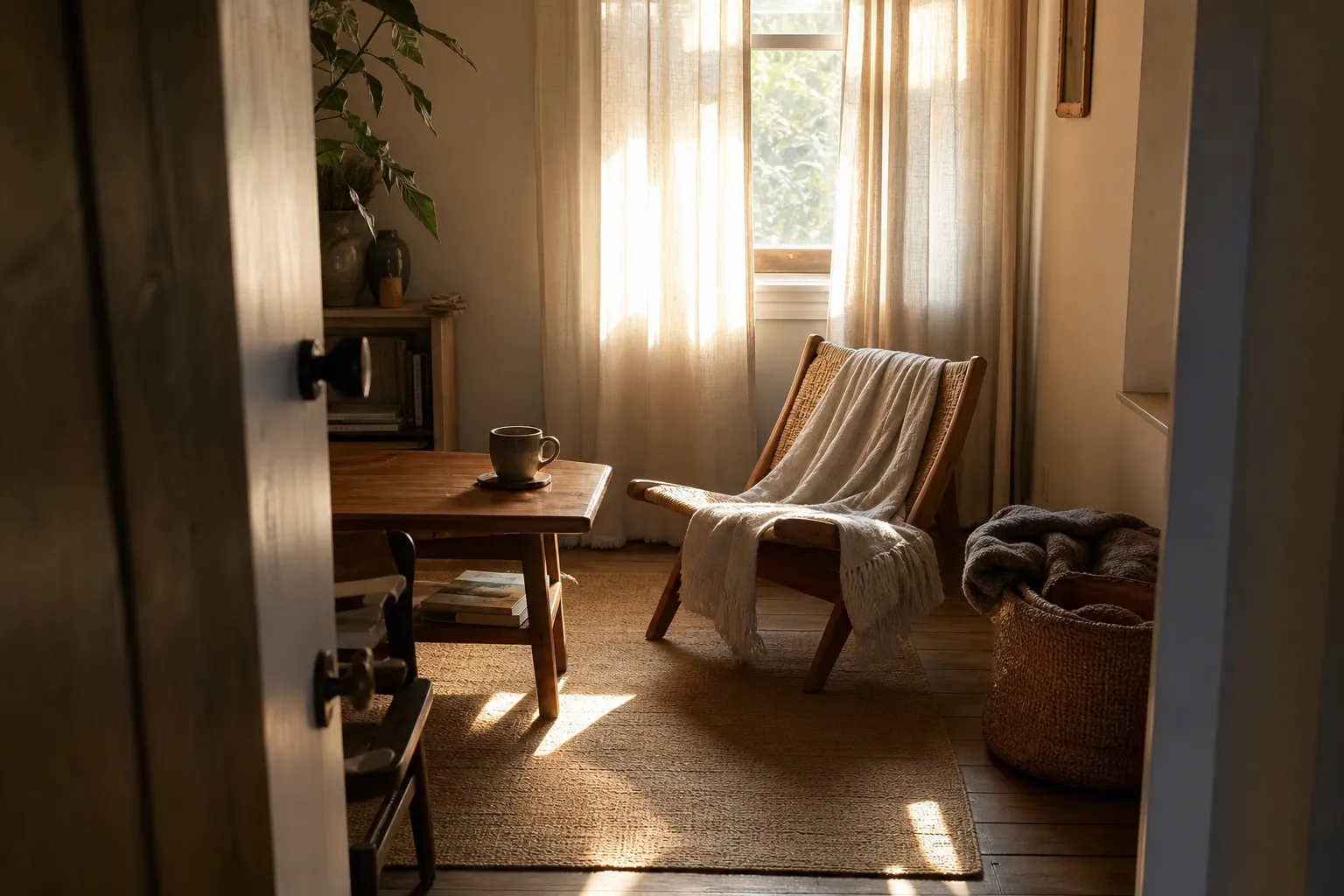
What a Seasonal Home Rhythm Means
A seasonal home rhythm is the habit of adjusting the house according to observable conditions rather than decoration pressure. The season is not only a date on the calendar. Indoors, it shows up through light angle, window habits, bedding layers, dust patterns, floor temperature, storage needs, and the way certain rooms become more or less comfortable at different times of day.
In a calm interior, seasonal change usually sits in five practical layers:
| Layer | What changes | Useful response |
|---|---|---|
| Light | Sun angle, glare, shadow, fading concern, screen reflection | Shift a chair, change curtain use, add shade, move delicate objects |
| Air and weather | Open-window habits, stuffiness, rain, dry dust, damp-feeling textiles | Adjust airing times, entry mats, drying space, and storage checks |
| Textiles | Bedding, throws, rugs, curtains, cushions, mats, covers | Rotate by weight, use, texture, and care limits |
| Cleaning | Dust, lint, mud, pollen, stored clutter, dull surfaces | Change the cleaning cadence by room and season |
| Storage | What comes out, what goes away, what becomes hard to find | Store clean, dry, labeled items by room or use |
This approach fits an Eastern-inspired home lens when it stays humble: observe first, adjust lightly, let materials age honestly, and avoid forcing a room into a seasonal theme it does not need.
Start by Reading the Room, Not the Calendar
Many people begin seasonal decorating by asking what to buy. A better first step is to stand in the room at different times of day and ask what the season is already doing.
Look for cues that are visible or easy to feel:
- Morning light is lower, stronger, weaker, or entering from a different angle.
- Afternoon sun creates glare on a desk, sofa, floor, or screen.
- A bedroom feels cooler before sunrise or warmer at night.
- A living room is pleasant in one season but heavy or dim in another.
- Entry areas collect wet shoes, dry dust, leaves, sand, or mud.
- Throws and cushions are used more often, ignored, or always in the way.
- Curtains help the room feel settled, or they make it feel too enclosed.
- Rugs feel welcome underfoot, or they feel too warm and visually dense.
- Stored textiles are harder to reach than the ones actually needed.
These cues are more useful than a generic seasonal checklist because they come from your actual rooms.
Building and comfort studies often show that indoor conditions change by season and by room use. That does not mean every home needs technical adjustments. It simply supports a modest household idea: people often adapt within the home as light, temperature, and weather shift.
So the useful questions are practical:
- Which room becomes too bright?
- Which corner becomes unused?
- Which fabric layer is doing real work?
- Which object is only adding maintenance?
- Which window habit changes when the weather turns?
A seasonal home rhythm begins when those observations shape the next move.
A Simple Seasonal Scan for the Home
Use this scan when a room feels out of step. It is not a strict schedule. It is a way to keep decisions calm and manageable.
| Seasonal cue | What to check | Possible adjustment | What to avoid |
|---|---|---|---|
| Light angle changes | Glare, dim corners, screen reflection, direct sun on delicate items | Shift seating, use a sheer or shade, move sensitive objects, add one lamp where needed | Buying new lighting before observing the room |
| Room temperature changes | Cold floors, warm sofa zones, stuffy bedrooms, uneven room use | Add or remove a throw, change bedding weight, use rugs selectively | Treating the whole home as if every room behaves the same |
| Weather changes | Rain, wind, dry dust, heat, dampness, mud at entry | Adjust mats, airing habits, shoe storage, drying space, window timing | Packing away damp-feeling items |
| Textile use changes | Throws used daily, bedding too heavy, curtains blocking needed light | Rotate layers, wash or air only as care instructions allow, store what is not in use | Keeping every seasonal textile out at once |
| Cleaning needs shift | Dust, lint, tracked dirt, pollen, stale storage corners | Change cleaning cadence by room and surface | Turning every seasonal change into a full-house overhaul |
| Storage pressure builds | Overflowing closets, unlabeled bags, forgotten cushions | Edit duplicates, store by room and season, keep access simple | Buying storage before reducing what must be stored |
The aim is not to decorate the season onto the room. The aim is to let the room answer the season with fewer, better changes.
Natural Light at Home: Observe Before You Adjust
Natural light is one of the clearest ways a season enters the home. It changes with day length, sun angle, weather, window position, neighboring buildings, trees, and room orientation. A room that feels balanced in spring can become too bright in summer or too dim in winter.
Daylighting research supports a simple idea that applies well to ordinary home observation: daylight quality depends on more than window size. Orientation, shading, window configuration, and surrounding conditions all affect whether light feels useful, excessive, uneven, or blocked. Some available studies focus on specialized building types, so they should not be treated as household rules. Still, they reinforce the value of watching the room before changing it.
Before moving furniture or buying new textiles, make a three-time light check:
- Morning: Where does light land first? Does it brighten the room gently, or does it create glare?
- Midday: Is the room bright enough for ordinary use? Are there harsh patches on textiles, wood, ceramics, or screens?
- Late afternoon or evening: Does the room become warm, dim, golden, exposed, or visually flat?
If possible, repeat the check on one clear day and one cloudy day. Weather changes how a room reads.
Shade is one of the most useful seasonal tools. It can soften a room, make a seating area more usable, and reduce the need for bigger design changes. Depending on the space, shade may come from curtains already in place, a woven blind, a fabric shade, a shifted chair, or simply moving a reflective object away from a sunny window.
Watch for overcorrection. When winter light feels low, it is tempting to add many lamps, pale textiles, reflective objects, and bright accents all at once. When summer glare feels sharp, it is tempting to darken the whole room. Both reactions can make a room harder to live with.
Try one adjustment first:
- open or close one layer of window covering;
- move one textile away from direct light;
- add one warm lamp to a dark corner;
- remove one visually heavy fabric from a small room;
- reduce reflective clutter near a sunny window.
Seasonal rhythm grows from repeated small corrections.
Weather Changes the Way Rooms Work
Weather affects rooms in ordinary ways: a window stays closed more often, a hallway collects grit, a blanket starts living on the sofa, or a room feels stale after rain. The goal is not to control every condition. It is to notice how weather changes the use and care of the home.
Ventilation choices often involve tradeoffs, especially in cold, wet, or very hot seasons. A field study of bedroom ventilation in autumn and winter described the practical tension between air exchange and heating conditions. The setting was specific, so its numbers should not be turned into universal home advice. The household problem, however, is familiar: when outdoor conditions are uncomfortable, window habits change.
For a practical home rhythm, ask:
- When do windows actually get opened in this season?
- Which rooms become stuffy when windows stay closed?
- Is there a time of day when airing a room is easier?
- Does rain or cold make certain textiles feel damp or slow to dry?
- Are curtains, bedding, or rugs blocking air movement around a window, vent, or radiator?
If a home has mechanical ventilation, heating, cooling, or unusual building conditions, those systems matter. Seasonal habits should work with the actual building, not against it.
Dampness also belongs in the seasonal scan. This page is not a technical guide to moisture problems, fabric storage standards, or building repair. But as a household care habit, it is sensible to treat damp-feeling textiles with attention rather than sealing them away.
Use a cautious, practical approach:
- Do not pack away a textile that feels damp.
- Follow the textile’s care label before washing, drying, steaming, or ironing.
- Give recently used seasonal fabrics time to dry fully before storage.
- Keep storage areas easy to inspect.
- If a room repeatedly feels damp or has visible building issues, styling changes are not enough.
The entryway often reveals the season first. It may not need new decor at all. It may need a better mat, a place for wet umbrellas, a tray for shoes, or fewer objects on the floor.
Ask what the season is bringing in: water, leaves, dust, sand, pollen, mud. Then adjust the entry for that reality. A themed console table will not help much if the floor is telling you it needs better function.
Textiles Are the Main Seasonal Layer
Textiles are the easiest seasonal layer to adjust because they are movable, tactile, and often already owned. They can warm a room, lighten it, soften sound, change color weight, and make a corner feel more usable. They can also become clutter if too many are displayed at once.
Seasonal home textiles include:
- bedding and pillow covers;
- quilts, blankets, and throws;
- cushion covers;
- curtains and sheers;
- rugs and runners;
- table linens;
- floor cushions and seat pads;
- bath mats and hand towels;
- entry mats and utility cloths.
The key is to rotate by use, not by fantasy. If a heavy throw is never used in a warm season, store it. If a light cotton cover is useful year-round, keep it. If a rug makes a summer room feel visually crowded, consider whether it belongs in storage for part of the year.
| Question | What it tells you |
|---|---|
| Is the fabric adding warmth or heaviness the room still needs? | Whether it belongs in the current season |
| Does the surface feel right for the weather and room use? | Whether texture is helping or weighing the room down |
| Is the textile being used, or only signaling a season? | Whether it should stay visible, move rooms, or be stored |
In cooler months, people often reach for denser bedding, layered throws, thicker rugs, and deeper textures. In warmer months, lighter covers, fewer cushions, washable mats, and more open surfaces may feel more practical. The exact choice depends on climate, building, preference, and material care.
Do not rotate every textile at once. A calm room usually benefits from one or two seasonal changes, not a full replacement. Try this order:
- Bedding first. It affects daily use and storage volume.
- Throws second. Keep only what is used in the room.
- Rugs third. Consider floor temperature, cleaning, and visual density.
- Curtains last. They affect light, privacy, heat, and the whole room mood, so change them only when there is a clear reason.
Curtains are especially easy to treat as pure decor. Before changing them, ask whether the issue is glare, privacy, heat, dimness, or simply a desire for novelty.
Material care sets the limit. The available sources for this page do not include detailed textile-care authorities or manufacturer guidance, so this article should not pretend to give washing rules for wool, linen, cotton, silk, down, specialty weaves, or vintage fabrics. Use a plain hierarchy instead:
- The care label or maker’s instructions come first.
- If the textile is valuable, delicate, old, handmade, or structurally fragile, avoid casual cleaning experiments.
- If laundering is allowed, clean before long storage when appropriate.
- If airing is appropriate for the item, do it in a way that avoids dampness and harsh exposure.
- If you are unsure, choose the least aggressive care step and seek material-specific guidance.
A seasonal textile rhythm is not a reason to over-wash, over-sun, or over-handle materials.

Seasonal Cleaning Without Turning It Into a Marathon
Seasonal cleaning works best when it is tied to actual seasonal pressure: dust from closed windows, mud from rain, pollen near entryways, lint from heavy bedding, storage piles after winter, or a kitchen that changes with cooking habits. It does not need to become a dramatic whole-house event.
Think of it as a practical seasonal cleaning reset: clear what blocks the room, clean what the season has stressed, and prepare what will be used next.
Ask one question in each room:
What did the last season leave behind, and what will the next season require?
That question keeps the work focused.
- In a bedroom, the answer may be bedding layers, under-bed storage, curtains, and dust behind furniture.
- In a living room, it may be throws, cushion covers, rug edges, lamp placement, and window glare.
- In an entry, it may be mats, shoes, umbrellas, and floor cleaning.
- In a tea corner or quiet corner, it may be cloths, trays, shelves, ceramics, and light exposure.
| Timing | What to check |
|---|---|
| Weekly | Visible dust, floors, entry mats, surfaces that gather daily use |
| Monthly | Textile condition, cushion covers if care allows, window areas, storage baskets, lamp shades |
| Seasonally | Bedding rotation, rug decisions, curtain assessment, closet edit, storage inspection, neglected corners |
This cadence is adjustable. A small apartment, humid climate, dusty road, pets, children, or open-window habit can all change what is realistic.
Clean before adding decor. Many seasonal decor problems are actually maintenance or storage problems: too many throws on one sofa, dusty lamps making light dull, a rug that no longer suits the weather, a crowded windowsill, or storage bins hiding textiles no one uses.
A clean surface, a moved lamp, and one suitable textile can mark the season more quietly than a new set of objects.
Seasonal Decor Without Adding Clutter
Seasonal decor becomes clutter when it adds objects without solving a room condition. A calm seasonal home uses fewer signals: one branch in a vase, a changed cushion cover, a lighter table cloth, a warmer throw, a shifted lamp, an edited shelf, or a bowl that reflects what is actually in season nearby.
The goal is not emptiness. It is a room that remains easy to clean, easy to move through, and visually settled.
For each room, choose one primary seasonal note:
- a textile texture;
- a natural object;
- a color shift;
- a lamp or shade change;
- a table surface;
- a doorway or entry mat;
- a tea cloth or tray cloth;
- a window treatment adjustment.
When everything announces the season, the room becomes busy. When one element carries the seasonal note, the rest of the room can stay calm.
Color can come from outside, but it should stay local. A longitudinal study of fall color preferences found that preferences for leaf-like colors rose and then fell as local autumn colors changed. This does not create a universal decorating rule. It simply supports a gentle design idea: outdoor color can inform what feels seasonally fitting.
Instead of following a trend palette, look outside:
- Are the trees silver, green, gold, bare, dark, or bright?
- Is the sky often gray, white, blue, or hazy?
- Are nearby materials stone, brick, wet earth, dry grass, snow, sand, or dense foliage?
- Does the room need contrast with the outside or continuity with it?
Seasonal color can be as small as a rust cushion cover, a pale linen runner, a dark winter tray, or a green branch. It does not need to repaint the room.
Natural objects can also mark nature cycles at home without becoming theatrical. A small bowl of seasonal fruit, a few branches, a stone, a dried leaf, or a flower from the market can be enough.
Keep the limits simple:
- Avoid crowding surfaces that need regular cleaning.
- Do not place damp plant material on vulnerable surfaces.
- Remove dried or decaying items when they no longer serve the room.
- Keep scented items, smoke, and flame choices separate from general decor decisions and use appropriate caution.
A calm seasonal object should make the room easier to notice, not harder to maintain.
Storage Is Part of the Seasonal Rhythm
Storage is where many seasonal systems fail. The room looks calm for a week, but the closet becomes a compressed pile of blankets, covers, mats, and decorative objects. A real seasonal rhythm includes the hidden half of the home.
Many people store all “winter” or “summer” items together. That can work, but room-based storage is often easier for textiles:
- bedroom bedding with bedroom bedding;
- living room throws with living room throws;
- cushion covers grouped by size;
- entry mats and utility cloths near cleaning supplies;
- table linens near the table or dining storage;
- tea cloths and tray cloths near the tea area.
The goal is to reduce friction. If a textile is hard to find, it will either be forgotten or replaced unnecessarily.
| Group | What to do |
|---|---|
| Used often | Keep accessible |
| Seasonal but useful | Clean or air according to care instructions, then store |
| Beautiful but unused | Decide whether it belongs in another room, another season, or out of the home |
| Damaged or uncertain | Repair, repurpose, or remove rather than storing indefinitely |
This is not a minimalist rule. It is a maintenance rule. Stored objects still occupy space, collect dust, and require future decisions.
Labels should be readable months later:
- “light bedding — queen”
- “winter throws — living room”
- “summer cushion covers — blue/linen”
- “guest bedding — washed”
- “entry mats — wet season”
- “tea cloths — occasional”
The best storage system is not impressive. It is understandable when you are tired.
A 60-Minute Practical Seasonal Home Reset
If the season has changed and the home feels slightly out of step, begin with one hour. Do not open every closet. Do not redesign the room. Move through the house with a basket, a cloth, and a short list.
| Time | Task | What to look for |
|---|---|---|
| 1–10 minutes | Walk and notice | Harsh light, unused textiles, dust, crowded storage, damp-feeling corners, entry mess, bedding that no longer suits the weather |
| 10–25 minutes | Remove what is clearly out of season | An unused throw, a heavy cushion cover, a rug that traps seasonal dirt, a crowded windowsill, a table textile that needs care |
| 25–40 minutes | Clean the season’s pressure points | Entry floor, window ledge, bedside surface, sofa area, tea tray, rug edge, storage shelf, lamp base or shade |
| 40–55 minutes | Adjust light and textile layers | Open a sheer, close a shade, move a throw, switch one cushion cover, move a delicate object out of direct sun |
| 55–60 minutes | Set one storage task | Label one bag, set aside one textile for repair, return one seasonal object, note a care question |
The point is to finish with one room or pathway working better than before. A seasonal reset should leave the home more usable, not more unfinished.
Common Seasonal Home Mistakes
Seasonal changes are simple, but they are easy to overdo. These mistakes often make a calm room harder to live with.
Buying before observing
If the issue is glare, a new cushion will not fix it. If the issue is damp storage, a new basket may hide it. If the issue is dust, a seasonal object may make cleaning harder.
Treating every room the same
One room may need shade while another needs more reflected light. One bedroom may need heavier bedding while a guest room stays unused. One rug may be welcome in a cold hallway and unnecessary in a warm sitting area.
Keeping all textiles visible
Throws, cushions, rugs, and cloths can quickly become visual weight. Keep what is useful, store what is seasonal, and let some surfaces remain quiet.
Ignoring hidden maintenance
Storage, drying, labels, cleaning, and care instructions are part of the design. A room is not truly calm if seasonal items are only pushed into a closet without order.
Using cultural style as a shortcut
Eastern-inspired interiors are often associated with restraint, material sensitivity, low arrangements, quiet corners, and attention to seasonal change. Without specific cultural sources, it is better to treat those ideas as design inspiration rather than authority. Use them respectfully: observe, reduce excess, care for objects, and avoid turning the room into a borrowed symbol.
Build Your Own Seasonal Rhythm Over a Year
A yearly rhythm does not need to be elaborate. Think in transitions rather than fixed dates. Your climate may not have four distinct seasons. Some homes move between wet and dry periods, hot and less hot periods, windy months, heating months, or long stretches of gray light.
At each seasonal turn, ask the same five questions:
- Light: What has changed in brightness, angle, glare, or shadow?
- Air: How have window habits and room freshness changed?
- Textiles: Which layers are used, unused, too heavy, too light, or hard to clean?
- Cleaning: What is the season bringing in or leaving behind?
- Storage: What needs to come out, go away, be labeled, or be edited?
A small home note can help:
- “Winter: afternoon glare on desk; move lamp and use shade.”
- “Rainy months: entry mat too small.”
- “Summer: living room rug feels too heavy.”
- “Cold mornings: keep one throw in reading chair.”
- “Spring: wash cushion covers if labels allow.”
- “Autumn: store light bedding earlier.”
These notes prevent repeated purchases. They also show that the home often already contains the answer.
Some years are hotter, colder, wetter, drier, busier, or more crowded than others. A flexible rhythm allows the home to respond without demanding perfection. You may rotate only bedding one year. Another year, the main task may be storage. Another season, the best change may be to remove decor rather than add it.
The room does not need to perform the season. It only needs to support ordinary life within it.
Reader Path: Where to Go Next
This root page is the map. Use the deeper topic paths when you know which problem you are trying to solve.
Seasonal Home Decor Without Adding Clutter
Start here if the room feels visually tired, but you do not want more objects. This path focuses on small seasonal signals, surface restraint, natural materials, and decor choices that are easy to clean around.
Seasonal Cleaning as a Practical Home Reset
Use this route when the house feels heavy, dusty, crowded, or behind. It frames seasonal cleaning as a room-by-room reset for surfaces, storage, airflow awareness, and maintenance limits.
How to Rotate Home Textiles by Season
Choose this when bedding, throws, rugs, curtains, or cushion covers are the main issue. The focus is seasonal textile rotation by temperature, texture, room use, care limits, and storage space.
Observing Light and Weather Before Changing a Room
Go here before buying decor or moving large furniture. This path helps you observe natural light at home, glare, heat, humidity cues, window use, and weather patterns that affect room decisions.
Final Takeaway
Nature cycles at home are most useful when they are treated as practical cues: light shifts, weather changes, rooms warm or cool unevenly, textiles become more or less useful, and cleaning needs move from one surface to another.
A calm seasonal home rhythm begins with observation, then uses small adjustments: rotate a textile, clear an entry, soften glare, clean a pressure point, label storage, or change one surface.
Start with the room you use every day. Notice what the season has already changed. Then answer with the lightest useful move.
Sources
Sources and further reading
Reference links are limited to sources considered suitable for public citation in this page.
Explore this section
Next guides in Nature Cycles
Use these focused guides when you want the practical next step inside this section.