How to Make a Quiet Corner Near a Window Without Glare or Heat
To make a quiet corner near window usable, start by watching where the sun actually lands before buying a shade or curtain. Sit in the spot at the hour it feels uncomfortable. Notice whether the light hits your eyes, your book, your screen, the floor, or the seat cushion. Then move the chair or bench slightly out of the direct beam, add a soft light-filtering layer, and use one controllable layer only where glare or heat remains.
The goal is not to darken the corner. It is to keep daylight, view, airflow, and access while making the seat easier to use.
broader context
Broader context
Use the broader page when you need more context before this narrower page.
Read the window before choosing a treatment
A window quiet nook usually fails for one of four reasons: glare, heat buildup, lack of privacy, or a fix that makes the corner too dim.
If the light is bright but the seat is not hot, a sheer curtain, light-filtering shade, or a small chair angle change may be enough. If the cushion warms up or the corner feels stuffy in the afternoon, the issue is more about solar heat gain and trapped air. If the window faces a street or neighboring building, privacy may matter as much as brightness.
Before choosing anything, check:
- Time of day: East-facing morning light, south-facing midday light, and west-facing late sun behave differently.
- Where the beam lands: Eye-level glare is different from sunlight on the floor.
- What you want to keep: View, daylight, privacy, ventilation, or a cooler-feeling seat.
- How the window works: Do not block a window needed for airflow, cleaning, locking, or emergency access.
- Nearby heat sources: Keep cushions, drapes, and baskets clear of heaters, radiators, vents, and appliance heat.
Window attachments can affect glare, daylight, solar heat gain, and seasonal comfort, but the result depends on the window, orientation, climate, fabric, fit, and how the treatment is used. That is why this small corner is best solved by observation first, not by a product promise.
Place the seat out of the harshest line of light
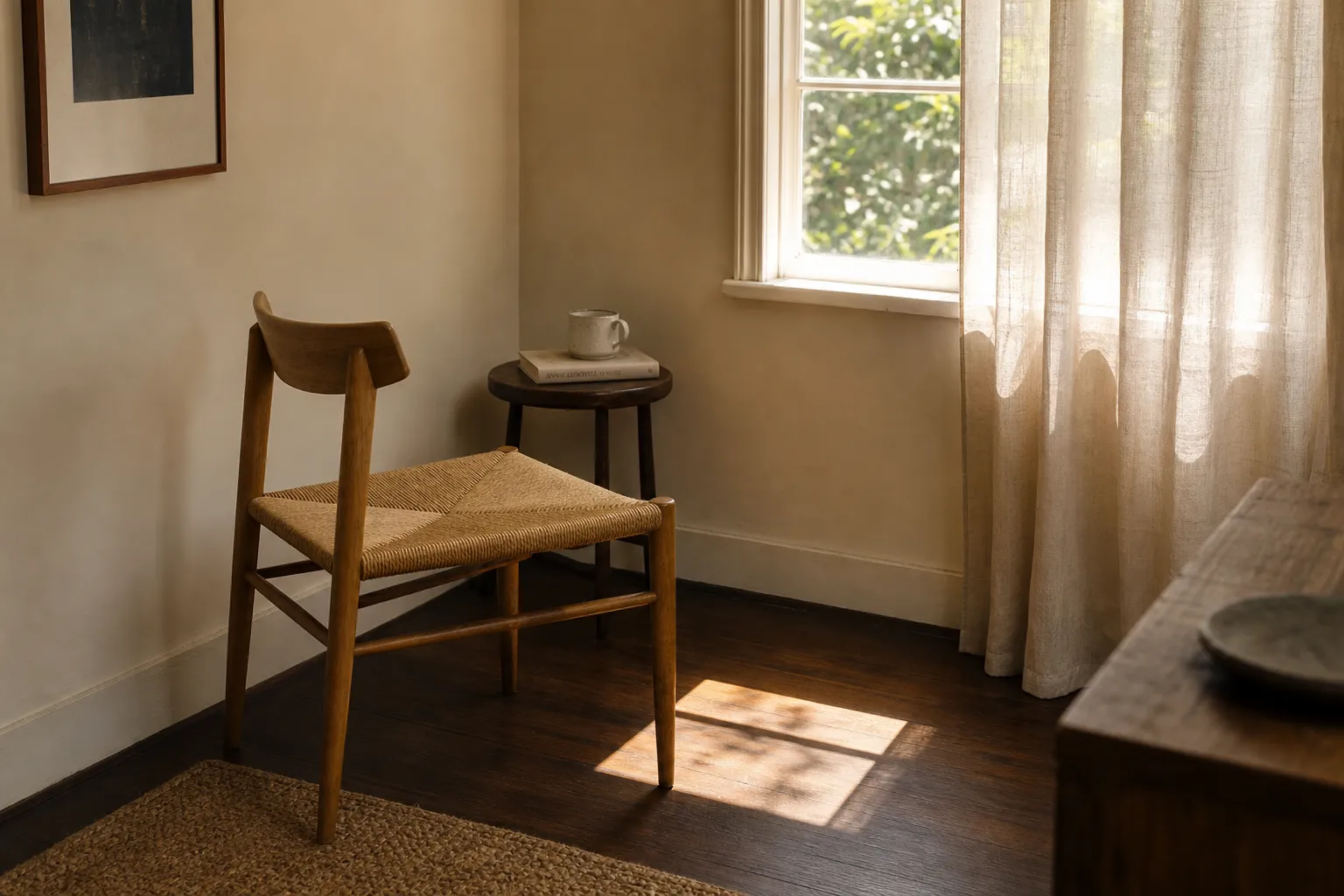
A small chair by a window does not need to sit in the brightest patch. Often the simplest improvement is moving the seat 12 to 24 inches away from the glass, turning it slightly, or arranging it so you look across the light rather than into it.
Angle the chair
Angle the chair 20 to 45 degrees away from the sun path. This can reduce direct glare without closing the window.
Use the bright side
Put the side table on the bright side. A small table, tea tray, or low shelf can take the strongest light while the body sits just outside it.
Choose breathable covers
Cotton, linen, and firm woven covers usually feel better in sun than thick dark synthetic fabrics.
Reduce reflected glare
Avoid glossy surfaces. A shiny table, polished floor, or bright white wall can bounce light back into your eyes.
Keep the corner visually simple. A chair, one table, one lamp, and a small basket often work better than a crowded arrangement.
A bench near a window needs the same test. If the bench cushion sits in direct afternoon sun every day, the window layer matters more than the styling of the pillows.
Match the window layer to the problem
No single window treatment preserves full daylight, full view, strong privacy, low heat, and open air at the same time. More control usually means some tradeoff in brightness, view, or openness.
| Main need in the corner | Practical option | What it does well | Tradeoff to expect |
|---|---|---|---|
| Soften direct sunlight while keeping the room bright | Sheer curtains | Diffuses harsh light and adds texture | Limited help with strong heat or low-angle glare |
| Reduce glare while keeping some view | Solar shades | Cuts brightness while preserving some outside connection, depending on fabric | Tighter weaves usually reduce view and daylight more |
| Block seated glare but keep upper daylight | Top-down/bottom-up shades | Useful for eye-level glare and street-facing privacy | Fit and hardware quality matter |
| Add stronger control for harsh hours | Drapes or lined curtains | Flexible, soft, and good for layering | Heavy fabric can make the nook feel closed in |
| Improve insulation-oriented control | Cellular shades | Often chosen where heat transfer and light control both matter | Effect depends on product design and installation |
| Keep the window visually simple | Window film | Low-profile way to reduce glare or solar gain in some cases | Can alter color, reflectivity, view, and may not suit every glass type |
Sheers when the light is sharp but still welcome
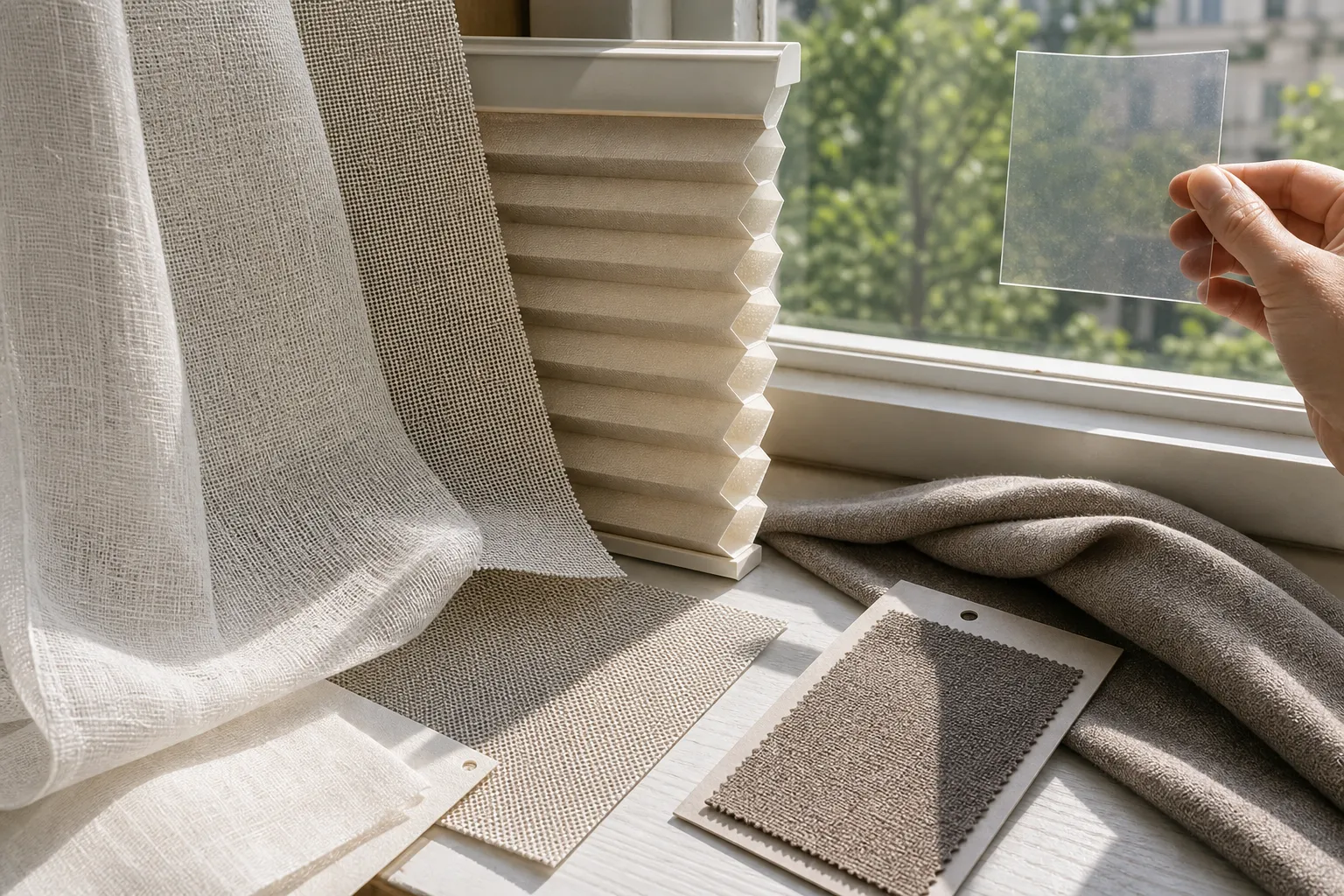
Sheer curtains are often the gentlest first layer. They work well when the corner is bright but not hot, or when you want filtered daylight for reading, tea, sewing, sketching, or sitting quietly.
Choose a fabric with enough weave to scatter the light. A decorative panel that is almost transparent may look soft at night but still allow the sun to cut through during the day.
For a calm, natural room, plain linen, cotton-linen blends, unbleached tones, soft white, warm grey, or a bamboo-colored rod can work without making the corner feel staged. The fabric should serve the light first.
Sheers are not enough if late afternoon sun heats the cushion, if a screen reflects the window, or if privacy is needed after dark. In those cases, use sheers as the soft visible layer and add one more functional layer.
Solar shades when glare and view both matter
Solar shades are often used for a window nook without heat or glare because they can reduce brightness while keeping some connection to the outdoors. The important detail is that “solar shade” does not mean one fixed level of performance. Fabric color, weave, openness, and product rating all matter.
A more open weave usually keeps more view and light. A tighter weave usually gives stronger glare control but less view. Darker and lighter fabrics can also behave differently in how they preserve view, reflect light, and affect brightness.
For a reading corner, do not choose only from a sample held in your hand. If possible, look at the material against a bright window. A fabric that looks calm on a table can still feel too bright with the sun behind it.
Top-down/bottom-up shades for seated glare
Top-down/bottom-up shades are useful when the problem is at eye level. You can cover the lower or middle part of the glass while leaving the top open for daylight.
This can work well for a small chair or bench near a street-facing window. The seated area gets more privacy and less direct glare, while the upper window still brings in light. It is not automatically better than a solar shade or curtain; it simply matches the way people sit low beside a window.
Drapes when the corner needs stronger control
Drapes are practical when the sun is harsh for a few hours each day. A lined drape can reduce brightness more than sheers and make the nook feel settled in the evening.
For daytime use, avoid jumping straight to the heaviest blackout fabric unless the window truly needs it. Strong blocking may solve glare but remove the reason you wanted a window corner in the first place.
A good compromise is a double layer: sheers for most of the day, drapes pulled only when the sun is direct.
Window film when you do not want fabric
Window film can suit a small room where rods, curtains, or shade hardware would feel bulky. Some solar-control films can reduce glare or solar gain, depending on the product, glass, orientation, and installation.
Treat film as a low-profile option with limits. It may change the color of the view, increase reflectivity, affect nighttime privacy, or conflict with some glass types or warranties. Check manufacturer instructions before applying it.
Make the corner adjustable, not perfect for one hour
A quiet corner by a window does not need one fixed setting. It works better when it can change across the day.
In summer or during strong afternoon sun, lower the shade before the seat overheats. In cooler months, open the treatment during soft morning light and close it only when the sun reaches eye level. On cloudy days, sheers alone may be enough. At night, privacy may matter more than glare.
A simple rhythm:
- Morning: Open the main layer if the light is gentle.
- Strong sun hours: Lower the glare-control layer or pull the drape partway.
- Late afternoon: Shift the chair angle if low sun enters under the shade.
- Evening: Use a warm table or floor lamp instead of relying on the window.
- Season change: Recheck the sun path; it will not land in the same place all year.
Keep the layout easy to adjust. Do not place a large plant or shelf where it blocks the shade controls. If the nook is for tea or reading, use a tray or small table that can move when you need to reach the window.
Quick safety and material checks
A calm-looking nook still needs practical checks. If blinds, shades, cords, chains, or loops are within reach of children or pets, choose cordless or inaccessible-cord options where appropriate and follow product instructions. Window-covering cords are a recognized household hazard, so treat this as part of the setup, not an afterthought.
Also check:
- Ventilation: Do not block a window the room depends on for fresh air.
- Access: Leave room to open, close, clean, and lock the window.
- Heat and airflow: Keep fabric, cushions, and baskets away from heaters, radiators, and vents.
- Furniture stability: A chair or bench should not wobble, tip, or press against glass.
- Fabric care: Sun can fade textiles; washable or replaceable covers are easier to live with.
- Moisture: If the window gets condensation, avoid trapping fabric tightly against the glass.
These checks matter most in compact corners, where every object sits close to the window, wall, and floor.
Common misunderstanding: glare control is not the same as cooling
Product descriptions often blend glare reduction, heat reduction, privacy, insulation, view, and energy savings into one message. In a real room, they separate quickly.
A sheer may soften light beautifully but do little for a hot west-facing window. A heavy drape may reduce brightness but remove the daytime view. A solar shade may keep some outdoor connection but still allow warmth, depending on the window and fabric. A cellular shade may help with insulation-oriented control, but fit and construction matter. A film may reduce glare while changing the look of the glass.
So the better question is not “What is the best window treatment?” It is: “What makes this specific corner unusable, and what do I want to keep?”
For many homes, the answer is modest layering: move the seat out of the beam, add sheers for soft light, then add one adjustable layer for the hours when the sun is too direct.
A simple setup for many small rooms
For a balanced small window sitting corner, start with:
- A compact chair or narrow bench placed just outside the direct sun path.
- A matte side table for tea, a book, or a small lamp.
- Sheer curtains to soften direct sunlight.
- One added layer chosen for the main remaining problem: solar shade, top-down/bottom-up shade, cellular shade, drape, or window film.
- Breathable, washable cushion covers.
- Clear access to the window, controls, vents, outlets, and locks.
- One warm lamp for evening.
That is enough for most ordinary rooms. The corner does not need built-in remodeling, automated controls, or a full product suite. It needs a clear reading of the sun, restrained furniture placement, and a window layer that reduces glare or heat without taking away the reason you wanted to sit there.