Bedroom layout check
Sleep-Friendly Bedroom Layout Checks for Calmer Nights
A sleep-friendly bedroom layout is not a formula or a promise. It is a set of visible room checks: keep direct light away from the pillow, reduce screen glare from the bed, make the room easier to darken and quiet, clear the route you use at night, simplify bedside surfaces, and avoid atmosphere choices that add fire or trip concerns.
Start at the bedroom door, then sit on the bed, then lie where your head actually rests. Ask what the room is asking your eyes, hands, and feet to manage after dark.
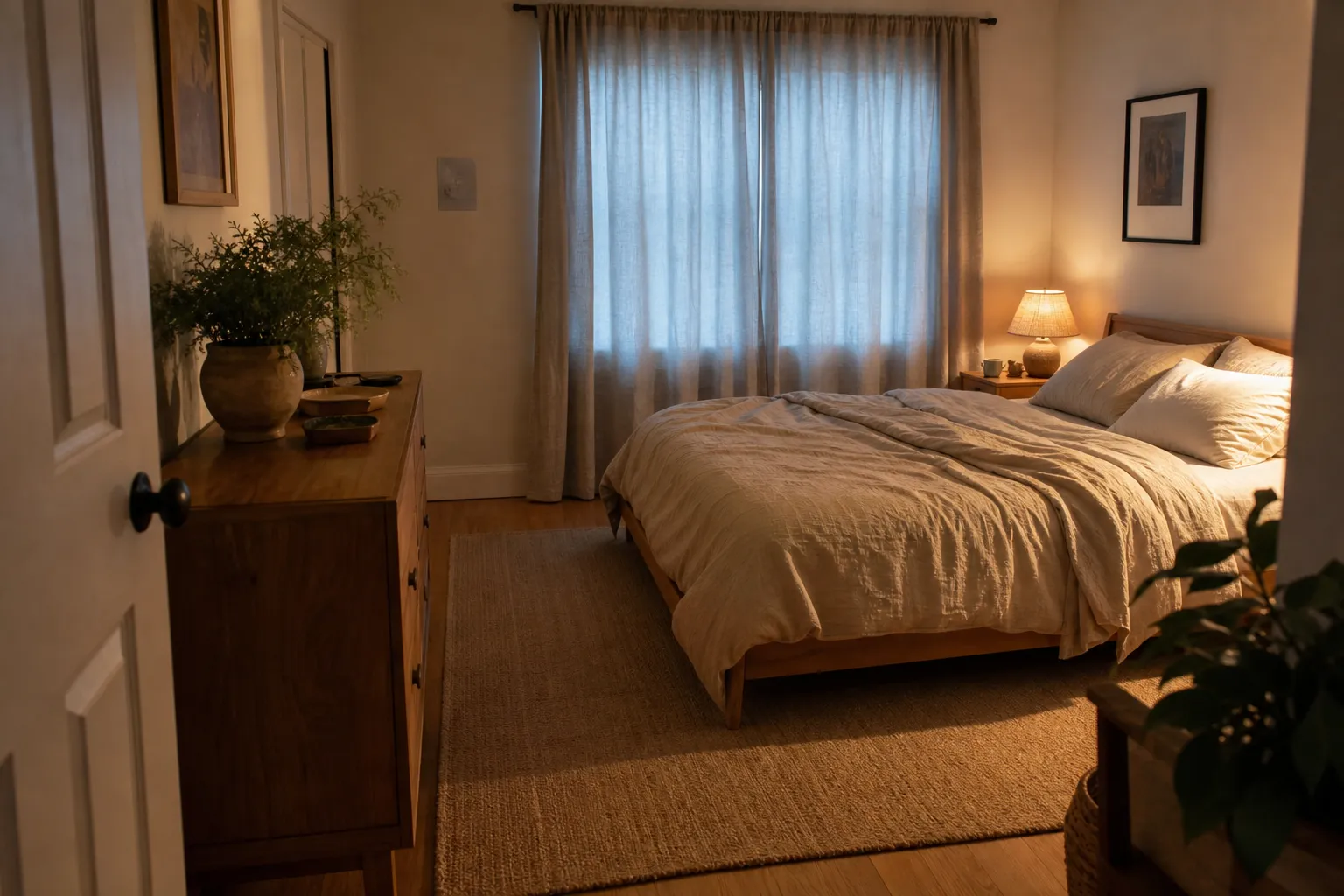
The quick room scan before moving furniture
Before rearranging the whole room, read it from three useful positions: the doorway, the pillow, and the nighttime path. A calmer bedroom layout is often less about buying a new piece and more about removing one source of glare, one awkward cord, one noisy object, or one crowded surface.
From the doorway
Is there a clear route to the bed, closet, door, or bathroom without stepping around laundry, baskets, charger cables, slippers, or rug edges?
From the pillow
Does a streetlight, hallway light, alarm display, television, phone, lamp, or mirror reflection land in your line of sight?
From the bedside
Can you reach water, glasses, tissues, or a book without knocking over a lamp, candle, charger, or stack of objects?
From the window
Do the coverings block light where it reaches the bed, or do they only look finished during the day?
From the outlet area
Are cords crossing a walking path, tucked under bedding, or crowded by too many devices?
These are ordinary home-design checks. They can make the room easier to use in the evening, but they should not be framed as a guaranteed sleep outcome.
Bed placement checks: light, doors, windows, and the path at night
Bed placement matters because it decides what your eyes see last and what your feet have to navigate first. A good position usually does three things: avoids direct glare, leaves a clear path, and gives the people using the bed enough practical access.
First, look for light hitting the bed. Sit or lie where your head rests and notice light leaks from streetlamps, neighboring windows, hallways, charger indicators, clocks, and reflections in mirrors or glass. A window behind or beside the bed can be beautiful during the day, but it may need lined curtains, a better-fitted shade, or a different bed angle if the pillow catches direct nighttime light.
Next, check the door relationship. The bed does not need a dramatic “command position,” but many rooms feel easier when the door is visible without placing the pillow in a bright hallway beam. If the open door sends light across the bed, try a smaller change before moving everything: close the door earlier, use a softer hall light, or switch on a lower lamp outside the bedroom instead of overhead lighting.
Then judge window covering performance at the difficult time, not at noon. Look after dark, at sunrise, or when headlights or exterior lights are the problem. Pay attention to the top, sides, and center gap. Light often leaks around the treatment, not through the fabric. A lined curtain, fitted shade, or layered covering can do more than a decorative panel that leaves a bright outline around the window.
Finally, walk the nighttime route. The path from bed to door, bathroom, baby monitor, pet bed, or closet should not depend on memory. Rugs should lie flat. Baskets, stools, low benches, and decorative ladders should not sit where half-awake feet will meet them. If you need a night light, choose one that helps orientation without shining into the pillow. Darkness is useful only if the room still feels safe to move through.
Warm bedroom lighting without glare
Warm bedroom lighting is not about making the room overly amber. It is about reducing visual sharpness in the evening. The main checks are lamp height, bulb exposure, shade, direction, brightness control, and reflections.
A bedside lamp should not shine directly into your eyes when you are lying down. If you can see the bright bulb from the pillow, the lamp may be too exposed, too tall, too low, or poorly shaded for that position. A fabric shade, opaque shade, covered wall sconce, or lamp placed slightly behind the reading position can soften the effect. Indirect light that washes a wall or corner often feels gentler than a bare bulb or bright overhead fixture.
Dimming helps when it gives real control. A lamp with only one bright setting may work for cleaning or folding laundry but feel too strong for an evening room routine. If possible, separate task light from atmosphere light: one lamp for reading or finding items, and another lower, shaded source for the final part of the evening.
Include screen glare in the bedroom in this check. A television, laptop, tablet, or phone can act like a small bright window in a dark room. Even when turned off, glossy screens can reflect lamps, streetlights, or movement. If a screen is visible from bed and keeps pulling the eye, turn it away, close the laptop fully, place the phone face down, or move charging to a dresser rather than the nightstand.
Lighting research can support cautious design language around dimmer, warmer-looking, lower-glare evening light and safe low-light movement. For a normal home, though, the useful question is simpler: can you see what you need without light landing directly in your eyes or making the bed area feel visually busy?
Quiet bedroom setup: reduce the obvious noise first
A quiet bedroom setup begins with sounds you can actually change. Total silence is not realistic in many homes, especially in apartments, shared houses, city streets, or rooms near plumbing and appliances. But the layout can reduce noises created inside the room.
Listen for small mechanical sounds: a buzzing charger, ticking clock, rattling blinds, air purifier on a high setting, loose door latch, vibrating phone, or fan touching a hollow surface. Move vibrating objects off lightweight furniture. Add a small felt pad under items that rattle. Tighten shade hardware if it taps against the frame. If a device must stay in the room, test whether moving it farther from the pillow makes it less noticeable.
Soft materials can reduce the feeling of sharp sound, but they should not create new problems. A rug underfoot, lined curtains, upholstered headboard, or fabric shade can make a room feel less echoing. Keep the tradeoff honest: a rug that curls near the bed is not worth the softness.
If outside noise is the main issue, layout has limits. Moving the bed away from a shared wall or window may help, but it may also worsen light, airflow, or walking access. Test before committing. Spend an evening in the proposed position, or temporarily shift the bed if possible. In a constrained room, the better fix may be window sealing, heavier curtains, door-gap attention, or a steady background sound you already tolerate.
Bedside surfaces, devices, and the “visible from bed” test
A cluttered bedside surface makes a bedroom feel busy because it gathers the last objects of the day: phone, watch, book, water, supplements, receipts, jewelry, tissues, candle, lamp, remote, and cables. The layout check is not whether the nightstand looks styled. It is whether it supports the last ten minutes of the evening and the first ten minutes of the morning.
Use the visible from bed test. Lie down and notice what pulls your eye first. If the phone screen is the brightest or most reachable object, it becomes part of the room’s visual field. If the nightstand is stacked, your hand has to search. If a lamp, glass, and charger compete for the same small corner, one sleepy reach can create a spill.
A simpler bedside usually needs only a few categories
- One stable light source that is shaded and easy to switch off.
- One small landing zone for glasses, a book, or a watch.
- One essential comfort item such as water or tissues.
- One planned charging location that does not tangle across the floor or sit under bedding.
This is where device placement becomes a design choice, not a moral lecture. If a phone is face-up beside the pillow, it is visually present. If it charges across the room, in a ventilated drawer, or on a dresser, the bed area becomes less device-centered. If you need the phone nearby for alarms, caregiving, accessibility, building entry, or emergency contact, adjust the check: dim the display, place it face down, turn it away from the pillow, or keep it reachable but not visually dominant.
Avoid letting the bed become an all-purpose activity surface. Home sleep-environment studies often name familiar room factors such as comfort, temperature, light, noise, electronics, TV, reading, music, phone use, and eating in bed. That kind of material is useful for noticing what is happening in the room; it should not be turned into a claim that one layout change creates a specific result.
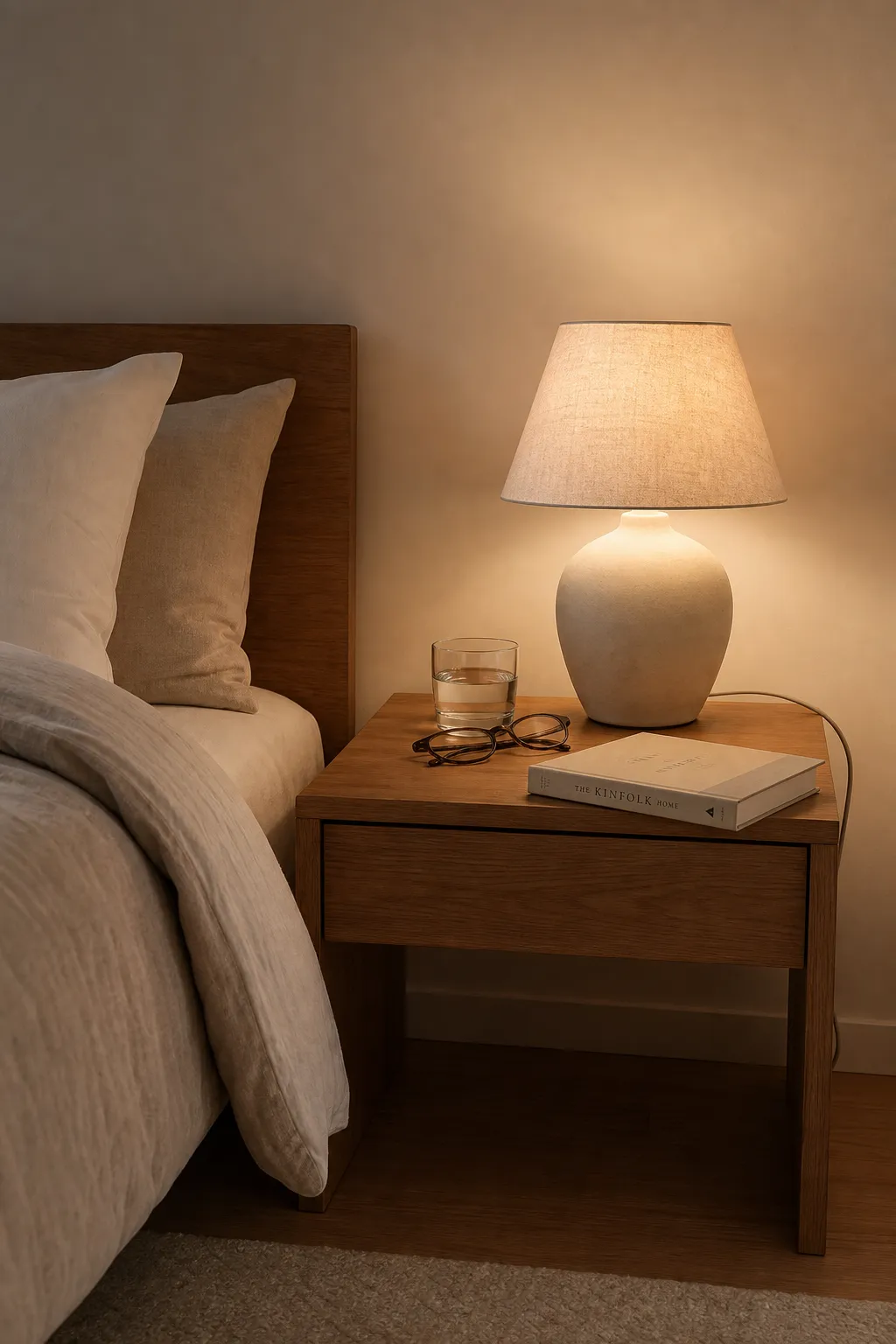
Safer atmosphere choices near bedding
Bedrooms often get styled with candles, incense, lanterns, draped fabric, plug-in fragrance devices, portable heaters, and layered textiles. The calmer choice is not always the most photogenic one. In a room used when people are tired, anything involving flame, heat, cords, or soft materials needs stricter placement.
For candle safety near bedding, keep the rule plain: open flame does not belong near pillows, blankets, curtains, paper, books, clothing, dried arrangements, or a crowded nightstand. It also should not be left burning when someone may fall asleep. Fire-safety guidance commonly emphasizes keeping candles away from things that can burn; in bedroom layout terms, that means separating mood from ignition.
Safer atmosphere options include
- A shaded warm lamp on a stable surface.
- A wall sconce with the cord managed away from the walking path.
- A low-glare night light for orientation.
- Flameless candles where the look matters more than the flame.
- A dimmer or lower-output bulb where the fixture allows it.
- A small lamp placed across the room rather than beside the pillow.
Portable heaters need the same sober thinking. Do not tuck them beside bedding, curtains, clothes, storage baskets, or rugs. Do not run cords where feet cross at night. Follow the appliance instructions and relevant safety guidance for any heating device you use. This page is a bedroom layout check, not an electrical or fire-code guide.
A warm bedroom should feel settled, not overloaded. If the scene requires flame, fragrance, loose fabric, extension cords, and a heater to feel complete, the layout is probably doing too much.
A five-minute evening room reset
A sleep-friendly bedroom layout only helps if the room returns to that layout most nights. Keep the reset short enough to repeat when you are tired.
- Lower the brightest light first. Switch from overhead light to a shaded lamp or dimmer setting.
- Clear the floor route. Move shoes, laundry, bags, and cords away from the bed-to-door or bed-to-bathroom path.
- Set the bedside surface. Leave only the items you will use before morning.
- Turn screens away from the pillow. Charge devices where they are less visible, or place them face down if they must stay nearby.
- Check the window edges. Close curtains or shades fully where light leaks reach the bed.
- Remove flame or heat concerns. Put out candles well before sleep and keep heaters clear according to their instructions.
- Leave one navigation cue if needed. Use a low, indirect light only where it helps movement.
This is not a promise of perfect rest. It is a practical way to stop the bedroom from collecting daytime residue: bright light, visible devices, cluttered surfaces, blocked paths, and atmosphere choices that need too much attention.
When these checks are not enough
Some bedrooms are limited by building conditions: thin walls, street exposure, shared rooms, caregiving needs, shift work, heat loss, poor windows, or safety concerns outside the room. Layout changes can still reduce friction, but they may not solve the whole problem.
Prioritize in this order: clear movement, fire-conscious placement, manageable light, reachable essentials, then visual calm. If you have to choose between a darker room and a clearer walking path, choose the path. If the phone must stay nearby, make it less visually intrusive rather than pretending it can disappear. If a candle creates a beautiful mood but sits near bedding or books, use a lamp or flameless option instead.
The most useful bedroom layout checks are modest: turn the bed away from glare, soften the lamp, improve the window covering, move the phone out of the direct sightline, clear the floor, and give the nightstand fewer jobs. A room does not need to be sparse to feel restful. It needs to ask less of you when the day is ending.
FAQ
What is the first thing to check in a sleep-friendly bedroom layout?
Check the view from the pillow. If direct light, screen glare, a bright alarm, a mirror reflection, or a crowded nightstand is the first thing you notice, start there before buying anything new.
Should a bedroom be completely dark?
Not at the expense of movement. A darker room can feel calmer for many people, but a clear walking path and a low, indirect navigation light may be more practical than total darkness.
Is it better to keep a phone out of the bedroom?
If you can, moving charging away from the bed often makes the room feel less device-centered. If you need the phone nearby, reduce its visual pull: dim it, place it face down, turn it away from the pillow, and keep cords out of the walking path.
Are candles okay in a bedroom?
Avoid open flame near bedding, curtains, books, clothing, paper, or a crowded nightstand, and do not leave candles burning when someone may fall asleep. A shaded lamp or flameless candle is usually easier to place safely.