Small Vanity Storage
Under-Sink Storage Ideas for a Small Bathroom Vanity
The quietest answer to under sink storage small bathroom vanity problems starts before you buy an organizer: empty the cabinet, check for dampness, measure around the P-trap, supply lines, shutoff valves, hinges, and door swing, then choose low-profile storage that keeps daily items reachable and part of the cabinet floor visible.
For most small bathroom vanities, the useful ideas are L-shaped organizers, expandable shelves, shallow pull-out drawers, sliding shelves, small totes, and lightly used stackable bins. The order matters: plan around plumbing first, moisture checks second, daily routine third. If a storage setup hides a leak, blocks a shutoff valve, or puts cleaners and medications within easy reach of a child, it is not serving the room well, even if the doors close neatly.

broader context
Parent topic
Use the broader page when you need more context before this narrower page.
Start With the Cabinet You Actually Have
A small vanity often looks deeper from the outside than it feels once the doors are open. The sink bowl drops into the cabinet, the P-trap cuts through the center, water lines may rise from the wall or floor, and shutoff valves need enough space for a hand to reach them. Door hinges, false drawer fronts, and narrow openings take away more usable room.
Before choosing an under vanity organizer, remove everything and wipe the base. Look for swollen panels, dark staining, damp corners, musty odor, soft flooring, or fresh water marks around the plumbing. Public moisture guidance focuses on finding dampness, leaks, visible wet surfaces, and musty smells rather than covering them with liners or bins. If the base is damp, pause the storage project until the water source is found and the area is dry.
Measure the cabinet in a simple, physical way
- Interior width from side wall to side wall
- Interior depth from the back wall to the closed door
- Usable height below the sink bowl and drain
- Width and depth of the plumbing obstruction zone
- Space needed to reach shutoff valves
- Clearance for hinges, door swing, and any drawer slides
A paper template helps. Lay newspaper or cardboard on the cabinet floor, mark where the pipes and valves sit, then pull it out and use it as a map. This prevents the common mistake of buying a piece that fits the cabinet dimensions but not the plumbing.
Storage Ideas That Work Around Pipes
The best fit is rarely the largest organizer. In a small vanity, useful storage leaves a little air, a little visibility, and enough hand space to clean or turn off water.
L-shaped organizers
Cabinets where the drain pipe occupies the center
Pipe clearance, valve access, door swing
Expandable shelves
Uneven spaces where pipes interrupt one side
Shelf height, plumbing cutouts, item weight
Pull-out drawers
Deep cabinets where back items disappear
Slide clearance, mounting needs, pull-out room
Sliding shelves
Awkward cabinets with daily items in the back
Door opening width, pipe position, installation method
Small totes or caddies
Grouping grooming items, hair items, or backups
Handle height, child access, moisture underneath
Stackable bins
Light extras such as paper goods or spare toiletries
Leak visibility, tipping, overstacking
Mounted organizers
Side-wall storage when the floor is crowded
Drilling, wall thickness, hinge and valve clearance
No-drill organizers
Renters or fragile cabinets
Stability, load, shifting during use
L-shaped organizers can work well because they respect the empty-looking space beside the P-trap. They may hold bottles or grooming items on one side while leaving the pipe zone open. Still, the label “under-sink” does not guarantee fit. Some vanities have off-center plumbing, low sink bowls, or valves placed exactly where a shelf leg wants to stand.
Expandable shelves are more forgiving when pipes interrupt one side. Choose them only if the shelf height clears the drain and the lower level does not cover the whole cabinet base. A shelf that hides the floor makes moisture checks harder.
Pull-out drawers and sliding shelves improve reach in a deep, dark cabinet, but they are not automatically easier. Some need screws, templates, slides, or careful alignment, and they need room to pull forward without hitting the doors. If you rent, avoid drilling unless your agreement allows it. If cabinet walls are thin or moisture-damaged, mounted hardware may not be a good match.
Small totes are often the most flexible choice. One tote for daily grooming, one for cool and unplugged hair tools, and one for backup toiletries can make the cabinet easier to reset. The tote should be small enough to lift out with one hand. If you have to unpack three layers to reach a refill, the system is too dense.
Sort by Routine, Not Bottle Shape
A calm cabinet is not made by lining up every container. It is made by separating what you touch every morning from what you only use occasionally.
Daily items stay near the front
Keep daily-use items near the front: toothbrush refills, skincare, shaving items, hair ties, contact-lens supplies, or the grooming objects that belong to that bathroom. Use a shallow bin or low drawer so the category stays visible. The object earns its place by use and care, not by fitting a perfect grid.
Backups stay light and reachable
Put backups farther back or higher, but keep them light. Extra soap, unopened toothpaste, spare cotton rounds, and paper products can sit in stackable bins if the bins do not reach the sink bowl or cover the whole base. A small front label can help, but clear access matters more than matching containers.
Bathroom cleaning supply storage needs a firmer rule. Keep cleaning products in their original containers with readable labels, close them tightly, and follow label directions for storage. Do not pour cleaners into unmarked jars or decorative bottles for a cleaner look. A tidy cabinet should not make the contents harder to identify.
If children can enter the bathroom, low vanity storage needs another decision. Cleaners, hazardous household products, and medications should not sit loose in open caddies within easy reach. Use controlled access, child-resistant packaging awareness, locks where appropriate, or move those items to a less accessible place. A no-drill organizer on a low cabinet door may be convenient for adults, but it can also bring higher-caution items closer to small hands.
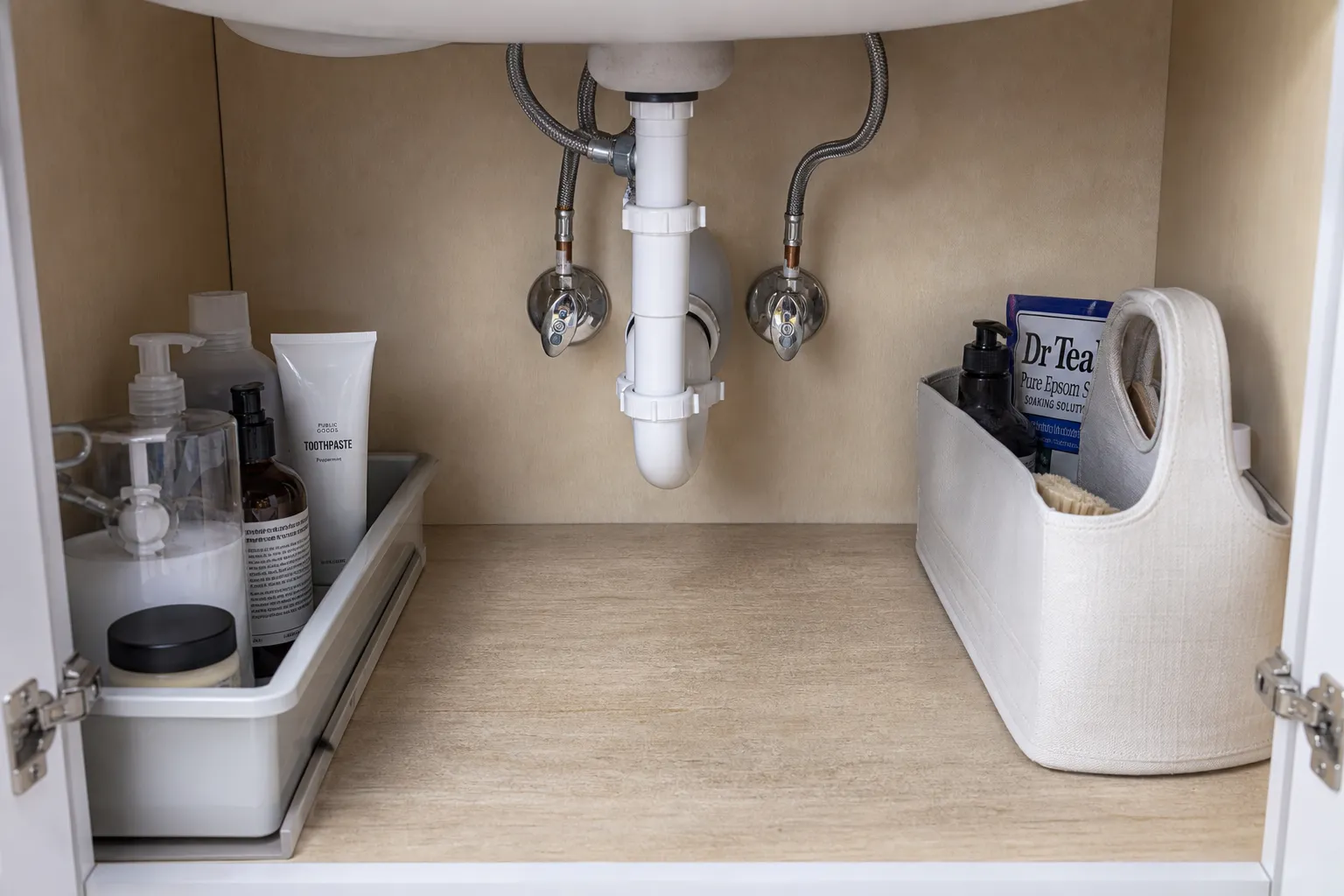
Keep Moisture Checks Built In
Under-sink storage fails quietly when it hides the one surface you need to see. A small leak can run behind a bin, dampen a liner, or sit under a stack until the cabinet base swells. Avoid covering every inch of the floor with opaque storage.
Leave a visible strip of cabinet floor under the drain and near the back wall. If you use a liner, choose one that can be lifted easily, and check beneath it. Liners may catch drips, but they can also conceal moisture if no one looks under them.
Do not crowd the P-trap or shutoff valves. You should be able to place a hand around each valve without unloading the whole cabinet. Bathroom planning guidance often emphasizes access and usable clear space around fixtures; inside the vanity, the same practical thinking applies at a smaller scale.
A monthly check is enough for many homes: open the doors, look at the cabinet floor, touch around the pipes with a dry tissue, and notice any new odor or swelling. After plumbing work, a clogged sink, or a season of heavy bathroom use, check sooner. Moisture awareness is a habit, not a product feature.
When an Organizer Is the Wrong Answer
Sometimes the better under-sink storage idea is to remove items, not add another layer. A vanity is a poor place for anything that should stay dry, cool, or easy to identify if the cabinet is damp, crowded, or shared by many people.
Avoid storing bulky appliances under the sink if cords tangle with bottles or if the tool may be put away warm. Keep electrical items dry, unplugged, and away from areas where water could collect. If the only available spot is directly under the P-trap, choose another location.
Be careful with tension rods for spray bottles. The idea is attractive because it lifts bottles off the floor, but it depends on a secure fit, light loads, and a cabinet layout that does not make higher-caution products easier to reach. If the rod slips or the bottles are heavy, the setup becomes less reliable.
Do not copy kitchen under-sink examples without adjusting them. Kitchen cabinets are often wider, deeper, and shaped around different plumbing or disposal equipment. A small bathroom vanity usually holds grooming supplies, cleaners, hair items, and backups in tighter contact. The storage plan should fit that smaller daily rhythm.
Also be wary of capacity claims. Commercial organizer language often promises space-saving, adjustable height, or pipe accommodation, but strong public sources are more useful for planning, moisture, and household-safety boundaries than for proving that one organizer type performs best over time. No single product style belongs in every vanity.
A Simple Layout for a Small Vanity
For a balanced cabinet, divide the space into three zones.
Front zone for daily grooming
Use the front-left or front-right area for daily grooming. A shallow pull-out drawer, small tote, or open bin works well here because it can move in and out without disturbing the plumbing zone.
Side zone for light backups
Use the side space around the pipe for backups. This is where an L-shaped organizer, expandable shelf, or low stackable bin may help, as long as the pipe clearance is real and the shutoff valves remain reachable.
Controlled place for higher-caution items
Use a separate, controlled place for cleaners and higher-caution items. If they stay under the vanity, keep them in original containers with labels visible, avoid open child-height placement, and do not mix them loosely with skincare or hair accessories. If the household includes children or frequent young visitors, moving those items elsewhere may be the better choice.
The finished cabinet should look slightly unfinished: a little open floor, a little air around the pipes, and no tower of bins pressed to the sink bowl. That restraint is what makes the storage usable.
Quick Check Before You Buy
Before buying an under vanity organizer, ask:
- •Can it fit around the P-trap, supply lines, and shutoff valves?
- •Does it require drilling, and is drilling acceptable for this cabinet?
- •Can the drawer or shelf slide out fully without hitting the doors?
- •Will it leave part of the cabinet floor visible for moisture checks?
- •Are cleaners still in original containers with readable labels?
- •If children may enter the bathroom, are higher-caution items controlled or moved?
- •Can daily items be reached without removing several bins?
If the answer is no to more than one of these, choose a smaller organizer or remove more items first.
Under-sink storage in a small bathroom vanity is less about filling every gap and more about respecting the hidden parts of the room: pipes, valves, damp surfaces, and the few objects used every day. Measure the obstruction, keep the floor partly visible, group items by routine, and let the cabinet stay easy to open, inspect, and reset.