Small bathroom material decision
Can You Use Bamboo or Wood Storage in a Small Bathroom
Yes, you can use bamboo or wood storage in a small bathroom, as long as the room dries well and the piece is kept out of regular splash. The decision is less about whether natural material belongs in a bathroom and more about everyday conditions: where water lands, how long surfaces stay damp, whether the finish is intact, and whether air can move around the unit.
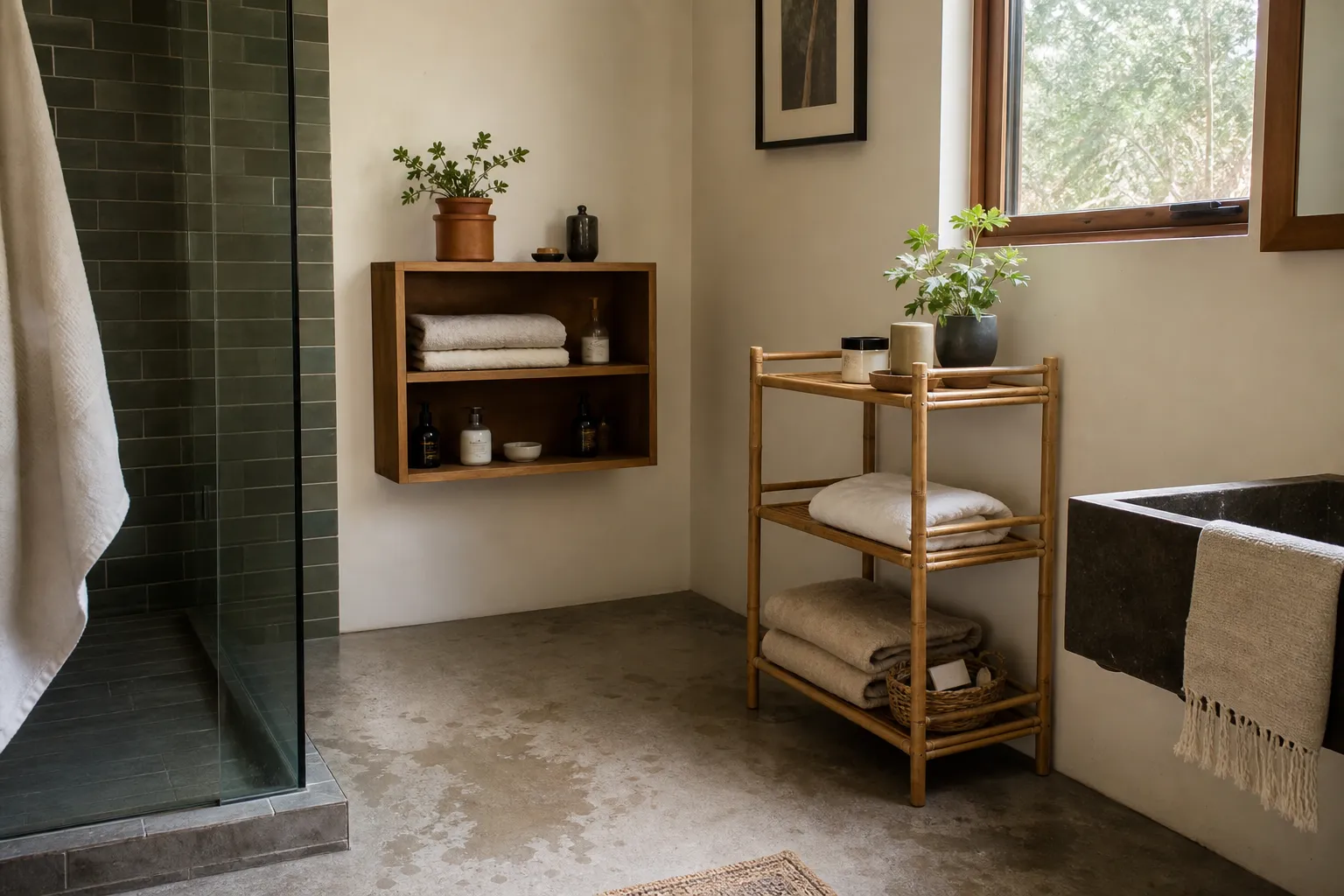
For wood storage in small bathroom layouts, a sealed wall shelf, raised cabinet, open bamboo rack, or narrow over-toilet unit can work. Unfinished wood, damaged veneer, storage sitting on wet tile, or a cabinet pressed against a damp wall is a poor match.
The calm look of bamboo and wood is real. So are the limits.
broader context
Broader context
Use the broader page when you need more context before this narrower page.
Start with the room, not the label
A small bathroom can be friendly to bamboo or wood if it behaves like a room that dries after use. It becomes a problem when it behaves like a damp box.
Before buying bamboo bathroom storage or moving a wooden cabinet into the room, check:
- Where water actually lands. Look at the floor near the shower, tub, sink, and toilet after normal use. If the same patch is wet every day, keep wood and bamboo away from it.
- How quickly the room dries. A mirror that stays fogged, towels that remain damp for hours, or water sitting along tile edges can signal a room that is hard on natural materials.
- Whether ventilation is used. A fan or window only helps if it is part of the daily routine. Moisture-control guidance consistently points to drying, ventilation, and leak control as basic household maintenance.
- Whether leaks repeat. A small drip under a vanity or a shower door that leaks onto the same floor area matters more than a product’s bathroom label.
- Whether you can clean around the piece. In a tight room, storage that traps dampness behind it may create more work than it solves.
Wood is moisture-responsive: it can absorb and release moisture, and changes in moisture can contribute to swelling, shrinking, warping, or joint movement. That does not mean every wood shelf will fail in a bathroom. It means the piece needs the right placement, finish, airflow, and occasional checking.
When bamboo or wood bathroom storage makes sense
Bamboo or wood storage is most reasonable when it is lightly exposed, easy to inspect, and not being used to compensate for a moisture problem.
Good candidates include:
- A sealed wood wall shelf away from shower spray.
- A bamboo shelf in a dry bathroom corner with airflow.
- A narrow open tower on raised feet.
- An over-toilet wood storage unit that stays stable and does not crowd the fixture.
- A small stool, tray, or towel stand that can be moved and dried.
- A sealed wood bathroom cabinet with protected edges, feet, and back panel.
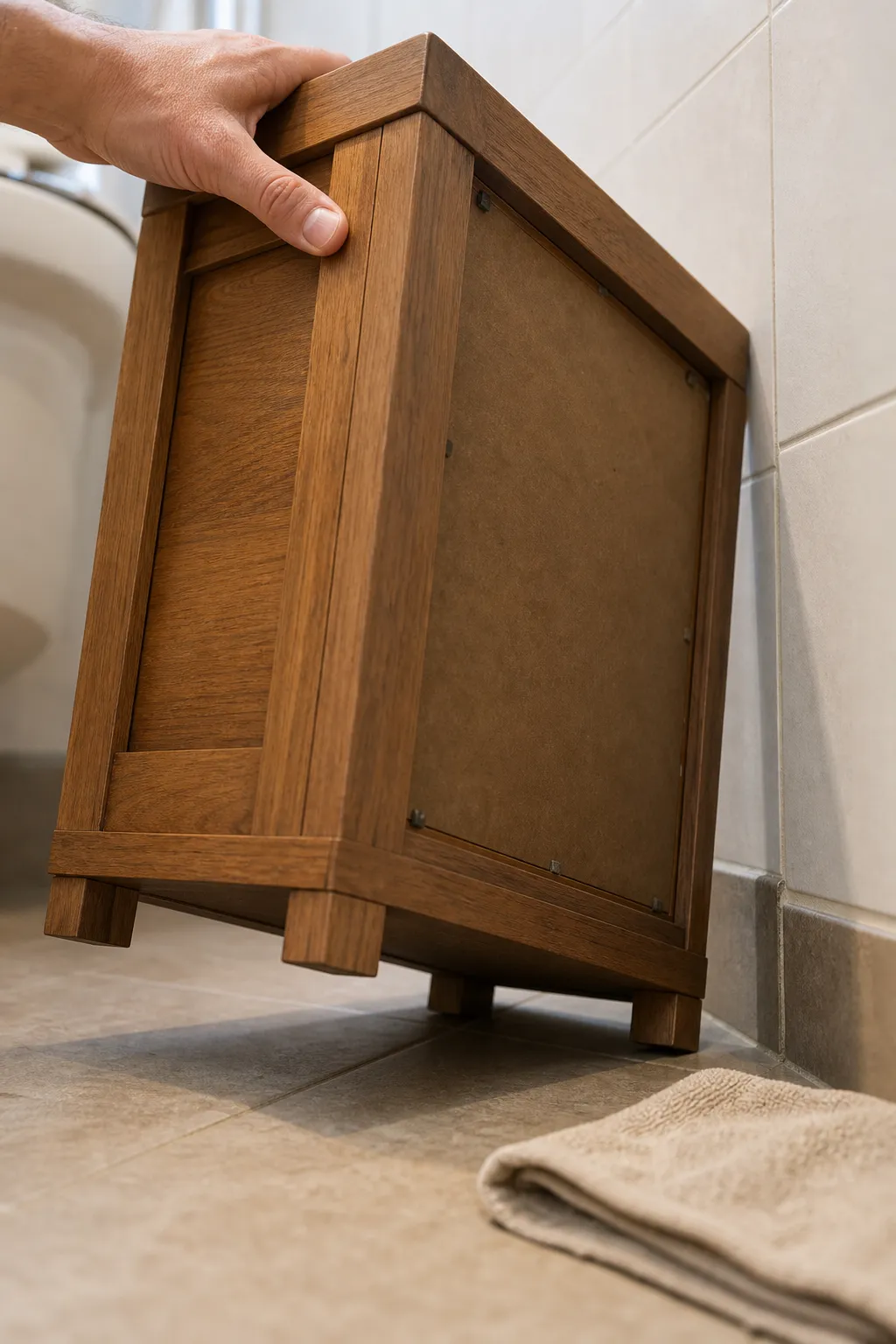
The better pieces usually have the same traits: finished visible and hidden surfaces, sealed shelf edges, raised feet, a back that is not raw exposed fiberboard, and enough space around them to wipe and inspect.
In a very small bathroom, open storage often performs better than a heavy closed cabinet. Air can move through it, dampness is easier to see, and the piece is easier to pull out. A slim bamboo rack for rolled towels may be more forgiving than a deep cabinet with a closed base sitting directly on tile. That is not because bamboo is automatically better; it is because the form is lighter and easier to dry around.
Where wood and bamboo are usually a bad idea
Some bathroom locations ask too much of natural material.
Avoid placing bamboo or wood storage:
- Inside the shower area, unless the product is specifically designed for that exposure and you accept regular care.
- Beside a tub or shower where daily splash is unavoidable.
- Under a sink with known leaks or pipe condensation.
- On a floor that stays wet after bathing.
- Tight against an exterior wall or damp wall with no air gap.
- Behind a door where it blocks airflow and cleaning.
- In a bathroom with no fan, no window, and slow drying.
- Where it narrows movement or blocks fixture access.
A wood cabinet near shower spray is not the same decision as a sealed shelf above a dry towel rail. A bamboo rack in a ventilated powder room is not the same as a bamboo cabinet in a windowless family bathroom where the floor stays wet every morning.
If the room has recurring leaks, standing water, or surfaces that stay damp for long periods, fix that condition before adding natural-material storage. A new cabinet should not hide a moisture problem.
Bamboo is not automatically bathroom-proof
A common misunderstanding is that bamboo is naturally suited to any bathroom. It is often sold with language that suggests freshness, spa style, or easy wet-room use. The more practical view is that bamboo products vary widely by processing, adhesive, finish, construction, and exposure.
Research on engineered bamboo and treated bamboo shows that humidity, treatment, and material structure all matter. That background is useful, but it does not mean an ordinary retail bamboo shelf is waterproof or maintenance-free.
Read bamboo as a material clue, not a guarantee.
For both bamboo and wood, check:
- Finish coverage: Are the underside, back, shelf edges, and feet finished, or only the front?
- Edges and joints: Raw edges, screw holes, and seams are vulnerable points.
- Back panel quality: Thin unfinished backs may fail before the visible frame.
- Base design: Raised feet are usually better than a flat bottom on tile.
- Veneer or laminate condition: Lifted edges give moisture an entry point.
- Existing odor or softness: Avoid pieces that already smell stale, feel soft at the base, or show dark staining.
- Care instructions: If the maker says to keep the item dry, take that seriously in a bathroom.
Unfinished wood in bathroom storage is the weakest choice. It may look quiet and natural at first, but raw surfaces and exposed end grain leave little margin for splashes, steam, and cleaning water.
Small-bathroom layout checks
Even when the material is acceptable, the layout can make the piece fail. Storage that blocks movement, prevents cleaning, or traps damp air can make a small room harder to live with.
Use these checks before placing it:
Door swing
The door should open without scraping the unit or forcing it into a damp corner.
Toilet access
Over-toilet or beside-toilet storage should not crowd normal use or cleaning.
Vanity access
Drawers and cabinet doors should open without hitting the new piece.
Shower exit
Avoid the place where wet feet land every day.
Cleaning reach
You should be able to wipe behind, below, and around the piece.
Air gap
Leave space behind and below so surfaces can dry.
Visual weight
A tall dark cabinet may add storage but make the room feel tighter. Open or raised pieces usually feel lighter.
Bathroom planning guidance is useful as a reminder that clearance and access matter. It is not a substitute for local requirements if you are renovating, but the practical point is simple: storage is not helpful if it makes the bathroom harder to use.
Be more cautious with built-in wood storage than with removable pieces. Built-ins are harder to inspect, harder to dry behind, and harder to replace if moisture reaches hidden edges. In a compact, humid room, a removable shelf, wall-mounted unit, or raised cabinet is often the more forgiving first step.
Care that keeps the decision realistic
If you choose bamboo or wood, the care routine should be simple enough to keep doing.
After normal use
- Run the fan or open the window if that is how the room dries.
- Wipe standing water near the storage piece.
- Keep wet towels from pressing against wood or bamboo.
- Stop bottles from leaking onto shelf surfaces.
- Avoid storing damp cloths inside a closed wooden cabinet.
Every few weeks
Check the quiet places:
- Feet and floor contact points.
- Undersides of shelves.
- The back panel.
- Joints and corners.
- Screw holes.
- Shelf edges.
- The top surface near bottles or trays.
- Areas closest to the sink, shower, or toilet.
Watch for finish lifting, swelling, dark marks, soft spots, persistent dampness, or a stale odor. These signs do not always mean the piece is ruined, but they do mean the room or placement may be asking too much of it. Move the unit, improve drying, reseal if appropriate, or replace it with a more moisture-tolerant material.
For bathroom cabinet finish care, avoid harsh scrubbing that breaks down the protective surface. Clean gently, dry afterward, and follow the product’s care instructions. A sealed surface only helps while the seal remains continuous.
The practical answer
Use bamboo or wood storage in a small bathroom when it stays out of direct spray, sits off wet floors, has a sound finish, allows air movement, and does not block cleaning or access.
Avoid it when the bathroom is poorly ventilated, slow to dry, leak-prone, or so tight that the unit has to be wedged against damp surfaces.
Natural texture can soften a small bathroom beautifully. Bamboo can feel light and restrained; wood can warm a room that otherwise feels hard and tiled. The lasting decision, though, comes down to ordinary details: splash pattern, drying time, finish quality, air gap, and whether you will actually inspect the piece over time.
If those details work, bamboo or wood storage can be a calm and practical choice. If they do not, choose a more moisture-resistant bathroom storage material first, and bring in natural texture through smaller movable objects that can dry easily.