Entryway Storage for Coats, Bags, and Shoes in One Small Area
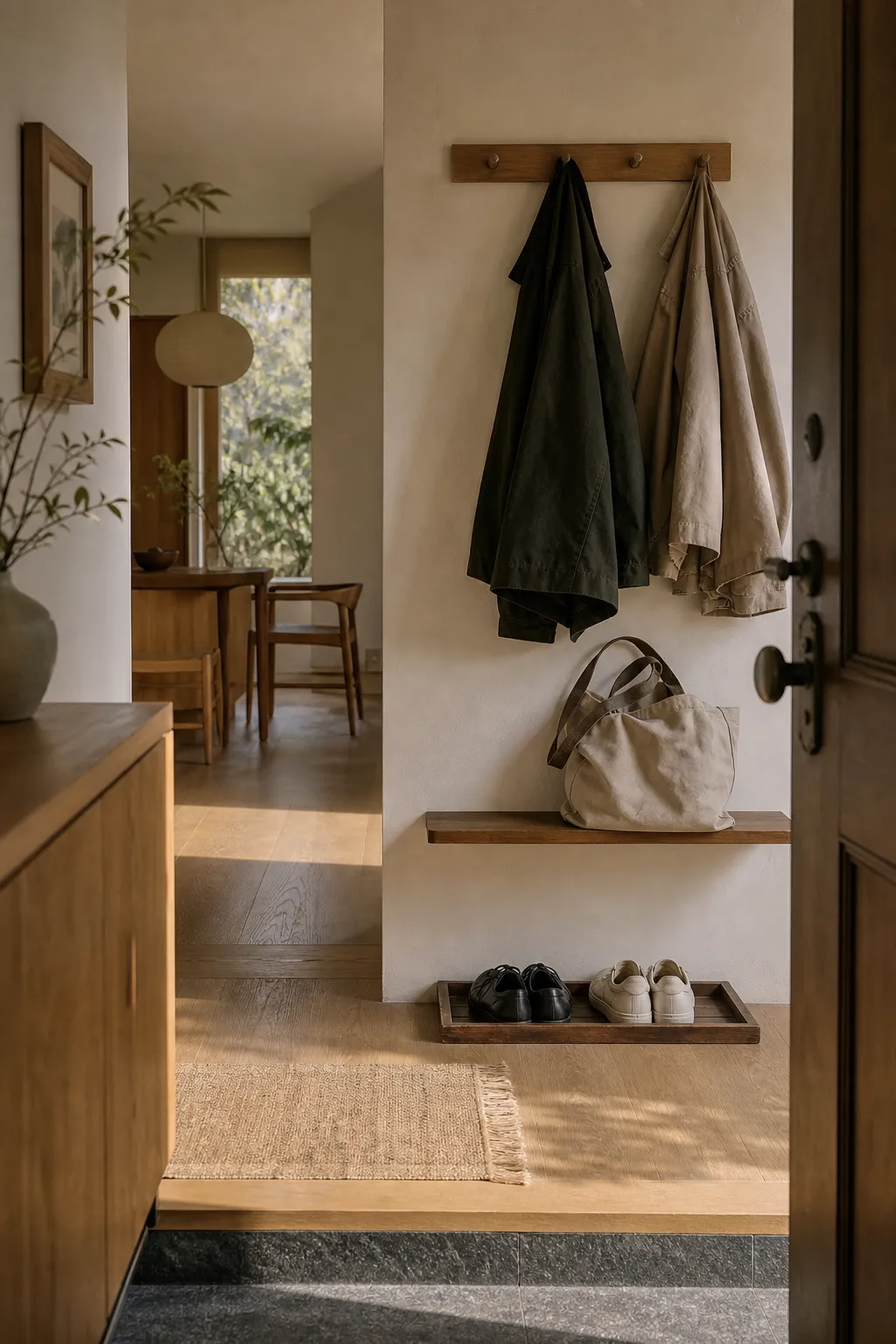
The simplest way to create entryway storage for coats bags and shoes is to stop treating the entry as one general drop zone. Count what actually comes through the door, then give each category a narrow, reachable place: hooks or a short rail for coats, a shelf or basket for bags, and a tray, rack, or cubby for shoes. Keep the walking path clear before adding more storage.
In a small entry, wall height often matters more than floor area. Still, the setup has to match real reach, coat length, wet footwear, and the daily habits of the people using that door.
A calm entry is not made by hiding everything. It is made by reducing decisions at the moment of arrival.
broader context
Parent topic
Use the broader page when you need more context before this narrower page.
Start by Counting What Really Lands at the Door
Before buying a bench, hall tree, cabinet, or shoe rack, count the real load of the entry for one ordinary week. This is the step many small entryway storage plans skip.
Look for:
- everyday coats used in the current season
- one or two bags that actually leave the house often
- shoes worn daily, not every pair owned
- keys, sunglasses, umbrellas, dog leads, or reusable shopping bags
- wet items after rain, snow, gardening, commuting, or school runs
- guest coats or shoes, if visitors regularly use this door
Be strict. A small entrance usually cannot hold a full wardrobe, a mudroom, and a family shoe wall at once. If the door area is narrow, the entry should hold what is needed for leaving and returning. Seasonal overflow belongs somewhere else.
What must be reachable within ten seconds of entering or leaving?
Those items deserve the entryway. Everything else can live in a closet, bedroom, utility area, or secondary storage spot.
For a small apartment
- two daily jackets on wall hooks
- one work bag on a shelf
- two pairs of shoes on a tray
- a small dish for keys
For a family side door
- lower hooks for children’s coats
- a washable shoe tray
- one basket for school bags
- a separate place for damp outerwear before it goes into closed storage
Choose the furniture after this count, not before it.
Give Coats, Bags, and Shoes Separate Homes
The core of coat and shoe storage in a tight entry is category zoning. Each item type needs a visible home, even if that home is very small. When coats, bags, and shoes share one bench surface or one open corner, the pile usually returns.
Coats: hooks, pegs, or a short rail
Hooks are often more forgiving than hangers in a small entry. They are quick to use and do not need the depth of a full closet. They work well for daily coats, scarves, hats, and light outer layers.
A short rail with hangers can look tidier, but it needs more width, more depth, and enough clearance for longer garments.
Use hooks when:
- people drop coats quickly
- the entry is narrow
- several users need separate spots
- children or guests need an obvious place
Use hangers or a short rail when:
- coats need more shape support
- the wall has enough depth
- the entry has a recess or closet niche
- you want a more enclosed, wardrobe-like look
Research on hanging storage and operating height points to a practical rule: do not place coat storage only where it looks balanced on the wall. Put it where real users can reach it without awkward lifting, and allow enough drop for the longest coat in active use. If children, shorter adults, or older household members use the entry, reachable placement matters more than perfect symmetry.
Bags: a landing zone, not a loose surface
Bags need a defined landing zone because they often carry clean items, electronics, papers, or food. They should not sit directly on wet shoes or muddy mats.
Good bag landing options include:
- a shallow wall shelf
- one open cubby
- a sturdy basket on a bench
- a low hook for a light tote
- a small side table if the entry has enough width
Avoid making the bag area too deep. A large basket can become a mixed bin for mail, gloves, returns, tools, and forgotten objects. In a small entry, one bag place should be large enough for the daily bag, but not so generous that it becomes general storage.
If several people use the door, one basket or cubby per person can work better than one shared container. The point is not visual perfection. The point is that each bag has a predictable place.
Shoes: contain the spread first
Shoes cause the most visible disorder because they move outward into the walking path. Before choosing between a rack, cabinet, cubby, or bench, decide how many daily pairs truly belong at the door.
For many small entries, the first layer of shoe control is a tray or mat. It gives wet or dirty footwear a boundary. A slim rack adds vertical stacking. A closed cabinet hides visual clutter, but damp shoes should not be shut away immediately if they are still wet.
Tray or mat
Works well when: Shoes are wet, muddy, or used daily.
Watch for: Too many pairs can still look messy.
Open rack
Works well when: You need quick access and vertical use.
Watch for: Shoes remain visible.
Cubbies
Works well when: Each person needs a clear slot.
Watch for: Boots may not fit easily.
Closed cabinet
Works well when: You want a calmer view.
Watch for: Damp shoes need drying time first.
Bench with shoe space
Works well when: You need sitting and storage together.
Watch for: It uses more floor depth.
For wet footwear, keep the logic simple: contain first, let damp items dry in the open, then return them to the daily shoe zone or longer-term storage. Do not expect a cabinet to solve moisture or odor issues unless its maker gives clear use instructions and limitations.
Use Wall Height Without Blocking the Route
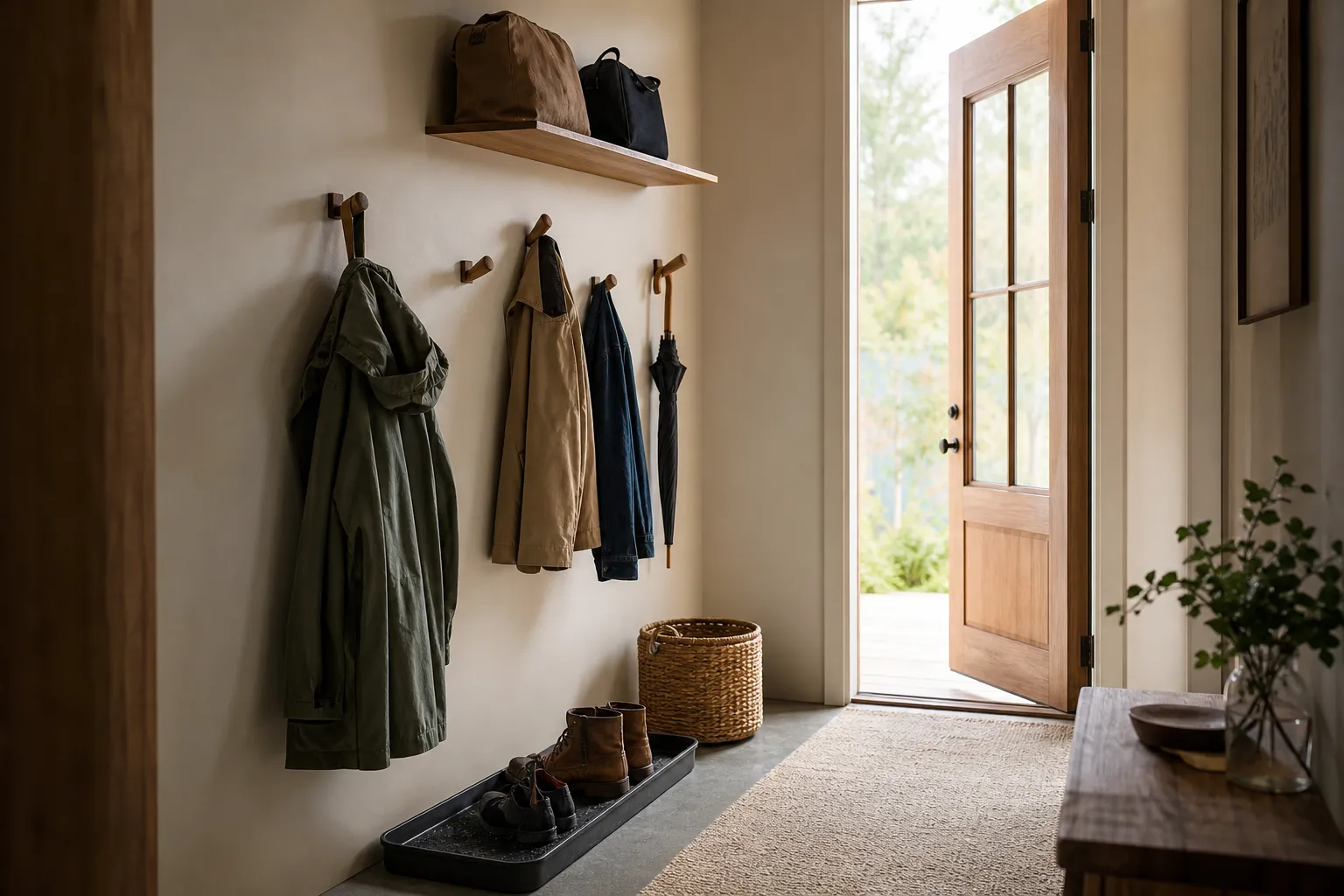
Small entryway storage often improves when the wall does more work than the floor. Compact-home research commonly describes vertical storage as one way small spaces carry more function. In an entry, that might mean hooks above a shoe tray, a narrow shelf above hooks, or a tall but shallow unit along one wall.
Use this order:
- Preserve the route through the door.
- Keep shoes from spreading into that route.
- Put coats at a reachable height.
- Place bags where they do not collide with wet footwear.
- Add upper storage only for lighter or less-used items.
A narrow entry usually cannot afford bulky furniture facing the door. A bench may be pleasant, but if it blocks the door swing, catches bags, or forces people to turn sideways, it is too large for the space. In that case, vertical storage usually works better than bench storage.
Bench storage works when:
- the entry has enough floor depth
- someone needs a place to sit while changing shoes
- the bench has open space below for daily footwear
- bags can sit without covering the shoe area
Vertical storage works when:
- the entry is a hallway or narrow recess
- floor space is already tight
- coats and bags are the main problem
- shoes can be contained below
For tall units, shelves, wall hooks, or improvised fixtures, stay practical: follow product instructions, respect stated weight limits, choose hardware suitable for the wall type, and consider tip-over restraint for tall furniture. The sources available here support general ideas about reach, compact layout, and cautious fixture planning. They do not support universal installation measurements or exact load advice.
Open or Closed Storage: Choose by Use
Open storage is easier to use. Closed storage is quieter to look at. Neither is automatically better.
Open shelves, hooks, and racks are useful for daily items because they reduce friction. A coat can go straight onto a hook. Shoes can go directly onto a tray. A bag can land on a shelf without opening a door. This is why open storage often works well in the first few feet of an entry.
The tradeoff is visual clutter. If the household has many coat colors, school bags, sports gear, and wet shoes, open storage can look busy even when it is working.
Closed cabinets, doors, and lidded baskets calm the view, but they add steps. If the storage is difficult to open, too deep, or too full, items may return to the floor. Closed storage is better for less-used shoes, seasonal accessories, spare bags, or items that do not need drying time.
A balanced small-entry setup might be:
- open hooks for two current coats
- one open shelf for the daily bag
- a shoe tray for wet footwear
- a closed cabinet nearby for extra pairs or seasonal gear
This avoids the common mistake of trying to hide everything. In a real entry, the most-used items need fast placement. Less-used items can be stored more quietly.
Baskets versus trays
Baskets and trays solve different problems.
A tray is best when the item is wet, dirty, or likely to spread. Shoes, umbrellas, and garden clogs often need a tray or washable mat.
A basket is best when the item is dry, flexible, and easy to lift out. Bags, scarves, hats, gloves, and reusable shopping totes can work in baskets, as long as the basket does not become a deep unsorted bin.
For bags and shoes storage in one small area, avoid putting clean bags in the same low basket as outdoor shoes. Even when space is tight, a simple vertical separation helps: shoes below, bags above.
Keep the Daily Reset Short
Entryway organization ideas fail when they depend on a long cleanup routine. The best small entry system asks very little at the busiest moment of the day.
Use a reset that takes less than a minute:
- shoes back onto the tray or rack
- coats on hooks, not on the bench
- bags on the shelf or in their basket
- wet items left in the open until dry enough for storage
- extra items moved out of the entry each evening or every few days
This routine should be visible. If the hook, tray, and bag place are obvious, the reset does not require much thought.
Research on spatial organization supports a modest, useful idea: objects are easier to act on when they are placed near the related action. In an entry, that means shoes where shoes come off, coats where coats are removed, and bags where hands naturally set them down. This does not guarantee that the area will stay orderly. It simply gives the household a better chance of repeating the same small action.
A calm-looking entry also needs seasonal editing. In winter, the coat zone may need fewer decorative items and more hooks. In summer, the shoe area may shrink while the bag or hat area grows. If the entry feels crowded, the first fix is usually removal, not another container.
Where Small Entryway Storage Usually Goes Wrong
The most common mistake is buying one large “entryway solution” before studying the room. A hall tree, storage bench, or cabinet can be useful, but it can also turn a narrow threshold into a blockage.
Watch for these problems:
- the furniture is deeper than the walking path can tolerate
- hooks are too high for daily users
- long coats hit the shoe rack below
- bags have no clean landing spot
- wet shoes are pushed into closed storage too quickly
- the bench becomes a pile surface instead of a seat
- seasonal coats crowd out daily coats
- the entry is asked to store every shoe in the home
Another misunderstanding is that a minimalist look will organize the household by itself. Visual restraint can make the entry feel quieter, but storage still depends on count, placement, reach, and maintenance. A simple wood shelf, a row of hooks, and a tray can work better than a beautiful cabinet if they match the household’s real arrivals and departures.
A Small Entryway Check Before You Commit
Use this quick check before settling on a layout:
- Can the door open enough for normal use?
- Can someone pass through without stepping around shoes?
- Can each regular user reach their coat place?
- Do long coats clear the shoe storage below?
- Is there one clean bag landing zone?
- Are wet or muddy shoes contained away from bags?
- Are daily items visible or easy to reach?
- Are rarely used items somewhere else?
- Are wall-mounted or tall pieces installed according to their instructions?
If the answer is mostly yes, the entry does not need to be larger. It needs to stay edited. One small area can hold coats, bags, and shoes when each category has a defined home, the floor route remains open, and the system is simple enough to repeat on an ordinary day.