Room Setup
Small Sitting Corner Ideas for One Chair and a Side Table
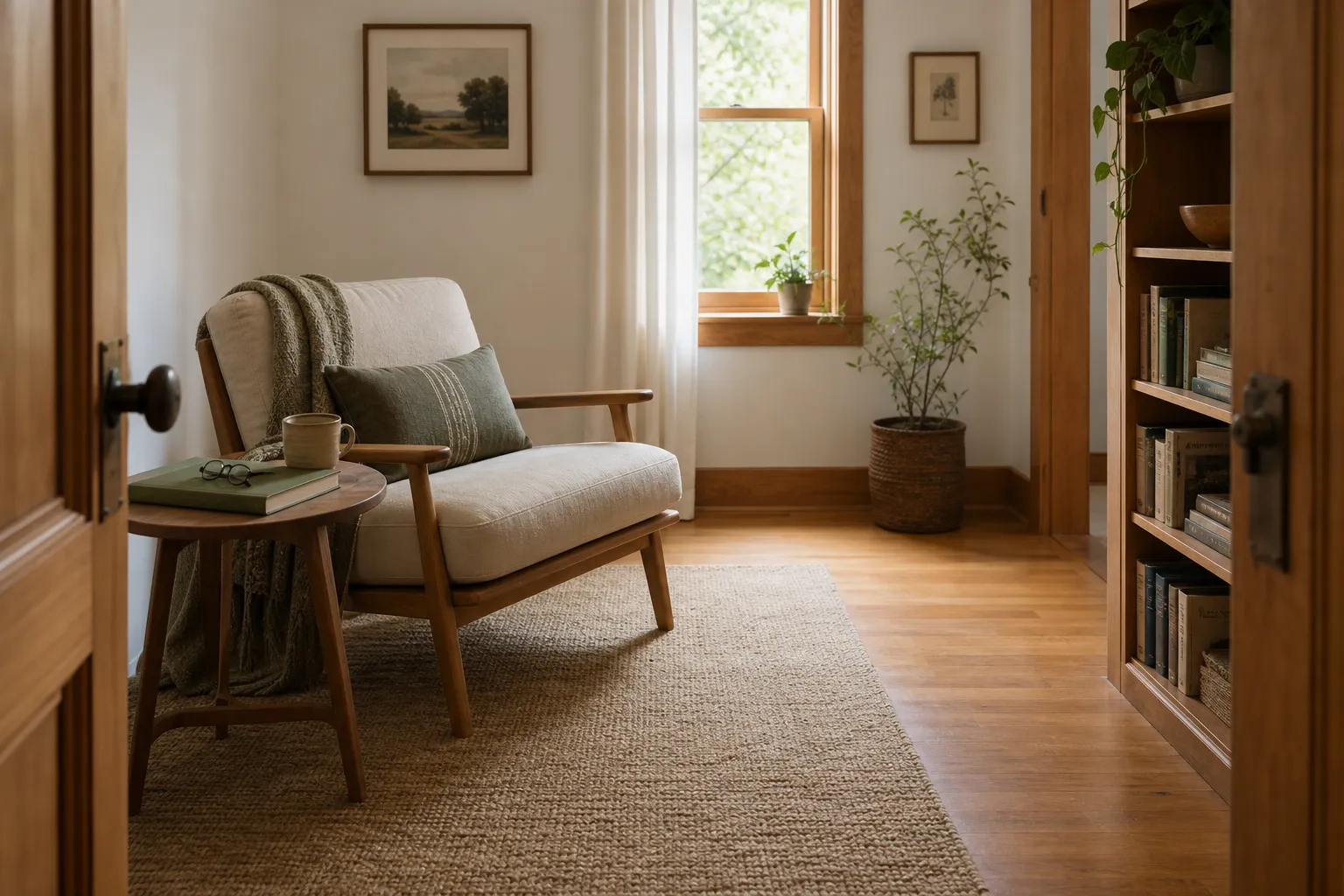
A small sitting corner with one chair works best when it is treated as a usable place, not a display scene. Put the chair where it does not interrupt the room’s main walking route, then place the side table close enough for a cup, book, glasses, or phone to be reached without twisting or standing.
The strongest setup is usually simple: one comfortable chair, one stable table, one useful light source if the corner is dim, and only a few objects that can be cleaned, moved, and used every day.
broader context
Broader context
Use the broader page when you need more context before this narrower page.
Start With What the Corner Is For
Before choosing a chair style or table shape, decide what this small sitting corner needs to do. A reading perch, a tea pause, a place to put on socks, and a quiet chair corner near a window all ask for slightly different choices.
For reading, the table needs enough surface for a book and drink, and the light should fall where the person sits. For a tea or coffee pause, a stable surface matters more than decorative height. For an entry-adjacent chair, the setup should not invite bags and coats so quickly that the chair stops being a seat. For a bedroom corner, softer textiles may fit the room, but only if they do not crowd the floor or make cleaning harder.
Four Plain Checks
- You can sit down and stand up without moving the table.
- The side table is reachable from the chair.
- The chair does not block the room’s natural walking route.
- The corner still looks settled when viewed from the doorway.
That last check is easy to miss. A corner can look balanced up close but heavy from across the room. Step back to the entrance and look at the outline: chair back, table height, lamp shape, wall art, plant, basket, or floor textile. If every item has a strong silhouette, the corner may feel crowded even when it contains only a few pieces.
Place the Chair First
In a small corner chair setup, the chair is the anchor. The table should support it rather than compete with it. Angle the chair slightly into the room if the corner feels boxed in, or place it more squarely if the room already has strong lines and you want the seat to look settled.
The best placement depends on what surrounds the corner:
Living Room
Keep the chair connected to the seating area without pushing it into the main path.
Bedroom
Leave room to open drawers, closet doors, or curtains without shifting the chair.
Beside a Window
Check curtain movement and direct sun before placing delicate textiles or paper objects.
Near a Doorway
Make sure the chair back does not create a physical or visual stop.
The side table should sit on the side where your hand naturally reaches when seated. This matters more than symmetry. If the table looks better on the left but the chair is mostly used by someone who reaches right, the corner may look composed and still feel awkward. Sit down, rest your arm, and notice where your hand wants to land. That is the most honest test of side table reach.
Table height is practical, but a fixed number is less useful than a live-room check. While seated, you should not need a high lift for a cup or a deep lean for a book. If you do, move the table closer, choose a different table, or use a tray only if it stays stable.
Round tables can soften a tight corner and reduce hard edges in a narrow passage. Square or rectangular tables can align neatly with a wall, bed, or sofa. A small stool can work if the top is flat and steady enough for the objects you actually use. Avoid choosing a tiny table only because the room is small; if it cannot hold daily items, clutter will spread to the floor, windowsill, or chair seat.
Make the Light Easy to Use
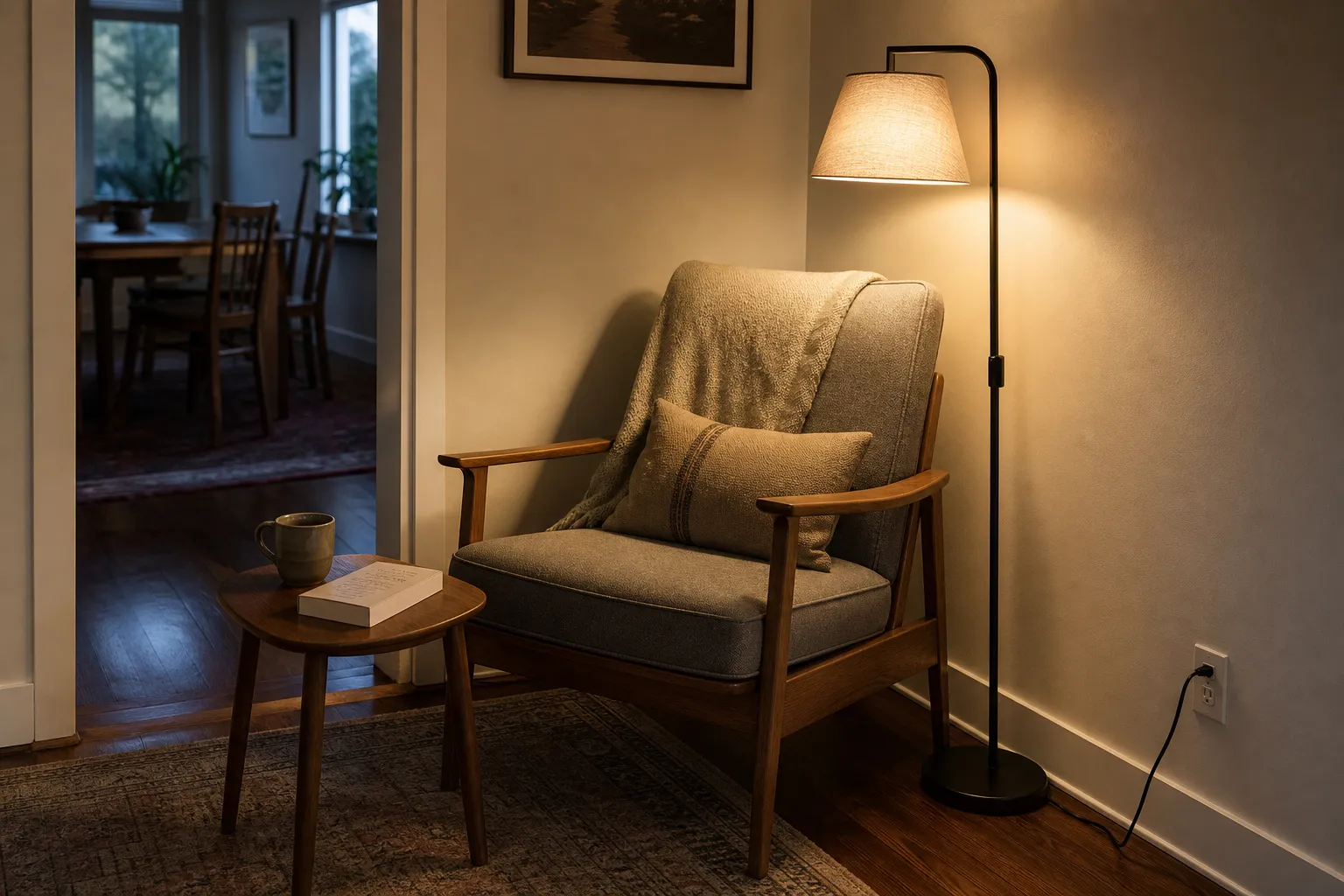
A small sitting corner often fails because the light is an afterthought. If the corner is used in the evening, test it at the time of day you will actually sit there. Overhead light may be enough for conversation but not for reading. A table lamp can help, but only if the table can hold it without losing all working surface.
Lamp access is partly about the switch. If you need to reach behind the chair, crawl near the wall, or move objects to turn the light on, the setup will feel inconvenient. A floor lamp can preserve side-table space, but its base and cord still need a sensible route. Keep cords out of the walking line where possible, and avoid routes that catch feet, chair legs, or cleaning tools.
If you use candles or incense as part of your home routine, keep the setup practical. Think about flame, heat, ash, ventilation, nearby fabrics, pets, open windows, and whether the surface can be cleaned. A small crowded table is not the right place for objects that need attention. A quiet-looking corner usually comes from less friction, not more atmosphere.
Natural light also changes the decision. A corner that looks gentle in morning light may glare in late afternoon. A fabric chair near a bright window may also age differently depending on material and exposure. Since material care depends on the specific product, observe your own room: check where the sun lands, what gets warm, and which objects you would be comfortable moving seasonally.
Keep the Visual Weight Low
Visual weight is the sense that one part of the room feels heavier than another. In a small sitting corner, heaviness can come from a bulky chair, a dark table, a tall lamp, a large plant, stacked books, a thick rug, or too many small objects gathered together.
You do not need the corner to be empty. You need it to have a clear order. Let the chair be the largest form, the side table be the helper, and the smaller objects be edited around actual use.
A Restrained Corner Might Include
- A chair with a visible leg line so the floor still shows.
- A side table with one open surface rather than several crowded shelves.
- A lamp, if the corner needs task light.
- One cushion or folded throw, if it stays tidy.
- One plant or crafted object, only if it does not interfere with reach.
The entrance view is the best edit point. Stand where you first see the room. If the corner pulls the eye too sharply, remove or lower one object. If it disappears completely, add contrast through texture rather than more pieces: a woven seat, ceramic cup, wooden table, paper shade, or quiet textile can be enough. Cultural or regional design references can give context, but they should not be used as promises about how the corner will affect someone.
Color can also reduce crowding. Repeated tones often feel less busy than many competing accents. A pale wall, warm wood, linen, bamboo, rattan, matte ceramic, or dark metal can all work, but the mix should be easy to maintain. Glossy surfaces show marks differently from matte ones; open weave can gather dust; pale textiles may need more frequent care. Choose materials you are willing to clean in the place where they will live.
Treat Clutter Control as Design
A sitting corner becomes cluttered when it has no rule for temporary objects. One chair invites a book. A side table invites a cup. A floor space invites a basket. Soon the corner becomes storage, not seating.
The solution is not to remove all personal items. It is to give the corner a narrow purpose. Decide what may stay there when no one is sitting: perhaps one current book, one small tray, one lamp, one cup when in use, and one folded textile. Everything else returns elsewhere at the end of the day.
A tray can help if it gathers small objects without becoming a junk zone. It should not cover the whole side table. Leave open space for the next use. If the table has a lower shelf, use it sparingly; hidden clutter still adds visual weight when it spills over the edge.
Baskets are useful only when they have a defined role. A basket for a folded throw can work. A basket for unsorted mail, cables, old magazines, and undecided objects will weaken the corner quickly. In a compact room, storage that looks casual can still behave like clutter.
Seasonal editing helps. In warmer months, the corner may need less fabric and more open surface. In cooler months, a throw may be useful, but it should have a place when not in use. The goal is not a seasonal theme; it is a corner that remains easy to sit in as daily habits change.
What Changes the Answer
If the Room Is Narrow
Choose a chair with a lighter outline and a table that tucks close without blocking movement. Avoid wide arms if they make the seat hard to enter. If the corner sits near a walkway, skip floor objects that spread outward.
If the Room Is Shared
Use a more forgiving surface. A delicate table may look right but fail if several people place mugs, keys, books, or devices on it. Stability matters more than decorative detail.
If the Corner Is Dark
Solve light before styling. A beautiful chair that cannot be used after sunset becomes a visual object, not a sitting place. Check outlet location before buying a lamp, and consider whether the switch can be reached from the seat.
If the Room Already Has Strong Furniture
Make the corner quieter. A heavy sofa, large bookcase, patterned rug, and tall plant may leave little visual room for another bold piece. In that case, the small sitting corner should borrow tones and materials from what is already there, rather than announcing itself as a separate scene.
If the Chair Barely Fits
Do not force the full formula. A chair plus a wall-mounted shelf, narrow stool, or nearby windowsill may work better than a conventional side table. The surface still needs to be reachable, stable for its use, and outside the walking line.
Common Confusion About One-Chair Corners
The most common mistake is treating a one-chair corner as a miniature living room. It does not need a rug, art, lamp, plant, basket, stack of books, cushion, throw, and tray all at once. In a small area, each added object changes reach, cleaning, and movement.
Another confusion is believing that the chair must face outward dramatically. Sometimes that works, especially when the corner is meant for conversation. But for reading or tea, a slight angle toward light or a view may be more useful. Let use decide the angle.
A third confusion is choosing the table after everything else. The side table is not just decoration. It determines whether the corner can hold a cup, lamp, book, or small daily object without turning the chair seat into a shelf. If the table is wrong, the whole corner becomes less usable.
Finally, do not overstate what a quiet chair corner can do. It can make a room more orderly, give one person a clear place to sit, and create a softer visual pause in a busy layout. Its value is practical and observable: you can sit, reach, read, drink, pause briefly, and return the corner to order.
A Simple Check Before You Finish
Sit in the chair with the room arranged as you intend to live with it. Place a cup, book, phone, or lamp where it would actually go. Stand up. Walk past the corner. Enter the room and look at it from the doorway. Turn the light on and off. Move the curtain, open the nearest drawer, and clean around the chair legs.
If none of those actions feel awkward, the corner is close. If one action keeps catching, edit that point instead of adding another object. A good small sitting corner with one chair is not defined by how much it contains. It is defined by whether the chair fits the corner, the table serves the seat, the light can be used, and the whole arrangement remains easy to live with.