Seasonal home rhythm
Natural Seasonal Decor From Branches, Leaves, and Small Found Objects
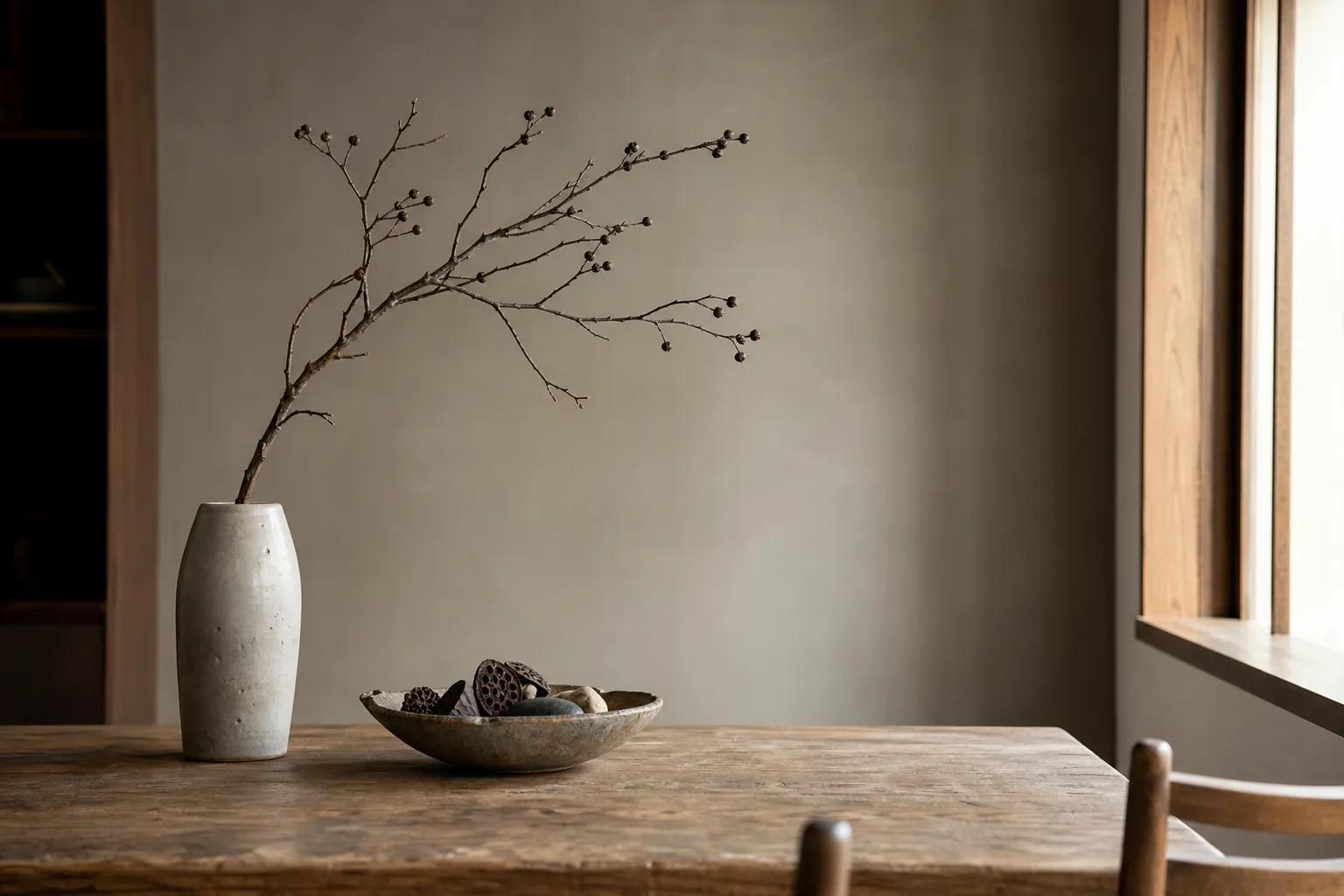
Natural seasonal decor works best when it is small, edited, and easy to care for. Choose one seasonal cue—a bare branch, a few pressed leaves, seed pods, stones, cones, or garden cuttings—and give it one clear place: a tall vase, a shallow bowl, a tray, a frame, or a quiet shelf.
Gather only where you have permission. Inspect each piece before it comes indoors. Dry or press plant material when needed, and keep dried leaves, grasses, branches, and seed pods away from candles, fireplaces, heaters, hot bulbs, and cooking areas. The goal is not to fill the room with nature. It is to let one seasonal detail change the room without adding clutter.
broader context
Broader context
Use the broader page when you need more context before this narrower page.
Start With One Seasonal Cue
The easiest way to keep branches and leaves decor from looking messy is to decide what the room is noticing this season.
In early spring, that might be one pruned branch with swelling buds. In late summer, it may be a smooth stone, dry grass stem, or seed head. In autumn, a few pressed leaves under glass can say enough. In winter, a bare branch in a plain vessel often feels stronger than a crowded display of cones, ribbons, and ornaments.
A simple formula
- One material: branch, leaf, seed pod, stone, cone, or dried grass.
- One container: vase, tray, bowl, frame, glass panel, or small dish.
- One location: entry table, tea table, windowsill, shelf, or bedside surface.
- One open area around it: leave visible space so the object can be seen.
This approach suits natural decor for small spaces because the object is not competing with piles of seasonal goods. A single branch in a vase can shift a corner. Pressed leaves under glass can mark autumn without raising the height of a table arrangement. A shallow bowl of seed pods or stones can sit on an entry tray and still leave room for keys.
The room should still work. If the display blocks a lamp switch, crowds a tea table, sheds onto a dining surface, or makes a shelf hard to dust, it is too large for that place.
Gather Lightly, Legally, and Close to Home
Found natural objects are not automatically free to take. The simplest responsible gathering for natural decor starts with places where collection is clearly allowed: your own garden, pruned branches from your yard, windfall on private property with permission, florist leftovers, farmers market bundles, or purchased dried botanicals.
Be more cautious with parks, trails, preserves, public gardens, beaches, river edges, and shared landscapes. The National Park Service’s Leave No Trace guidance emphasizes leaving natural objects where they are in protected places. That is a useful rule for home decorating too: if a place is maintained for public enjoyment or habitat, do not assume you can remove branches, flowers, stones, moss, cones, leaves, or seed pods.
For household decor
- Use windfallen material from your own property before cutting anything living.
- Ask before taking from a neighbor’s tree, shared courtyard, roadside planting, or community garden.
- Avoid stripping moss from rocks, bark, or soil.
- Do not collect from protected landscapes unless posted rules clearly allow it.
- Take only a small amount, and only if removal will not damage the plant or place.
There is also a design reason to gather lightly. Too many small pieces tend to read as clutter indoors. One good branch, three leaves, or a small handful of permitted seed pods is usually enough for a seasonal entry tray or shelf with empty space.
Check Materials Before They Come Indoors
Branches, leaves, and seed pods keep changing after they are cut, collected, or dried. They can hold moisture, shed dust, break, smell musty, or carry dirt and insects. General plant-preservation guidance is useful, but there is no universal drying time or shelf life for every species. Treat each piece as a material with limits.
Inspect objects outdoors or over a washable surface.
Leave the piece outside or discard it if you see
- Visible mold or a musty smell.
- Damp bark, wet leaves, or soft plant tissue.
- Insect activity, egg clusters, webbing, or small debris from insects.
- Sharp thorns or splinters in a place people will touch.
- Brittle parts that break apart when lifted.
- Heavy shedding onto food, fabric, or floors.
- Sap, sticky residue, or staining.
- Unknown berries, seed pods, or plant parts that children or pets may mouth.
For branches, shake them gently outside and brush off loose dirt. For stones or hard seed pods, wipe away soil and let them dry fully before placing them in a bowl or tray. For leaves, decide whether they are temporary fresh accents or whether they need pressing for a flatter, longer display.
The University of Missouri Extension’s guidance on drying and preserving plant materials is a helpful reminder: leaves, flowers, stems, and other plant parts often need drying, pressing, or preserving if you want them to hold their form. The right method depends on the plant and the look you want, so avoid treating every leaf or branch the same way.
Prepare Branches, Leaves, and Small Objects Simply
You do not need a technical craft setup for low clutter natural decor. Most room displays need only four steps: clean, dry, stabilize, and place.
Branches
A branch should be stable before it goes into a room. Remove loose bark that is already flaking, trim ragged ends, and check that it does not tip the vase. A tall branch needs a vessel with enough weight at the base.
If the branch is fresh, expect it to change: buds may open, leaves may wilt, or the cut end may darken. If it is already dry, expect brittleness and some shedding.
A single branch in a vase works best when the vase is taller and heavier than you think you need. Set it where people will not brush against it. Bare branches are often easier to live with than leafy ones because they shed less and cast a clearer line in the room.
Leaves
Fresh leaves are short-term accents. They can curl, brown, or soften quickly depending on species and room conditions.
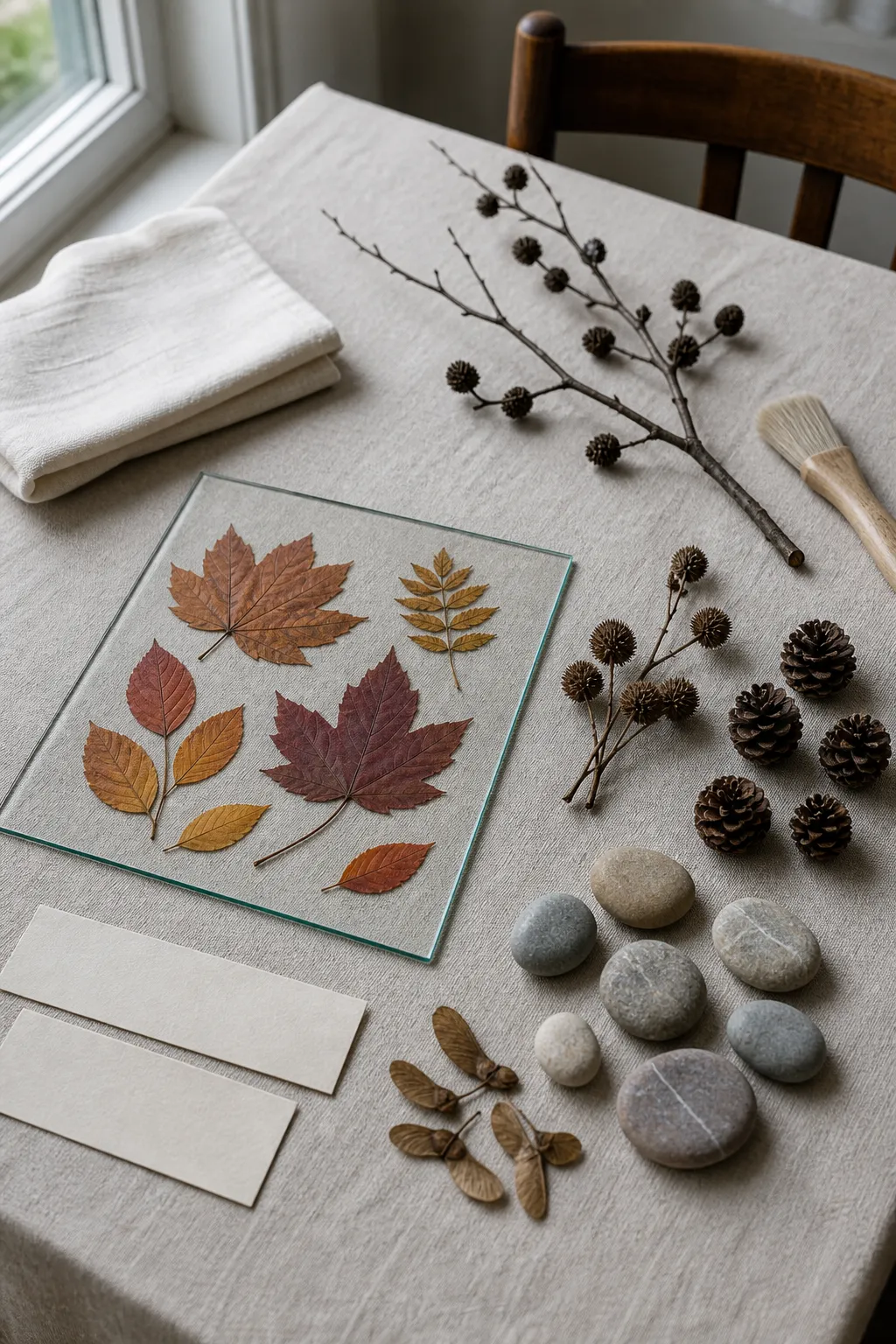
If you want drying leaves for indoor display, pressing is often the cleanest option: place selected leaves flat between absorbent paper under weight, then display only the best few under glass or in a shallow frame. Avoid relying on exact timing unless you are following a specific preservation guide for that plant.
Pressed leaves under glass suit small spaces because they stay flat, do not need water, and do not take up much surface area. They are usually better for a desk, shelf, or entry console than loose dry leaves scattered across a table.
Seed Pods, Cones, Stones, and Small Found Objects
A shallow bowl of seed pods, cones, or stones can be handsome, but keep it sparse. The bowl should not become a catchall for every walk. Choose pieces with a related color, shape, or texture so the display reads as intentional.
Hard objects still need care. Wipe stones when appropriate, dry them thoroughly, and avoid placing damp natural objects on wood or porous stone. Seed pods and cones should be dry, clean, and not actively shedding. If an object crumbles when handled, it is better composted or discarded than brought into the room.
Arrange With Empty Space
The common mistake is assuming that more natural material makes the room feel more seasonal. In practice, more pieces often mean more dust, more shedding, and less clarity.
For low clutter natural decor, use asymmetry, height, and negative space.
Try these small arrangements
- Entry tray: one small bowl of permitted cones or stones, a key dish, and open space for daily items.
- Tea table natural accent: one pressed leaf under glass or one small dry branch in a low vessel, placed away from cups and food.
- Shelf composition: one branch in a narrow vase, two books, and open space on both sides.
- Window ledge: three leaves in a flat frame rather than loose foliage.
- Bedside surface: one smooth stone or seed pod in a small dish, leaving room for a lamp, book, and water glass.
- Dining sideboard: a single tall branch instead of a table centerpiece that interferes with meals.
A useful test: remove half the objects. If the remaining arrangement still reads as seasonal, it is probably closer to the right scale.
Keep the color range narrow too: brown branch, cream wall, dark ceramic vessel; red maple leaf, clear glass, pale wood; grey stone, linen tray, black bowl. Natural seasonal decor becomes easier to see when the surrounding materials are quiet.
Keep Dried Decor Away From Heat, Flame, and Hot Lighting
Dried greenery fire safety is mostly a placement issue. Dry leaves, grasses, flowers, garlands, and branches can catch more readily than fresh plant material, especially near candles, fireplaces, heaters, hot bulbs, or unsafe lighting.
The NFPA’s seasonal fire-safety guidance is framed around holiday displays, but the household principle applies more broadly: dried plant material should not sit near open flame or heat sources.
For everyday decorating, avoid placing dry natural materials on or near
- Active fireplace mantels.
- Wood stoves and heater tops.
- Radiators and heat vents.
- Candle trays.
- Lamps with bulbs that heat nearby material.
- String lights wrapped through dry branches unless the lighting is suitable, cool-running, and used with care.
- Kitchen zones near burners, toasters, or ovens.
Flameless candles reduce open-flame concerns, but they do not make a crowded arrangement automatically suitable. You still need stable placement, clear space, and attention to battery compartments, wiring, heat, and tipping.
Also think about movement. A tall branch near a doorway, curtain, or chair can be knocked over. A bowl of cones on a low table may attract children or pets. A dry grass bundle near a frequently opened window may shed across the room. Placement is part of the design.
When to Remove or Replace Natural Pieces
Natural decor is not meant to stay unchanged all year. Its seasonal quality comes partly from the fact that it ages.
Remove or replace pieces when they
- Smell musty.
- Show mold or dark damp patches.
- Shed heavily.
- Become brittle enough to snap or crumble.
- Collect dust that cannot be cleaned gently.
- Tip, lean, or become unstable.
- Drop seeds, bark, or fragments onto surfaces.
- No longer match the season you meant to observe.
Compost clean plant material if appropriate in your area. Discard anything moldy, treated, painted, wired, glued, or mixed with non-compostable parts according to local waste guidance. Stones and durable objects can be kept in a small seasonal box instead of drifting into drawers and bowls around the house.
A seasonal reset can be very small: replace autumn leaves with a winter branch, swap cones for one smooth stone, or clear the tray completely for a week. Empty space is still a valid seasonal choice.
A Short Room-by-Room Starting Point
If you are unsure where to begin, choose one room and one surface.
For an entry
Use a narrow tray with a small bowl of seed pods, one practical key area, and open space. Avoid loose leaves that will blow away when the door opens.
For a tea table
Keep the accent low and easy to clean around. A pressed leaf under glass, a small stone, or a single dry stem in a tiny vessel is easier than a shedding branch near cups.
For a shelf
Use height. One branch in a sturdy vase can balance books or ceramics without filling the whole shelf.
For a dining area
Keep natural decor off the eating surface unless it is clean, stable, and easy to remove. A sideboard is often better than the center of the table.
For a small apartment
Choose flat or vertical displays. Pressed leaves under glass, one wall-hung branch, or a narrow vase takes less room than bowls of mixed objects.
The thread through all of these is restraint. Seasonal decor with natural materials should help the room register the time of year while leaving surfaces usable, cleanable, and visually quiet.
Common Confusions About Natural Seasonal Decor
Can I collect from a park if the object has already fallen?
Not necessarily. Fallen does not always mean available. In many public or protected places, natural objects are part of the landscape and should remain there unless collection is clearly permitted.
Do I need to preserve every leaf or branch?
No. Some pieces can be temporary and then removed. Press only the materials you want to display longer or keep flatter. If a leaf is curling, damp, or shedding, it may be better as a short visit than a long-term object.
Is natural holiday decor different from everyday seasonal decor?
The materials may overlap, but holiday displays often add candles, lights, garlands, and denser arrangements. That makes placement more important. Keep dry plant material away from flame, heat, and hot lighting, whether the display is festive or simply seasonal.
Natural seasonal decor is strongest when it stays modest: one branch, one leaf, one stone, one bowl, one open surface. Gather with permission, prepare the material, place it where it can be seen without being in the way, and let it leave the room when its season has passed.