Patina, Wear, and Damage in Natural Home Objects
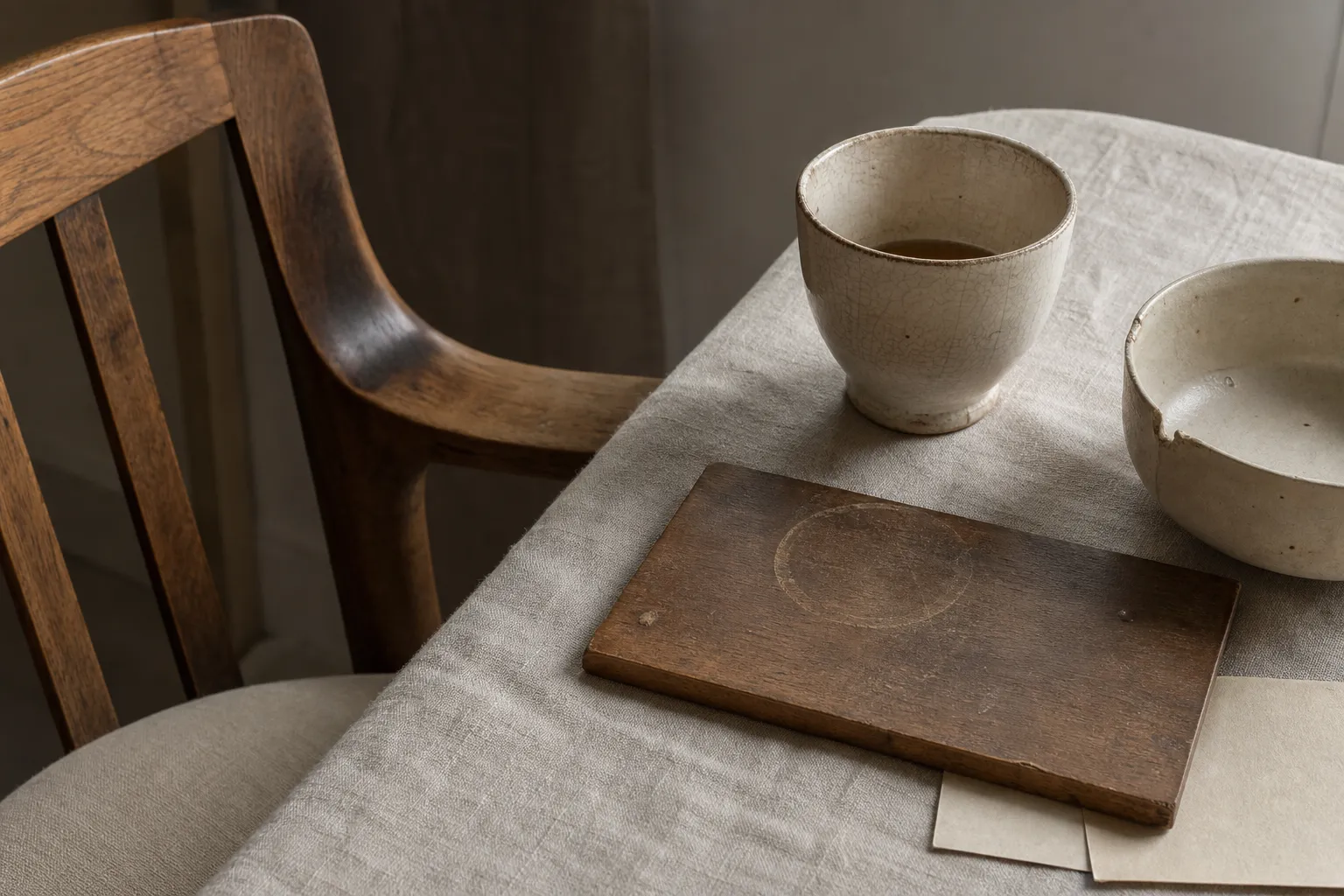
A darkened chair arm, a tea-stained cup, a pale ring on wood, a small chip on a bowl: these marks can make a home feel used and settled, or they can signal that an object needs a different role. The practical question is patina vs damage. Has the mark become part of a stable surface, or has it changed structure, cleaning, handling, food use, or long-term care?
Natural home objects do age. Wood mellows, ceramic stains, metal darkens, woven fibers soften, and textiles fade. A calm room can hold that kind of wear well. It should not ask a cracked drinking cup, a flaking finish, or a rough moisture-trapping surface to keep doing a job it can no longer do comfortably.
broader context
Parent topic
Use the broader page when you need more context before this narrower page.
Patina, normal wear, and damage are not the same thing
Patina is stable visible age. It might be a softened wooden edge, a mellowed handle, a gentle darkening where hands often touch, or a slight color shift from light and time. The key word is stable: it is not shedding, spreading, cutting, snagging, absorbing moisture in a new way, or making the object difficult to clean.
Normal wear is the expected evidence of use. It can include shallow scratches, rubbed corners, softened tool marks, cutlery marks on tableware, or fading on the side of an object that faces a window. Normal wear may be beautiful, plain, or barely noticeable. Its value is personal and practical, not automatic.
Damage changes usefulness
A damaged object may still be worth keeping, displaying, or repairing, but the mark has moved beyond appearance. Common signs include:
- cracks that open, lengthen, or collect dirt and moisture;
- chips with sharp edges or exposed porous material;
- flaking glaze, lifting finish, powdery surfaces, or friable wood;
- roughness that makes cleaning difficult;
- warping, looseness, splitting, or structural weakness;
- uncertain glaze condition on ceramics used for food or drink.
The same mark can fall into different categories depending on use. A hairline crack on a decorative vase may be something to watch. A hairline crack in a cup used for hot tea matters more because it affects handling, washing, and food-contact judgment.
A room-side check before you decide
You do not need to inspect an object like a conservator. Start with visible, repeatable checks that match how the object is used.
Is it only color, or has the surface changed?
Color alone is often the least urgent clue. Wood can darken, yellow, brown, gray, or fade with time, light, oxygen, and handling. Metal can mellow or tarnish. Ceramic glaze can show staining or utensil transfer. Stone may darken where oil, dust, or water has settled.
Is the mark still changing?
A stable mark looks much the same after ordinary use and gentle cleaning. An active mark spreads after washing, reappears after wiping, widens in dry or humid weather, sheds flakes, leaves powder, or develops new roughness.
Does the object still do its job?
A display object, side table, cutting board, tea bowl, and chair leg do not have the same threshold. The mark matters more when it meets hands, lips, blades, water, heat, or weight.
Surface change matters more. Look closely and, where it is safe, feel near the mark rather than dragging your hand across sharp or unstable areas. Ask whether the surface is:
- smooth and continuous;
- raised or blistered;
- powdery or crumbly;
- rough enough to catch a cloth;
- cracked, lifted, or flaking;
- softened by water or repeated cleaning.
A stable color shift can often stay in daily life. A surface that is losing material is no longer just patina.
If you are unsure, take a simple photo in the same light every few weeks. This is not a scientific measurement, but it helps separate memory from visible change. Use the same angle and avoid comparing a sunlit photo with an evening one.
Use depends on the object’s role
Ask:
- Does it support weight?
- Does it hold liquid?
- Does it touch food or drink?
- Does it need frequent washing?
- Is it handled by children or guests?
- Is the mark where hands, lips, blades, water, or heat meet the surface?
A small chip on the underside of a decorative ceramic jar may be mostly visual. A small chip on the rim of a drinking cup is a handling and food-use concern. A pale ring on a side table may be finish damage but not a reason to stop using the table. A soft blackened area on a wooden board that stays damp is a stronger signal to change its role.
Wood: aged marks that can be lived with, and marks that need care
Wood is where people most often want to call every mark patina. It warms with touch, changes with light, and records use beautifully. It also responds to moisture, heat, and humidity. Read wood by texture and movement, not only by romance.
Usually livable: mellowing, shallow wear, softened edges
Many wood marks are compatible with daily use:
- softened corners on a cabinet pull or chair arm;
- slight darkening where hands often rest;
- shallow scratches that do not cut deeply into the surface;
- even fading on a sun-facing side;
- small dents that are dry, stable, and not splintering.
These are common forms of wear on home objects. In an Eastern-inspired interior, aged wood often works well because it softens the contrast between object and room. The practical reason to keep using it is simple: the surface remains coherent, dry, cleanable, and structurally sound.
More concerning: water marks, roughness, splitting, and weak surfaces
Water changes the meaning of many wood marks. A ring or pale patch may be a finish issue, especially if moisture has entered or disrupted the surface layer. A dark area may be old staining, but it may also show repeated moisture exposure. The important question is whether the mark is dry, smooth, and stable, or whether it remains tacky, swollen, soft, rough, or musty.
Research on aged and weathered wood describes visible changes such as color shift, roughening, checking, cracking, and loss of surface coherence under environmental exposure. Household furniture is not exterior heritage timber, but the home lesson is useful: color change alone is not the same as material loss.
Treat these as care signals
- raised grain that keeps catching cloth;
- powdery or crumbly surface areas;
- cracks that widen or lengthen;
- splinters where hands touch;
- loose joints or shifting legs;
- dark damp areas that do not dry normally;
- finish that flakes or peels under light wiping.
Humidity can also make cracks appear to change. Wood expands and contracts with moisture conditions, so a fine crack that looks quiet in one season may open in another. If the crack is in a chair, stool, shelf, or table leg, reduce use until you know whether the structure remains reliable.
Ceramics and glass: crazing, chips, stains, and food-use decisions
Ceramics invite confusion because many marks look handmade, inherited, or traditional. A tea stain in a cup, crazing on a bowl, a small rim chip, and gray cutlery marks are not the same condition.
Metal marks and stains are not always scratches
On porcelain and glazed tableware, gray marks from cutlery can sit on the surface. Some may clean away; others persist visually. Research on porcelain tableware separates metal marking from deeper scratches, cracks, chips, and glaze deterioration. That distinction matters at home: a surface mark is mostly cosmetic, while roughness, cracking, or glaze loss changes cleaning and use.
Tea, coffee, mineral deposits, and food pigments can also stain ceramics. If the glaze is intact, smooth, and the object is known to be suitable for food use, staining may be ordinary wear. If the surface is crazed, rough, chipped, or unknown, staining is harder to interpret because liquids may sit in fine cracks or exposed areas.
Crazing deserves context
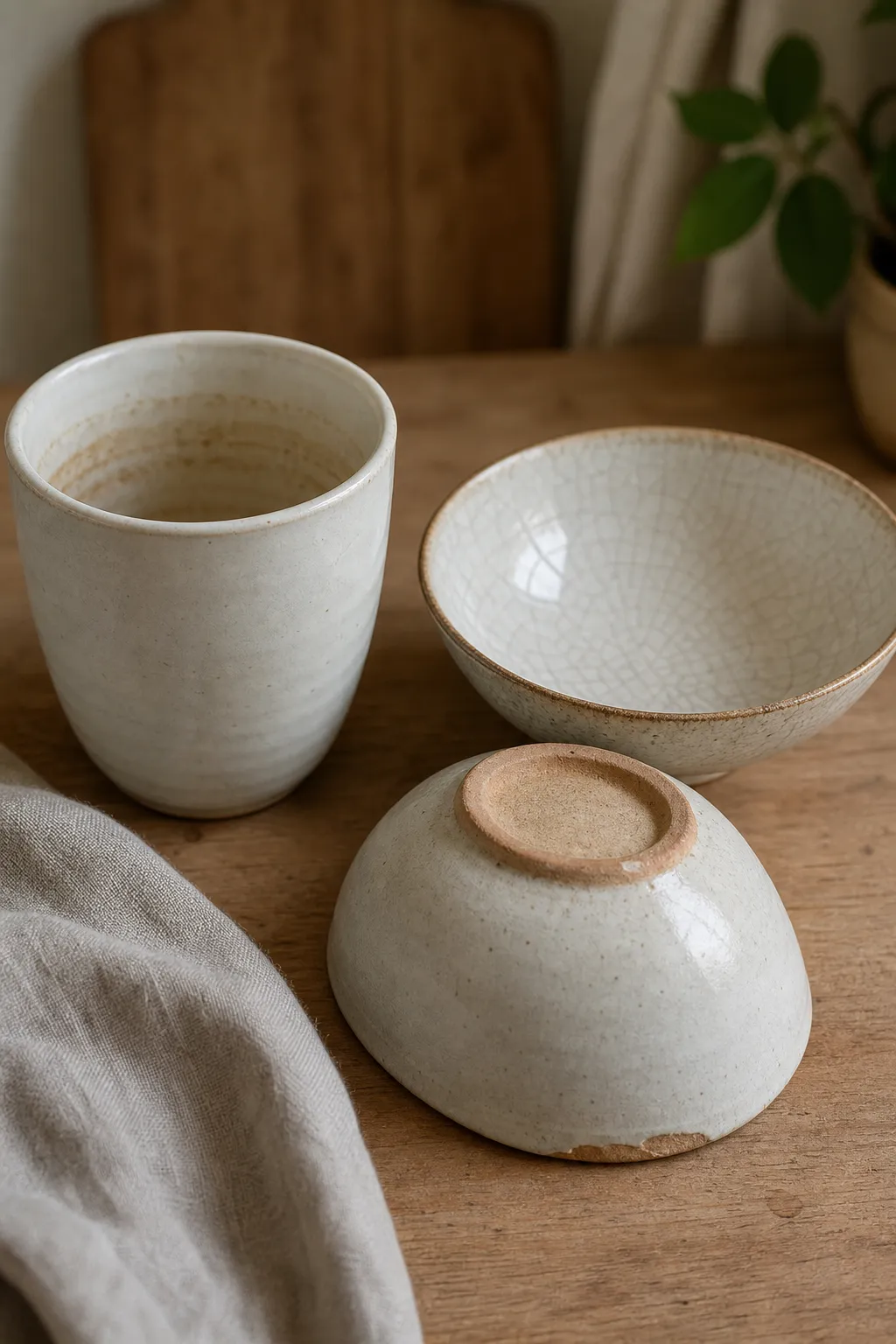
Crazing is a network of fine cracks in the glaze. It can be stable and long-standing, especially on decorative objects. It can also complicate cleaning, staining, and food-contact judgment.
For a decorative vase or shelf bowl, stable crazing may be acceptable if there is no flaking, sharpness, leakage, or spreading. For a teacup, soup bowl, sake cup, serving dish, or anything used with food or drink, use more caution. The issue is not that every crazed object must be discarded. The issue is uncertainty: fine cracks can hold staining or residue, and older or unknown glazes may not come with clear food-use information.
Chips and cracks change handling
A chip is not just a missing fleck. On a rim, handle, spout, or foot ring, it can create a sharp edge, weaken a stress point, or expose more absorbent material beneath the glaze. A crack can affect whether the object holds liquid, tolerates temperature change, or can be washed thoroughly.
Consider removing a ceramic object from food or drink use when it has:
- a rim chip where lips or fingers touch;
- a crack that reaches through the body;
- a handle crack;
- glaze flaking or lifting;
- rough exposed ceramic in a food-contact area;
- unknown glaze status combined with age, repair, or visible deterioration.
Food-contact guidance gives a useful caution for older, handmade, traditional, imported, cracked, or unknown-glaze ceramics, especially when they are used for acidic foods, hot drinks, or regular serving. This does not mean all handmade or traditional pottery is unsuitable. It means beauty, age, and cultural value do not prove food-contact suitability. When in doubt, use the piece decoratively, keep it for dry non-food display, or verify its intended use through reliable product information or appropriate testing.
Other natural materials: use narrower judgment
The strongest source support behind this page is for wood, furniture, ceramics, glass, porcelain tableware, and ceramic food-contact questions. For stone, metal, bamboo, rattan, leather, textiles, and paper, avoid broad rules. Use the same visible checks, but keep your conclusions modest.
Stone
Stone trays, bowls, lamps, and small sculptures can show darkening, water spots, oil stains, scratches, and chips. Smooth, stable color variation may be livable. Be more cautious with powdering, gritty shedding, cracks that cross thin areas, sharp chips, or stains that seem to spread from moisture or oil. Porous stone can hold liquids differently from glazed ceramic, so food use should depend on the object’s intended purpose and finish, not appearance alone.
Metal
People often ask about patina versus rust, corrosion, oxidation, tarnish, or verdigris. For home decisions, do not get trapped in labels. Ask whether the surface is stable.
A mellow darkening on a brass handle may be acceptable. Tarnish on a decorative object may be a matter of preference. Orange rust on iron, powdery green corrosion on copper alloys, pitting, flaking, or residue that transfers to hands should be treated as active deterioration rather than decorative age. If the object touches food, skin, textiles, or a damp area, use a stricter threshold.
Bamboo, rattan, and woven plant materials
Wear often appears as softened color, rubbed high points, or slight darkening where hands touch. Damage appears as broken strands, sharp splinters, mildew-like spotting, sagging, unraveling, or areas that stay damp. These materials can look quiet while losing strength, so check a chair seat, basket handle, or tray rim under the kind of use it actually receives.
Leather, textiles, and paper
Fading, creasing, and softened edges may be acceptable in objects that are not under strain. Light exposure and handling can change color over time, especially in organic materials. More concerning signs include powdering, cracking that sheds, sticky surfaces, tearing along folds, brittle fibers, or stains associated with dampness. Avoid aggressive cleaning unless you know the material and finish, because fragile surfaces can be made worse by well-meant scrubbing.
Why people mix up patina and damage
The confusion usually comes from four habits.
Age is treated as proof of value
An inherited bowl, old stool, or worn tea tray can carry family or cultural meaning, but meaning is not the same as sound condition. You can honor an object by changing its role.
Handmade irregularity is confused with condition
Handmade irregularity is mistaken for damage, or damage is excused as handmade irregularity. A slightly uneven glaze, tool mark, or asymmetrical form may be part of making. A spreading crack, sharp chip, or flaking surface is a condition issue.
Dirt is confused with patina
Darkening on natural materials may come from hand oils, smoke, dust, water, oxidation, food stains, or finish change. If a mark lightens with gentle cleaning and the surface remains intact, it may have been soil rather than age. If cleaning requires force, solvents, abrasive pads, or sanding, pause. A one-method-fixes-all approach can remove finish, open pores, or weaken fragile surfaces.
Museum language is borrowed too heavily
Conservation sources are useful because they teach caution around cracks, humidity, light, handling, and cleaning. But a home is not a museum. The goal is not perfect preservation. The goal is to decide whether an object can keep its current role, needs gentler use, should become decorative, or needs skilled repair.
A practical decision path
When you are holding a real object and trying to decide what to do, move through these options in order.
Accept it as patina
Accept the mark when it is mostly color, sheen, or shallow surface wear; the object remains smooth enough to clean; no material is shedding; and its job is unchanged. Examples include a mellowed wooden drawer pull, a rubbed edge on a tray, or light fading on a cabinet side.
Monitor it
Monitor marks that may be seasonal or slowly active: a fine wood crack, a water mark near a plant, a dark area on a cutting board edge, a stained line in a ceramic crack, or a patch of metal discoloration. Move the object away from obvious moisture or direct sun if that is relevant. Photograph it in the same light and check whether it spreads, roughens, or returns after gentle cleaning.
Clean gently
Dust first. Use the mildest method suited to the material. Avoid abrasive pads, harsh polishing, soaking, or scrubbing fragile surfaces. For ceramics and glass with cracks, chips, applied decoration, or fragile repairs, cleaning should be conservative because water and pressure can worsen weak areas. For wood furniture, avoid treating every mark with oil, wax, sanding, or solvent; finishes differ, and the wrong treatment can create new problems.
Display only
Some objects remain valuable in a room after they stop being useful in the old way. A crazed inherited bowl can sit empty on a shelf. A chipped teacup can become a small display piece. A cracked wooden stool may work as a plant stand only if it is structurally stable and protected from moisture; if not, it should simply be displayed or repaired.
Repair carefully
Repair is reasonable when a chair is loved and structurally important, a cabinet finish is failing, a ceramic handle is cracked, or a valuable object needs more than home cleaning. For complex finishes, structural furniture, old ceramics, or objects with cultural or family importance, avoid irreversible quick fixes. Glue, filler, sanding, over-polishing, and coating can reduce future options.
Retire it from the risky job
Retirement does not mean throwing the object away. It means stopping the use that makes the mark consequential. Retire a cracked cup from hot drinks, a roughened cutting board from food preparation, a splintering chair from seating, or a flaking tray from serving. Keep it decoratively if it still belongs in the room.
When patina adds value, and when it lowers usefulness
Patina can add visual depth when it shows stable use: a darkened bamboo handle, a softened wooden box corner, a mellow brass pull, a slightly faded cabinet, a tea object with age that does not compromise use. In quiet interiors, such marks reduce the feeling of showroom newness and help objects sit naturally with textiles, clay, wood, and warm light.
Patina lowers usefulness when it makes the object harder to clean, less pleasant to touch, less reliable under weight, or uncertain for food and drink. A beautiful crack still changes a bowl. A lovely old finish may still be lifting. A darkened board may still be moisture damaged. A handmade cup may still need clear food-use confidence.
Placement also changes the future of wear. Sun-facing shelves fade faster. Plant stands invite water rings. Entryway benches receive grit and wet clothing. Tea corners create repeated heat and moisture. Kitchen objects face detergent, acids, knives, and washing. If an object is aging well, place it where the wear matches its strength. If it is already fragile, move it away from the condition that keeps feeding the damage.
The clearest home rule is this: keep age that is stable, dry, cleanable, and compatible with use. Respect marks that carry time and touch. But do not ask beauty, inheritance, or cultural charm to override cracks, sharp chips, unstable surfaces, moisture problems, or uncertain food-contact use.