Seasonal home reset
How to Decide Which Room to Clean First During a Seasonal Reset
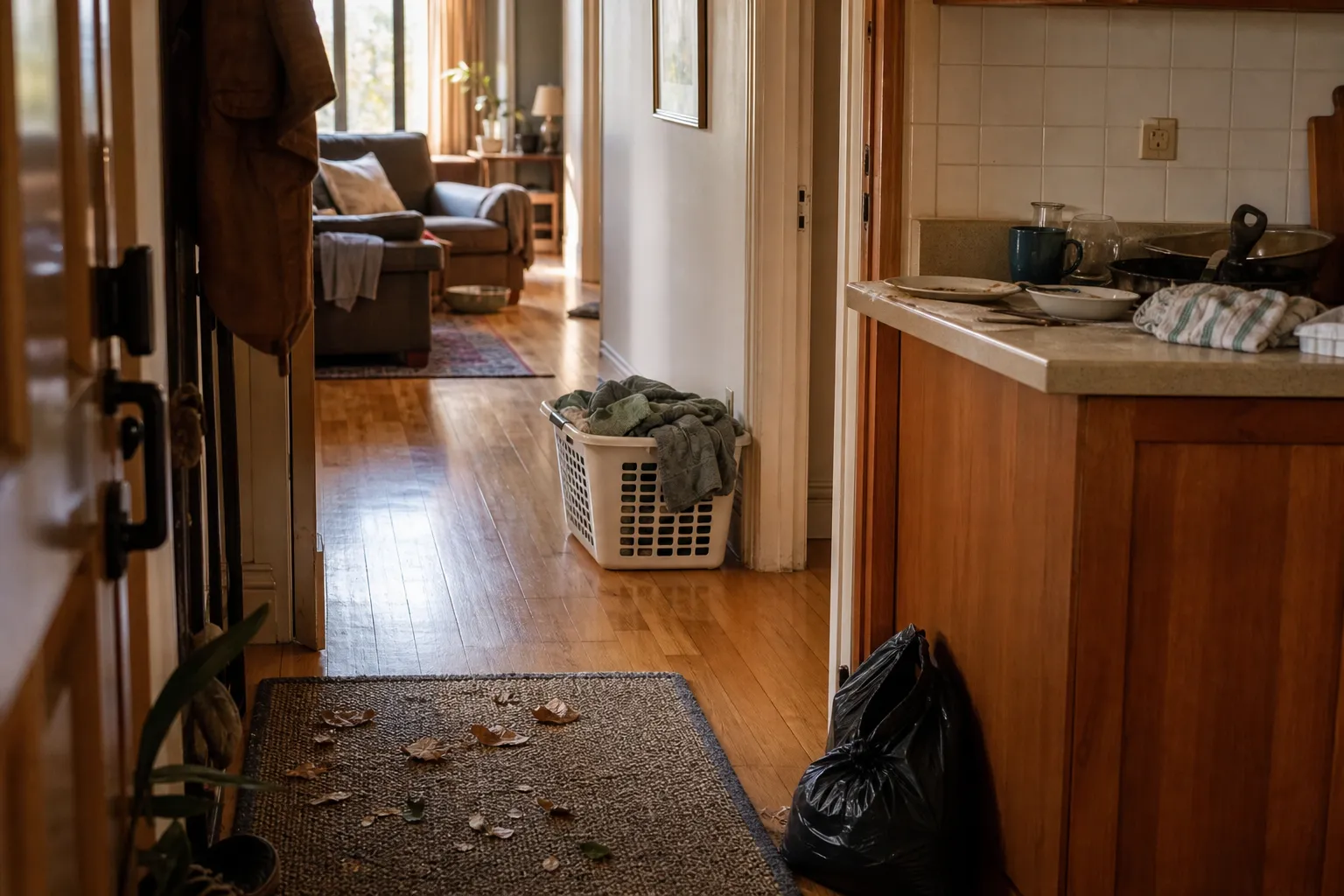
Start with the room that is causing the most immediate friction, not the room that appears first on a generic seasonal cleaning list. If you are wondering which room to clean first, look for food residue, trash, odors, damp towels, blocked counters, backed-up laundry, or an entryway that keeps carrying dirt inward.
In many homes, that means the kitchen, bathroom, laundry area, or entry comes before bedrooms, shelves, and decorative details. If no room is urgent, begin with the space that will make the rest of the reset easier: a clear kitchen counter, an open laundry path, or one temporary surface for sorting objects.
broader context
Parent topic
Use the broader page when you need more context before this narrower page.
A simple way to choose the first room
Stand where you can see the main traffic path of the home. The first room is usually the one that answers “yes” to one or more of these questions:
- Is there food residue, unwashed dishes, sticky residue, or full trash?
- Is there an odor that will bother the household if it waits?
- Are there damp towels, wet floors, or bathroom surfaces that are visibly used?
- Is laundry blocking beds, chairs, hallways, closet access, or the bathroom?
- Is the entryway tracking grit, leaves, rain, or outdoor clutter into the home?
- Is one room preventing basic daily use, such as cooking, washing, dressing, or sitting down?
- Do you need one clear surface before you can sort the rest?
If one room has several of these signs, start there. The goal is not a perfect seasonal cleaning order. It is to remove the room that is making every other task harder.
A practical working order
- Food, trash, odor, or moisture first. Kitchen, bathroom, laundry pile, pet area, or entryway.
- Bottleneck rooms next. Laundry area, kitchen counter, hallway, mudroom, or shared bathroom.
- Shared spaces after that. Living room, dining area, tea corner, family room, or work table.
- Private rooms and detail zones last. Bedrooms, shelves, drawers, decorative objects, textiles, and seasonal styling — unless one of these is the actual blocker.
This is a working order, not a rule. A bedroom covered in laundry may come before a usable kitchen. A small guest bathroom may come before a living room. A narrow entry full of wet shoes may come before everything because it keeps spreading mess through the house.
When the kitchen should come first
Start in the kitchen when it has food residue, full trash, dishes blocking the sink, sticky counters, or items that need to be put away. It also rises in priority when it will be used again soon. If dinner, breakfast, school lunches, or tea preparation are coming within the next few hours, a kitchen reset gives the household back a working surface.
Keep the first pass modest. Remove trash and food scraps, clear dishes, wipe the main prep area, and return food items to their places. Then decide whether to continue or move to the next room.
The kitchen can also work as the home’s sorting anchor. A cleared table or counter can hold a small basket for items that belong elsewhere. This prevents the reset from turning into a wandering loop: carrying one cup to the kitchen, noticing a towel, taking the towel to the bathroom, seeing laundry, and forgetting the original room.
Start with the kitchen if it blocks function. Do not start there only because many checklists put it first.
When the bathroom or laundry area should come first
A bathroom should move up the list when it is shared, visibly dirty, damp, or crowded with towels, trash, or products around the sink and floor. Household restroom research is not the same as seasonal home-cleaning advice, but it supports a modest practical point: visibly used bathroom surfaces and high-touch areas deserve timely attention.
For a first pass, remove trash, hang or collect damp towels, clear the sink edge, wipe the most used surfaces, and open the path around the toilet, tub, or shower. Save drawer sorting, old product decisions, and linen-cabinet editing for later unless they are causing the mess.
The laundry area comes first when laundry is no longer just a task but a bottleneck. If clothes block chairs, beds, bathroom floors, closet access, or the entry, other rooms will not stay reset for long. Domestic laundering research describes laundry as a repeated household flow — sorting, washing, drying, folding, and returning items — which is why a stuck laundry cycle can unsettle several rooms at once.
Start with laundry if
- clean clothes are piled in a shared space;
- damp items have been sitting too long;
- bedding is blocking the bedroom reset;
- towels are missing from the bathroom;
- the laundry area is making a hallway or utility space hard to use.
The first move may be small: start one load, fold one basket, or make three piles — wash, dry, return. During a seasonal reset, laundry often works better when it is moving in the background instead of sitting as one large obstacle.
When the entryway should come first
The entryway is easy to underestimate because it is small. During seasonal change, it may hold wet shoes, leaves, umbrellas, coats, sports bags, garden items, parcels, or dust from outside. If people cross this area many times a day, a messy entry keeps feeding dirt and objects into the rest of the home.
Choose the entry first when it affects movement. A narrow doorway with shoes in the walking path can make the whole home feel unfinished, even if the rooms beyond it are manageable.
Clear the floor, remove trash or packaging, shake out or set aside mats if appropriate for their material, and give active items a temporary home: shoes together, bags on one hook, mail in one tray, outerwear in one place.
This is also a good first room when you only have a short window. A ten-minute entry reset will not replace a full closet edit, but it can stop the outside from spreading inward.

If every room feels equally messy, choose by time
Sometimes no room is obvious. The kitchen is usable, the bathroom is not urgent, the laundry is annoying but not blocking, and the living room has the most visible clutter. In that case, choose by the time you have and what the household needs next.
15 minutes
Start with a quick reset room — entryway, bathroom sink area, kitchen counter, or dining table. Pick a space with a clear finish line.
30 to 45 minutes
Start with the room that supports the next daily routine. Before dinner, choose the kitchen. Before guests, choose the bathroom or entry. Before sleep, choose the bedroom floor or laundry pile.
Half a day
Start with the bottleneck room, then move outward. For example: laundry area first, then bedrooms; kitchen first, then dining table; entry first, then living room.
If you need a clutter staging space, create it before deep cleaning. Clear one table, bench, or floor corner and use it briefly for sorting: keep here, return elsewhere, wash, donate, repair, discard. Keep it temporary. If it becomes a new pile, it has stopped helping.
A small lesson from cleaning-process research is useful here: order and interruptions can affect whether tasks are missed. At home, that does not mean you need a professional system. It simply means you should avoid scattering your attention across five rooms. Pick the first room, finish the first pass, then move.
Quick room priority check
Use the table as a reading tool, not a rule. A studio apartment, a family house, and a shared flat will not have the same first room.
Common confusion: visible clutter is not always the first priority
The messiest-looking room is not always the room to clean first. A living room full of books, blankets, and toys may look dramatic, but if the kitchen has food residue or the bathroom has damp towels on the floor, the quieter problem may deserve the first pass.
The opposite can also happen. A kitchen may look ordinary, but if the dining table is the only place where the household can sort paperwork, fold laundry, or prepare seasonal storage, clearing that table first may make the whole reset easier.
A useful room cleaning priority is based on friction, not appearance alone. Ask:
- What will smell, spread, stain, or become harder if it waits?
- Which room will be used next?
- What space do I need in order to clean the other rooms?
- Where am I most likely to get interrupted?
- Which room can I finish enough to create momentum?
This keeps the home reset routine grounded in the room in front of you, rather than in a universal checklist.
Practical limits before you begin
There is no strong public source showing one ideal seasonal cleaning order for every home. The available research around cleaning sequence, restrooms, and laundry is adjacent rather than directly about whole-home seasonal resets. So the most useful answer stays conditional: start with the room that has the strongest visible reason to go first.
Also keep product and material limits in mind. Follow cleaning product labels, avoid casual mixing of products, and be careful with moisture on wood, paper, natural fiber rugs, unsealed stone, and delicate objects. If a room needs drying time or open windows, place it earlier in the day when possible. If a task involves damage, persistent dampness, or a material you are unsure how to clean, pause the reset and treat that as a separate maintenance question.
The right first room is the one that makes the next hour easier. Remove the active problem, clear one path or surface, and let the rest of the home follow in a quieter order.