Seasonal Cleaning as a Practical Home Reset
A seasonal cleaning home reset helps when a home feels slightly off: shelves are crowded, dust has settled behind objects, entry dirt has traveled farther indoors, towels dry slowly, or cleaning products have multiplied under the sink. The aim is not to scrub every room into perfection. It is to walk through real spaces with enough attention to notice what daily routines have started to miss.
Seasonal cleaning sits between weekly tidying and major repair. It clears buildup, restores storage logic, checks dampness and airflow, and helps you decide what can be cleaned now and what needs follow-up.
broader context
Parent topic
Use the broader page when you need more context before this narrower page.
What Is a Seasonal Home Reset, and How Is It Different From Deep Cleaning?
Deep cleaning usually means a heavier version of cleaning: more surfaces, more detail, more time. A seasonal home reset is broader. It asks not only, “Is this surface clean?” but also whether a room has collected things that no longer belong there, whether dust or lint is building up where weekly cleaning rarely reaches, whether stored items are blocking airflow or access, whether textiles are being overused or put away before they are fully dry, whether products are being used from habit rather than need, and whether moisture, odor, condensation, leaks, or drying issues need more than wiping.
That distinction matters because many homes do not need a dramatic quarterly overhaul. They need a modest pause: clear the entry, wash the throws, pull dust from behind low furniture, check bathroom corners, sort one cabinet, use ventilation thoughtfully, and stop letting temporary piles become part of the room.
A seasonal reset also keeps cleaning and disinfecting separate. Public guidance commonly describes cleaning as removing dirt and impurities from surfaces, while disinfecting is a separate step used for specific purposes. In an ordinary home reset, cleaning is usually the main task. Disinfecting every surface is not the goal, and stronger product use does not automatically mean a better-cared-for room.
Think of the reset as a domestic audit with cloth, broom, light, and patience. It is practical, not ceremonial. A room may feel more ordered afterward because objects return to useful places, surfaces become visible again, and small maintenance signs are easier to notice.
How to Decide Which Room to Clean First
The best starting room is not always the dirtiest one. Start where cleaning will change how the home functions for the next season.
-
If you notice dirt tracks from shoes, bags, pets, or wet weather, start with the entry, hallway, mudroom, or landing. Entry dirt spreads quickly into living areas and textiles.
-
If towels dry slowly, corners feel damp, or surfaces collect residue, start with the bathroom, laundry area, or kitchen sink zone. Moisture-prone rooms reveal maintenance needs early.
-
If dust returns quickly after weekly cleaning, start with shelves, window areas, vents, baseboards, and under-furniture edges. Dust often hides on neglected horizontal and low surfaces.
-
If closets or cabinets are hard to use, start with storage zones. Storage drift makes every later cleaning task slower.
-
If a small apartment feels overwhelmed by stuff, start with one visible room edge or one storage wall. Pulling everything out can make the reset collapse halfway.
-
If the weather is changing, start with windows, curtains, entry mats, bedding, and outerwear storage. Seasonal use changes what the home needs daily.
If you are unsure, begin with the space that gets the most repeated contact: the entry, kitchen, bath, or main sitting area. These areas show the daily rhythm of the home. Once they are clearer, quieter rooms become easier to read.
A seasonal cleaning checklist should not force every room into the same order. A sunny, dry living room needs different attention from a north-facing bath, a compact kitchen, or a closet storing natural fibers. Let the room decide the work.
A Seasonal Cleaning Checklist for a Calm Home Reset
Use this as a room-by-room walk-through rather than a rigid schedule. It is meant for ordinary homes, not major damage, renovation, or specialized cleaning situations.
Entry points: stop dirt before it travels
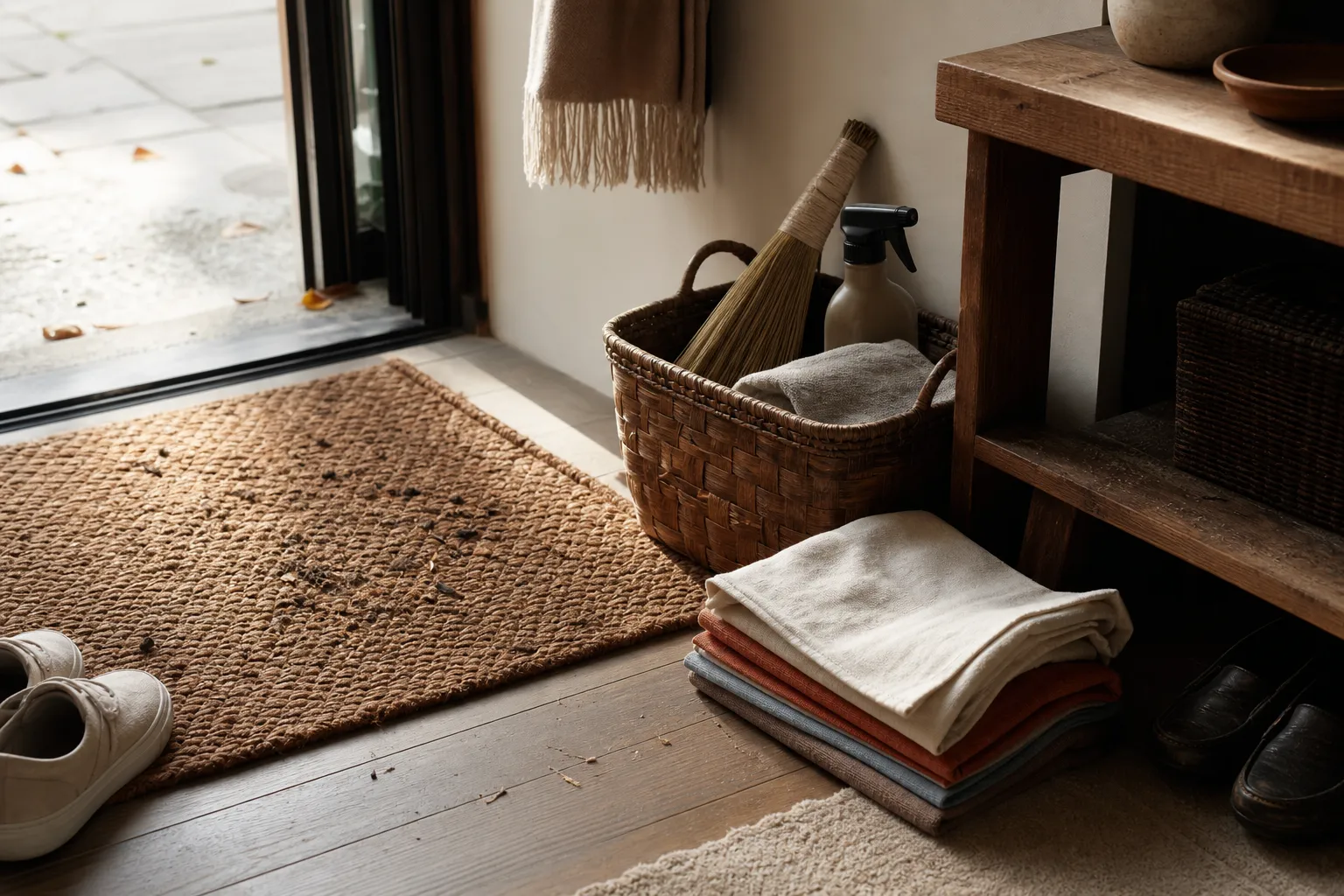
The entry is often the smallest space with the largest effect. Sweep or vacuum the threshold, shake or wash mats according to their care instructions, wipe the door area, and check where shoes, umbrellas, bags, and coats actually land.
Grit under shoe racks
Damp mats that do not dry fully
Salt, mud, pollen, or sand carried indoors by the season
Overcrowded hooks that keep outerwear from airing
Baskets that have become mixed storage instead of useful landing places
If mats stay damp or flooring near the door repeatedly feels wet, treat that as more than ordinary cleaning. You may need better drying, a different mat system, a change in shoe storage, or a closer look at how water is entering.
Windows, shelves, and stored items: remove dust where it hides
Spring and autumn often reveal dust because light angles change and windows are opened or closed more often. Clean window sills, tracks, frames, nearby shelves, and the tops of objects that usually remain untouched.
For shelves, remove objects in small groups rather than emptying the whole wall. Dust the shelf, dust the object, then decide whether it still belongs there. This is useful for ceramics, tea tools, books, baskets, wood objects, and decorative pieces. The goal is not to make a display look unused; it is to keep settled dust from becoming part of the arrangement.
Stored items deserve a slower check.
Are boxes directly against cold or damp walls?
Do fabric bags smell stale when opened?
Are seasonal textiles fully dry before storage?
Are delicate materials crushed under heavier things?
Has temporary storage blocked access to cleaning behind it?
Avoid overwashing natural materials just because the season changed. Wood, stone, ceramic, bamboo, paper, and textile objects often need appropriate care, not aggressive cleaning. Dusting, drying, airing, or repositioning may be enough. When in doubt, follow the maker’s care instructions for the object or material.
Kitchen and bath: clean residue, then read the moisture signs
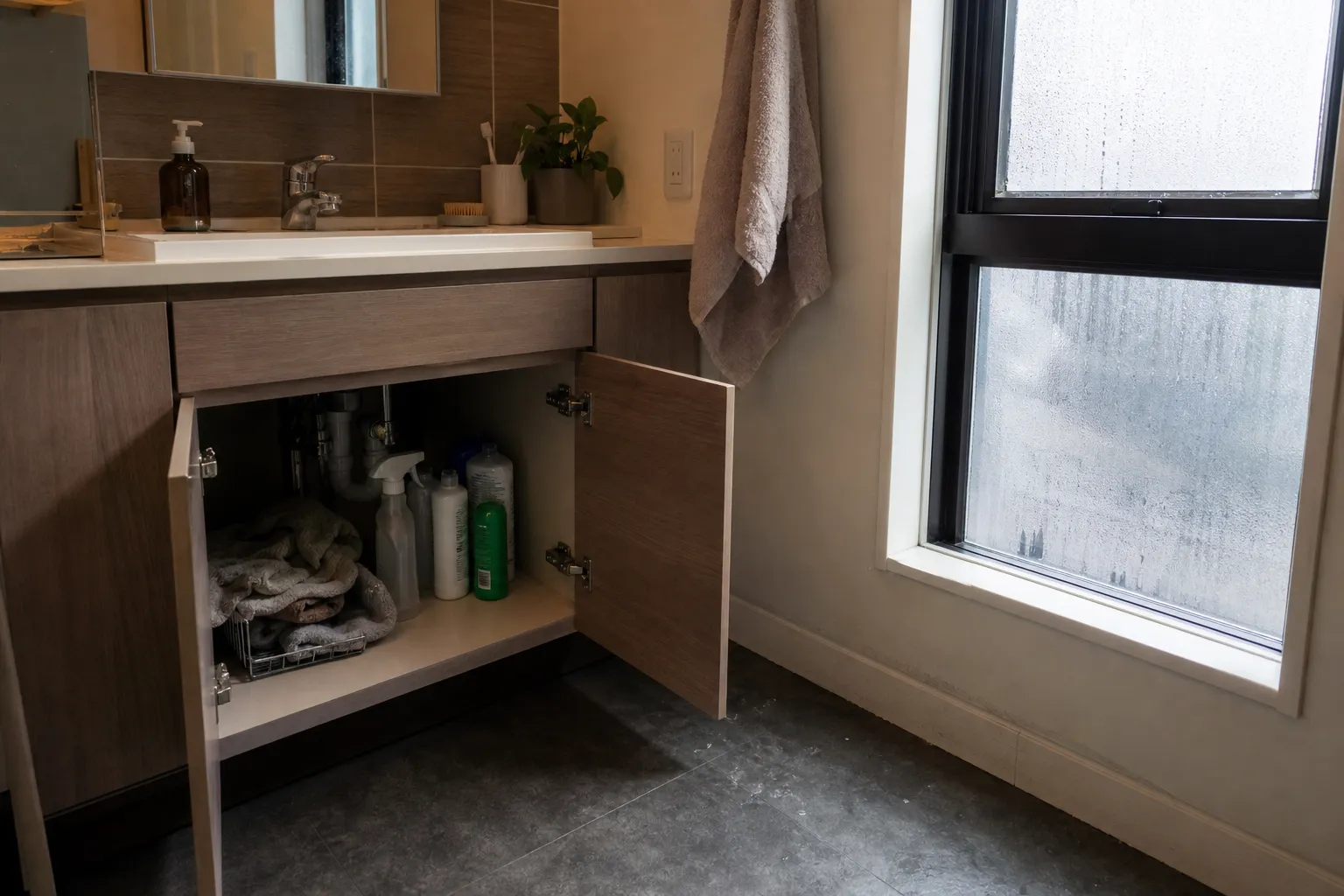
Kitchens and bathrooms need both surface cleaning and observation. Wipe soap residue, cooking film, cabinet fronts, handles, splash areas, and the floor edges where dust mixes with moisture. Clean before considering any stronger surface product.
Then pause and look for conditions ordinary wiping may hide:
Persistent damp odor
Window condensation
Slow-drying grout or sealant lines
Leaks under sinks
Swollen cabinet bases
Stains returning in the same corner
Poor drying around showers, tubs, or laundry machines
Guidance on damp buildings often points to several causes working together: climate, ventilation, building design, plumbing, materials, and maintenance. A seasonal reset should not pretend that scrubbing alone solves every damp condition. If a surface repeatedly becomes wet, the question is not only how to clean it but why the area is staying wet.
Ventilation while cleaning can help move product smells and moisture out of a room, but it is not a universal fix. Outdoor humidity, weather, building layout, and mechanical systems all affect whether opening windows helps. Use fresh air when it is sensible, run existing exhaust fans where appropriate, and avoid trapping strong product smells in a closed room.
Living areas and bedrooms: dust, textiles, light, and quiet corners
Living rooms and bedrooms often look clean from the doorway while holding dust in edges and fabrics. Move light furniture if possible, clean baseboards, vacuum under beds and sofas, wipe low shelves, and shake or launder washable textiles according to care labels.
Pay attention to quiet corners:
Behind floor cushions
Under low tables
Around warm lamps
Beneath curtains
Near bedside shelves
Behind storage baskets
Around electronics and cords
These areas collect fine dust because they are visually calm and rarely disturbed. A seasonal reset does not need to strip the room bare. It should restore circulation around objects, remove what is stale, and make the room easier to clean weekly.
Bedding and throws deserve seasonal judgment. Some need washing. Some need airing. Some need repair, rotation, or storage. Natural fibers should be fully dry before being folded away. If a textile smells musty after airing and washing according to care instructions, do not bury it in a cabinet; keep it out of long-term storage until the cause is clearer.
Product cabinet: simplify what you use
A home reset should include the cleaning products themselves. Pull out the products you use most, read labels before use, discard empty or unusable containers according to local rules, and do not mix products in the hope of making them stronger.
A practical product cabinet may include only a few well-understood items: a general cleaner suitable for your surfaces, mild dish soap, cloths, brushes, a vacuum or broom system, and any special material-care product that is genuinely needed. More bottles often create more confusion, not a cleaner home.
Seasonal Focus: What Changes in Spring, Summer, Autumn, and Winter
The same home reads differently across the year. A good home reset routine changes with weather, light, humidity, heating, cooling, and daily movement.
Spring cleaning checklist: dust, windows, shelves, and stored items
Spring often reveals what winter concealed. Focus on dust, window areas, shelves, bedding, and storage.
Clean window sills, tracks, and frames
Dust shelves and objects near windows
Wash or air winter textiles before storage
Check closets for items stored while slightly damp
Vacuum under beds, sofas, and low cabinets
Reset entry storage for lighter shoes and rain gear
This is also a good time to notice condensation marks, stains, or damp odors that may have developed while rooms were closed more often.
Summer home reset checklist: humidity, entry dirt, and daily surfaces
Summer cleaning often needs restraint. In humid weather, opening windows may not dry a room. Outdoor moisture can enter, and some spaces may dry better with exhaust fans, dehumidifying equipment, or simply better spacing around damp items, depending on the home.
Entry grit from outdoor activity
Frequently touched kitchen and dining surfaces
Bath towels and laundry drying habits
Shower and sink areas
Fans, screens, and window ledges
Food storage zones and bins
Do not let airing out become automatic. If outside air is heavy and damp, ventilation may feel pleasant without helping moisture control.
Autumn cleaning checklist before colder weather settles in
Autumn is a preparation season. The question becomes: what will be harder to clean once windows stay closed, coats return, and rooms hold more textiles?
Clean entry mats and prepare wet-weather storage
Wash lightweight curtains if care labels allow
Dust heaters, nearby shelves, and floor edges before heavier use
Rotate bedding and inspect stored blankets
Clear kitchen cabinets before cold-weather cooking increases
Check for leaks, drafts, and slow-drying corners
Autumn is also a useful time to reduce storage crowding. Closed rooms and overfilled closets make it harder to notice moisture, pests, dust, or material damage.
Winter home reset checklist: dust, moisture, and closed rooms
Winter reset work is usually smaller and more targeted. Rooms may be closed longer, windows opened less often, and fabrics used more heavily.
Dust around heating areas and low furniture
Condensation on windows
Dampness near exterior walls
Bathroom drying after showers
Laundry drying habits
Airflow around stored items
Entry salt, mud, or wet footwear
If you see repeated window condensation, staining, leaks, or persistent damp odor, treat it as a reason to observe more carefully. Cleaning the surface may be appropriate, but the underlying condition may need maintenance attention.
Seasonal Cleaning for Small Apartments Without Pulling Everything Out
Small apartments make seasonal resets both easier and harder. There are fewer rooms, but less staging space. Pulling everything out at once can turn a reasonable task into an all-day obstacle.
Use a one-edge-at-a-time method:
Choose one visible edge: entry wall, kitchen counter, bedside area, closet floor, or window zone.
Remove only what you can sort in 20 to 40 minutes.
Clean the exposed surface.
Return only what has a reason to live there.
Move one category out of the room if it belongs elsewhere.
Stop before the room becomes unusable.
For compact homes, seasonal cleaning is mostly about access. Can you reach the window? Can the bathroom dry? Can shoes stay contained? Can bedding air before storage? Can you clean behind the one large shelf without dismantling the whole room?
Small apartments also benefit from quarterly rather than weekly tasks. Clean behind appliances if accessible, dust high shelves, check under-sink storage, review product bottles, wash curtains when care labels allow, and inspect corners behind stacked items. These jobs do not need to happen every week, but if they never happen, the apartment starts to feel harder to live in.
Routine Care Versus Maintenance: When Cleaning Is Not Enough
A seasonal household maintenance check pairs naturally with cleaning because clean surfaces make problems easier to see. The important distinction is simple: routine care handles dust, residue, clutter, storage drift, and ordinary grime. Maintenance handles causes.
Cleaning is usually enough when dust is loose and removable, dirt comes from normal entry use, a surface dries well after cleaning, odor disappears after laundering or airing, storage improves once items are sorted, and residue does not immediately return.
Cleaning may not be enough when a damp smell keeps returning, a wall or cabinet stays wet, water stains expand or reappear, window condensation is persistent, visible growth returns after appropriate cleaning, a leak is suspected under a sink or around a window, or porous or damaged materials have been wet and do not dry properly.
Moisture-control guidance from public agencies and building references commonly emphasizes fixing sources of water, drying wet materials, improving appropriate ventilation, and maintaining buildings over time. For a household reset, the practical takeaway is modest: do not keep scrubbing a symptom while ignoring the cause.
Ordinary cleaning may remove surface dirt and some minor residue from washable materials, but visible growth, persistent dampness, and wet porous materials can move beyond seasonal housekeeping. Depending on severity, materials, and location, the next step may be drying, repair, replacement, landlord or building management contact, or professional assessment. A seasonal reset is good at revealing the issue; it is not a substitute for repair.
How Long Should a Seasonal Home Reset Take?
A reset can be sized to the home and the season. It does not need to consume a weekend unless you want it to.
30 to 60 minutes: one entry, one window area, one cabinet, or one dusty shelf wall
2 to 3 hours: one room with textiles, surfaces, storage, and floor edges
Half a day: kitchen and bath moisture zones plus product review
One weekend in short blocks: whole-home reset without emptying every closet
The better measure is not time spent but decisions made. At the end of a seasonal home reset, you should know what has been cleaned, what has been aired, dried, or stored differently, what products you actually use, which neglected areas need quarterly attention, which moisture or repair signs need follow-up, and which objects or materials need gentler care.
A calm reset is not an achievement display. It is a way of returning the home to readable condition.
A Practical Quarterly Home Reset Routine
If you want a simple recurring structure, use this quarterly rhythm:
Walk first: notice dust, odor, dampness, storage crowding, blocked corners, and entry dirt.
Clean visible buildup: floors, ledges, shelves, handles, window areas, and under-furniture edges.
Reset textiles: wash, air, rotate, repair, or store only when fully dry.
Check moisture-prone zones: bath, kitchen, laundry, windows, entry mats, and under-sink cabinets.
Review products: keep what you understand and use correctly; avoid unnecessary combinations.
Separate cleaning from maintenance: write down leaks, stains, condensation, damaged materials, or recurring dampness.
Close gently: return fewer objects than you removed, and leave access for weekly care.
This kind of seasonal reset suits real rooms because it respects limits. It does not require a spotless home, a new storage system, or dramatic before-and-after work. It asks you to see the home clearly four times a year: where dust collects, where water lingers, where objects crowd, where light changes, and where ordinary care should hand off to maintenance.