Desk Setup Guide
Natural Materials for a Calm Home Office Desk Area
A calm-looking home office desk usually comes from fewer, better-chosen objects, not from filling the surface with “natural” décor. For a practical natural materials home office, start with one warm anchor piece, then add two or three useful items in wood, linen, ceramic, cork, bamboo, stone, or woven fiber. Each object should do a job: hold tools, protect a surface, hide visual clutter, support cables, or make the desk easier to reset.
The better question is not “Which natural material is best?” It is “How will this object behave on my desk, in my light, with my spills, dust, cables, and work habits?”

broader context
Parent topic
Use the broader page when you need more context before this narrower page.
Start With the Desk Jobs
Before buying wood desk accessories or linen office storage, divide the surface into three simple zones:
Work zone
Laptop, keyboard, mouse, notebook, writing pad, or drawing tools.
Holding zone
Tray, pen cup, file stand, document box, charging dock, or small bowl.
Pause zone
One personal object, cup, lamp, seasonal clipping, or simply open space.
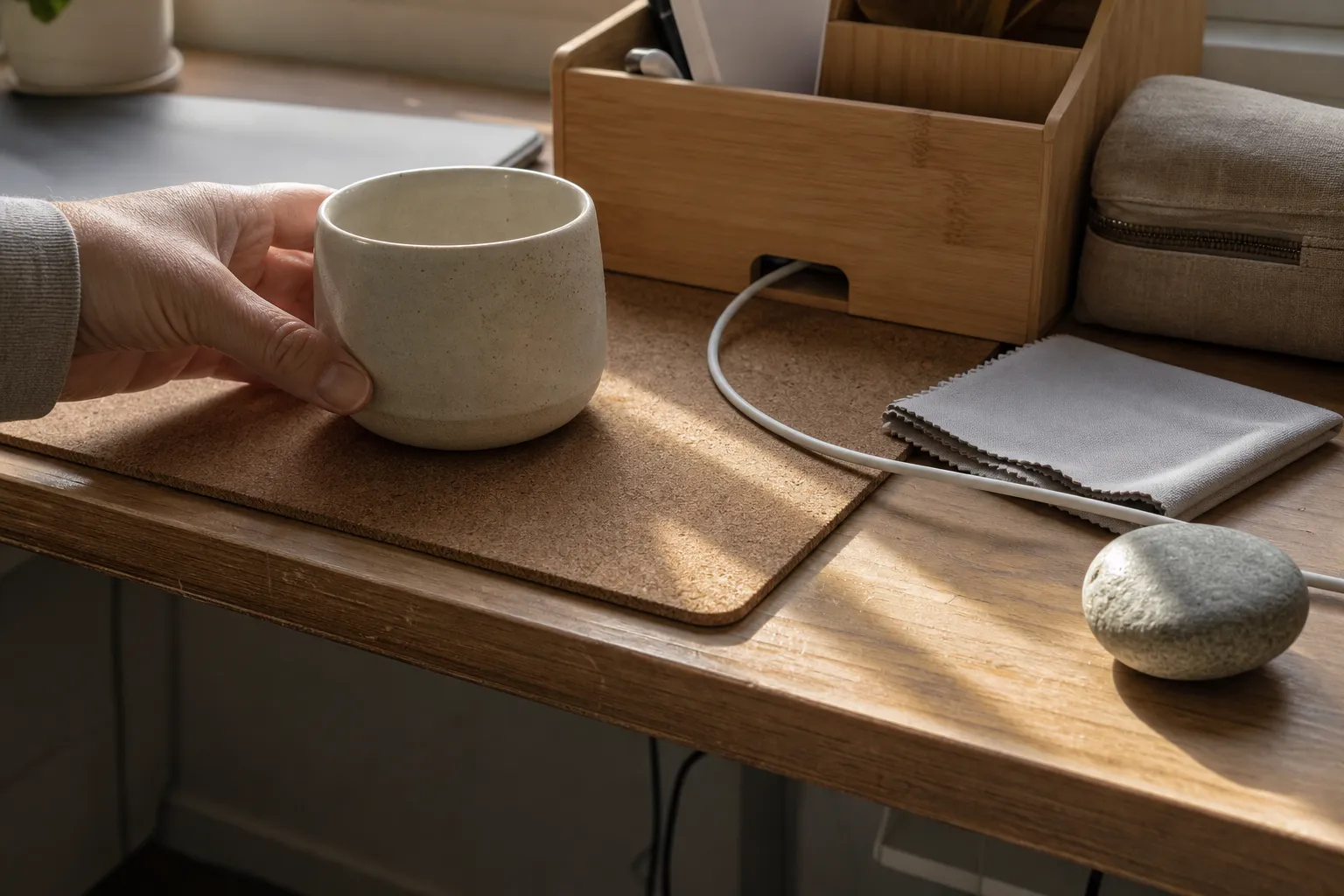
Natural desk materials work well when they support those zones. A wooden tray can gather loose items into one visual group. A linen-covered box can hide paper, adapters, and stationery. A ceramic cup can hold pens if it is stable and easy to clean. A cork mat can soften a hard desktop, but it still has to suit your mouse, pen pressure, and spill habits.
If an object only adds texture while taking away useful space, it may look styled for a day and become frustrating after that.
Choose Materials by How They Behave
Natural materials vary by finish, construction, sunlight, humidity, and daily use. Treat the notes below as practical checks, not fixed promises for every product.
Wood
Pen trays, monitor risers, small drawers, paper sorters.
Smooth finish, cup marks, splinters, cable clearance.
Bamboo
Organizers, shallow trays, laptop stands.
Joint quality, wobble, coating, drawer fit.
Linen or cotton
Storage boxes, covered bins, cable pouches.
Dust, stain visibility, lid stiffness, cleaning options.
Ceramic
Pen cups, small bowls, catchalls.
Weight, glaze smoothness, chip risk, noise on hard surfaces.
Cork
Coasters, desk mats, pin surfaces.
Crumbling edges, staining, mouse tracking, writing feel.
Stone
Paperweights, bookends, small trays.
Weight, sharp edges, scratch risk, visual heaviness.
Woven fiber
Baskets, shallow trays, document holders.
Snagging, uneven base, dust in the weave, cable tangles.
For a small desk, one or two visible textures are usually enough. Wood with linen feels warm and quiet. Ceramic with cork feels simple and practical. Stone can be beautiful, but a large piece may look heavy on a compact desk. Woven storage adds hand texture, yet too many baskets can make the surface busy.
Color matters as much as the material. Pale oak, warm bamboo, unbleached linen, matte ceramic, and soft cork tones usually sit quietly beside laptops and paper. Strong grain, dark stone, glossy glaze, or high-contrast weaving carries more visual weight.
A Quick Desk Material Check
Use this before adding any natural object to the desk.
Does it reduce visible decisions?
A useful tray turns scattered headphones, sticky notes, lip balm, and a cable into one clear group. A decorative bowl that fills with receipts may do the opposite.
Can you clean around it easily?
Woven trays, carved wood, linen boxes, and natural fiber baskets can collect dust in seams and texture. If your desk gathers crumbs, pet hair, or paper dust, keep daily-use items smoother.
Does it behave well near drinks?
Tea, coffee, and water are common desk companions. Use a coaster or washable mat near wood, cork, paper, and fabric storage. If you often keep a cup beside your laptop, avoid placing absorbent or unfinished-looking pieces in the splash zone.
Does it work with cables?
A calm desk can be undone by awkward cords. Check whether a box has a cable exit, whether a tray traps wires, and whether a wooden riser leaves enough room for chargers, hubs, or a closed notebook.
Does it suit the light?
Sunlight can make glare, dust, scratches, and uneven surfaces more visible. Use matte or lightly textured pieces where reflection is strong, and keep glossy ceramic or polished stone out of direct glare if it distracts you.
Is it pleasant to handle?
Edges, drawer pulls, lids, and cup rims matter because a desk is touched often. A beautiful box that is annoying to open often becomes clutter storage rather than a useful tool.
Build the Arrangement With Fewer Layers
A calm desk does not need to be empty. It needs clear roles. Many home office desk areas feel cluttered because several objects are doing the same job.
A simple setup can include:
- One horizontal base: clear work surface, writing pad, or desk mat.
- One vertical holder: pen cup, slim file stand, or small shelf.
- One contained tray: for small daily items.
- One closed storage piece: linen box, wooden drawer, or fabric pouch.
- One quiet personal object: stone, ceramic piece, seasonal clipping, or favorite tool.
This adds texture without turning the desk into a display shelf. It also reflects an Eastern-inspired design preference for restraint and object care: let materials and purpose show, but do not make every item compete for attention.
Leave some blank surface visible. Empty space is useful when it lets the desk reset quickly at the end of work.
Care Limits to Keep in Mind
Natural material care is where many desk setups become less practical than they look. Follow the maker’s care label or product instructions when available. Without product-specific guidance, keep the setup modest and easy to maintain.
Wood may show rings, scratches, dents, or color changes depending on finish and use. Keep wet cups off wood unless the surface is clearly protected for that contact, and wipe grit away before it sits under a laptop stand or monitor riser.
Linen and cotton storage soften the look of paper clutter, but fabric can hold dust and show stains. Near snacks, drinks, ink, makeup, or art supplies, choose washable options, removable liners, or darker fabric where possible.
Ceramic has pleasant weight and clean edges, but it can chip or make noise on a hard desktop. Felt pads help under pieces that move often. Delicate ceramics are not ideal for heavy scissors, metal rulers, or tools that may strike the rim.
Cork can work under cups or as a soft writing surface, but it may dent, flake, or stain depending on construction and use. A large cork mat may warm up the surface visually, though it will not suit every mouse sensor or pen stroke.
Stone is stable and visually grounding, but it is heavy. Check the underside before placing it on wood, painted desks, or delicate surfaces. Use stone as a small accent or paperweight unless the desk can comfortably handle more.
Woven trays and natural fiber baskets bring texture, but they can catch paper corners and cable ends. They are usually better for soft loose items than for documents handled all day.
What Changes the Right Choice
The right mix of calm office materials changes with the room.
A bright desk by a window may need matte, low-glare surfaces more than extra texture. A darker corner may benefit from pale wood, light linen, or warm ceramic so the area does not feel heavy. A shared dining-table desk may need portable storage instead of fixed accessories. A small apartment desk may need closed boxes because every visible object reads as room clutter.
Humidity and sunlight also matter. If the desk sits near a window, radiator, air conditioner, humidifier, or damp wall, be cautious with materials that could warp, stain, loosen, or collect moisture. Do not assume a natural material is automatically more tolerant than a synthetic one.
Work style changes the answer too. If you write by hand, a textured mat may interrupt the page. If you sketch, woven trays may snag paper edges. If you use several devices, cable access may matter more than material purity. If you eat at the desk, washable surfaces and fewer seams are more useful than a beautiful fiber box.
A calm natural desk area is not the most natural-looking one. It is the one that still works on a busy Tuesday.
Common Misunderstandings
The biggest misunderstanding is that natural automatically means better. Natural materials can be warm, tactile, and visually quiet, but they are not automatically cleaner, stronger, lower-impact, or more suitable for every desk. Those claims need specific product information, material documentation, or credible standards. Without that support, judge the item by use, care, and fit.
Another confusion is treating minimalist or Eastern-inspired desk styling as a fixed formula. Low object count, visible grain, seasonal detail, and careful storage can be useful design language, but a desk still needs the tools that let you work.
Matching sets can also be a trap. A full run of bamboo organizers or coordinated linen boxes may look tidy online, but in a real home office it can feel repetitive. One warm wood piece, one soft textile, and one smooth ceramic object often looks more natural than filling the desk with one material family.
Scented objects, incense, oils, or smoke-heavy additions need extra caution near electronics, paper, fabrics, and scent-sensitive people. If you use any scented product, follow its label, keep the area ventilated, and do not make scent the main method for creating a calm-looking workspace.
Practical Setup Examples
Compact laptop desk
Start with a clear work surface. Add a shallow wooden tray on the non-dominant side for earbuds, one pen, and a small notebook. Use a linen-covered box under or beside the desk for cables and papers that do not need to stay visible. Choose a ceramic cup for writing tools only if it is heavy enough not to tip and smooth enough not to scratch the desk. Add a cork coaster if drinks are part of the routine.
Wider desk
A wooden monitor riser can be the anchor if it leaves room underneath for a keyboard, notebook, or charging hub. Pair it with one fabric storage box and one small stone or ceramic catchall. Keep the center third of the desk open. If it still looks busy, remove the smallest decorative object before adding another container.
Desk by a bright window
Reduce glare first. Use matte finishes, pale materials, and low objects that do not cast distracting shadows across the keyboard. Keep delicate papers, fabric storage, and drink areas away from direct sun if fading, heat, or spills would bother you.
Buying and Reset Checklist
Before bringing a natural desk object home, check that:
- It has a clear function on the desk.
- Its color sits quietly with the desktop, laptop, wall, and lamp.
- Its texture does not catch paper, cables, sleeves, or dust too easily.
- Its base is smooth enough for the surface underneath.
- It can be wiped, aired, moved, or emptied without effort.
- It does not block charging, writing, mouse movement, or cup placement.
- It still looks useful when the desk is not perfectly styled.
At the end of the workday, return loose items to one tray, close one storage box, clear the cup area, and leave one open patch of surface. That small reset usually matters more than adding another natural accessory.
The best natural materials for a calm home office desk area are the ones you can use, clean, and keep in place without fuss. Let wood, linen, ceramic, cork, bamboo, stone, or fiber earn its place through function first; then let color and texture do the quiet visual work.