Entryway shoe limit
How Many Shoes Should Stay in the Entryway
For most homes, keep one everyday pair per person in the entryway, plus one weather or activity pair per person only when the space still stays clear. As a starting point, that means:
- one-person home: 1–2 pairs
- couple: 2–4 pairs
- family of four: 4–8 pairs at most
This is not a universal home standard. It is a practical rule for deciding how many shoes to keep in entryway areas without turning the threshold into full shoe storage.
The better test is physical, not numeric: the door should open freely, people should be able to walk through without stepping around shoes, and wet or dirty pairs should have room to sit apart instead of being buried in a pile.
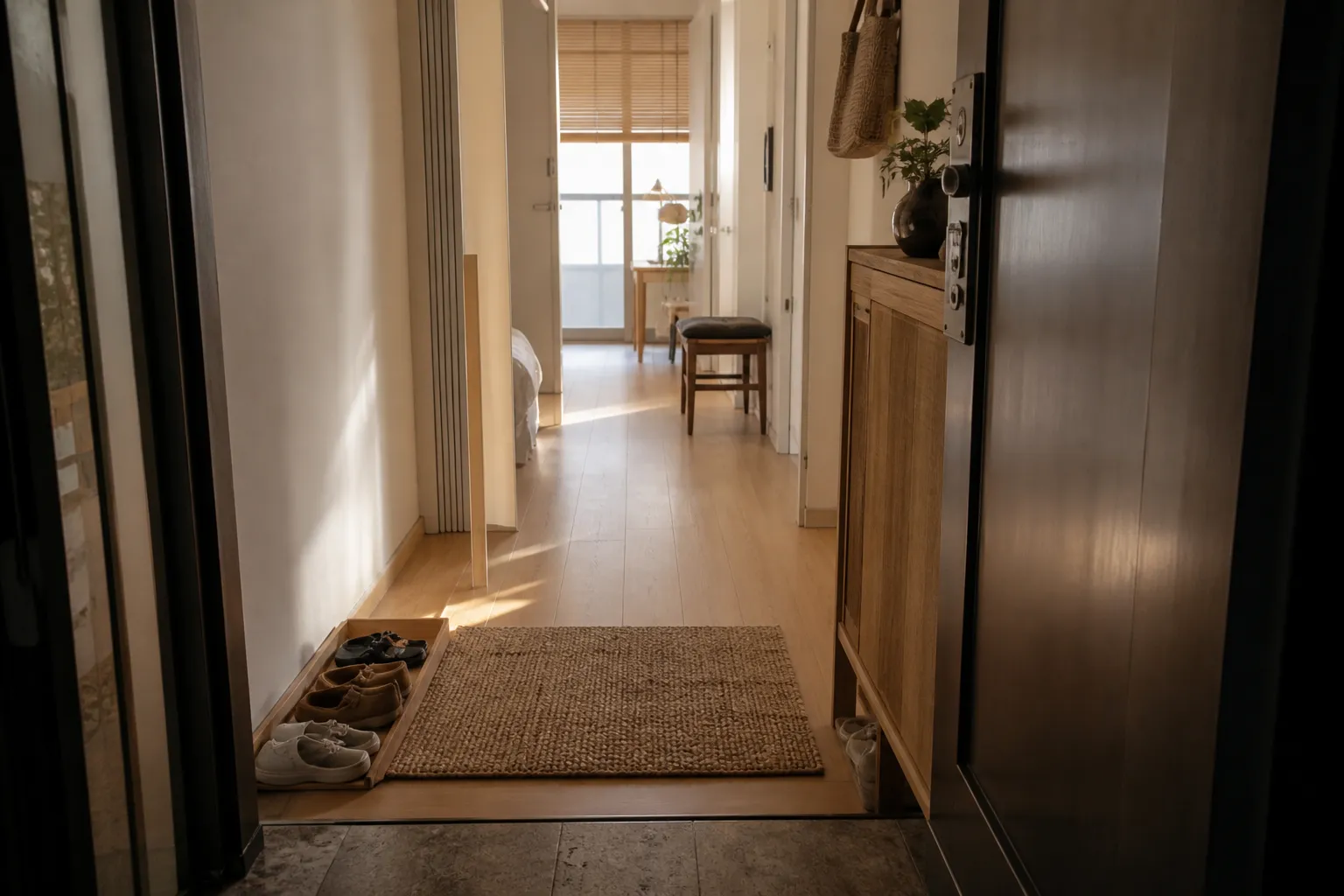
broader context
Broader context
Use the broader page when you need more context before this narrower page.
Keep this week’s shoes, not the whole collection
An entryway works best when it holds the shoes that are actually in rotation now. Usually, that means:
- the pair each person wears most days;
- one extra pair for rain, snow, garden work, school, commuting, or exercise if it is used this week;
- guest shoes only while guests are present;
- no formal, occasional, out-of-season, or “maybe soon” shoes unless the entry has generous storage.
This keeps daily shoe storage close to the door without asking the entry to act like a closet. The entryway is a transition space: people arrive, remove shoes, put on shoes, set down bags, open the door, and move into the home. If shoes interrupt those movements, the count is too high even if the rack still has empty slots.
A useful entryway shoe limit is not “how many pairs can fit?” but “how many pairs can stay here while the floor still reads as open?”
If the numbers feel too strict, try them for one week. Most homes reveal quickly which pairs are truly used and which pairs are simply parked near the door.
What changes the number
The right count depends on the room, the season, and the household routine. The space should set the limit.
Entry size and shape
A small apartment entry that opens directly into the living room usually needs fewer shoes than a home with a separate hall, porch, or mudroom. In an open-plan space, visible shoes become part of the first room people see. Even a few extra pairs can make the entrance feel unsettled.
A narrow hall also needs restraint. Shoes lined along one wall may look orderly at first, but if someone has to turn sideways, step over laces, or avoid a pile while carrying groceries, the entry is doing too much.
Larger entries can hold more pairs, but only when shoes are contained. A low shelf, bench, tray, or rack can support more shoes than loose floor storage. Still, the walking path matters more than the rack capacity.
Door swing and walking path
Before choosing a number, open the door fully and walk through the entry as you normally would. Carry a bag. Bring in a package. Help a child take off shoes. If the shoes sit where the body naturally steps, reduce the count or move the storage.
A good check: can a person enter, close the door, remove shoes, and move inward without shifting another pair? If not, there are too many shoes at the door, or the storage is in the wrong place.
Wet shoes and dirty soles
Wet shoes need more room than dry shoes. A pair damp from rain or snow should not be pushed under a pile or tucked tightly into a closed corner. It needs a place to drip, dry, and stay separate from clean pairs.
Research on footwear and indoor floors often treats shoes as one way outdoor material moves inside. Studies on track-in, flooring, and foot traffic do not create an exact shoe-count rule for the home, but they support a practical point: the pairs most likely to bring in water, grit, or mud deserve a controlled place near the entrance, not a scattered route through the house.
In wet seasons, the answer may temporarily change. You might keep one daily pair plus one weather pair per person by the door, while moving less-used dry shoes away. A tray, mat, or washable surface can make the wet-shoe zone easier to clean.
Flooring and cleaning effort
Tile, sealed concrete, hard flooring, and washable mats are easier to manage than carpet when shoes are damp or dirty. Carpeted entries usually work better with fewer shoes left out, because grit and moisture are harder to reset quickly.
The question is not whether the floor can tolerate shoes. The better question is how much cleaning the entry creates each week. If you are constantly sweeping around scattered pairs, lower the number and keep only the daily pairs near the door.
Household rhythm
A home where everyone leaves at the same time needs a simpler setup than a home with staggered schedules. Morning congestion can turn a small shoe pile into a daily irritation.
For families, one pair per person is often the cleanest starting point. Add second pairs only for a current, repeated need: rain boots during a wet week, sports shoes during the season, or indoor slippers if the household uses them every day.
A quick sorting method
Do not begin by buying more storage. Start by sorting the shoes already near the door.
1. Keep by the door: daily and weekly pairs
These are the shoes worn now, not someday. If a pair has been used several times this week or will be used tomorrow, it can earn a place in the entryway. This group may include everyday walking shoes, work shoes, school shoes, house slippers, or current weather shoes.
2. Move nearby: occasional pairs
These are useful but not daily. They can live in a hall closet, bedroom closet, under-bed box, or secondary shelf. Formal shoes, backup sneakers, and activity shoes used only on certain days usually belong here.
3. Store away: seasonal and inactive pairs
Snow boots in summer, sandals in winter, special-event shoes, and rarely worn pairs should move to deeper storage. If the entryway holds every season at once, it will almost always feel crowded.
After sorting, put back only the first group. Then check the room, not just the number. Can the door open? Is the walkway clear? Are wet shoes separate? Does the entry look settled from the main room? If yes, that is your current limit.
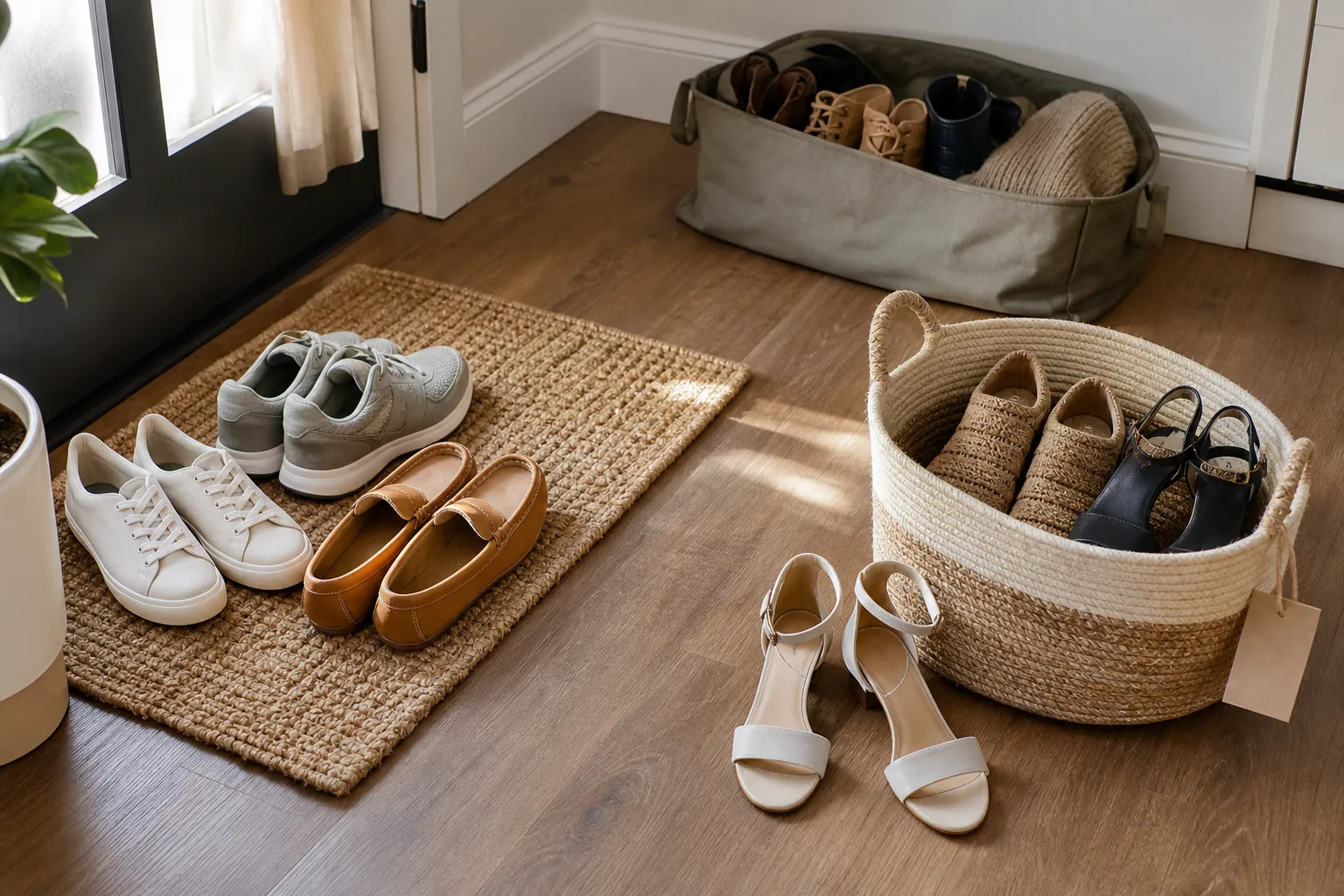
Examples for common homes
A one-person apartment may only need one daily pair by the door. If the entry opens directly into the kitchen or living space, one pair may be better than two. A second pair can stay in a closet and come out only when needed.
A couple can often manage two pairs each if the shoes are contained on a shelf or tray. If both people keep work shoes, gym shoes, sandals, boots, and slippers near the door, the entry will likely become storage rather than passage. Start with one pair each, then add only the pair that solves a real weekly need.
A family with children may need more pairs, but the count should still be firm. One daily pair per person is the base. Add rain boots or activity shoes only during the season they are being used. Low shelves or open bins often work better than a loose pile, especially when children need to find their own shoes quickly.
A home with frequent guests should not keep permanent guest overflow in the main path. Leave a small open area, tray, or lower shelf when guests arrive. Clear it again when they leave.
A home in a rainy or snowy climate may need fewer total pairs but more drying space. In other words, remove extra dry shoes so wet shoes can sit apart.
Common misunderstanding: rack capacity is not the right number
A shoe rack that holds twelve pairs does not mean twelve pairs should stay in the entryway. Capacity is a product feature. The right count is a room decision.
A full rack can work in a generous mudroom and overwhelm a small apartment entrance. A beautiful bench can still fail if shoes spill beyond it. A closed cabinet can hide visual clutter, but it may not be the best place for damp shoes that need air before being stored.
Another misunderstanding is treating every shoe-removal habit as the same storage problem. Some homes remove shoes at the door for cultural, practical, or cleanliness reasons. Others keep outdoor shoes on until reaching a closet. Either way, the question stays practical: which pairs need to be available at the transition point, and which pairs can live elsewhere?
The most common drift is leaving “weekly” shoes near the door long after the week changes. A pair used last month slowly becomes part of the scenery. A short weekly reset is enough: return what was not worn, bring forward the pair needed for the coming weather, and clear anything that has migrated into the walking path.
When the entryway number should be very low
Keep fewer shoes by the door when:
- the door cannot open fully without touching shoes;
- the entry is also the main route to the kitchen, stairs, or bathroom;
- shoes collect water where people step;
- the first view from the living room is a shoe pile;
- the floor is carpeted and difficult to clean around;
- children, older adults, or guests regularly pass through and the floor needs to stay simple;
- the home has no defined entry and the door opens directly into the main room.
In these cases, keep only the current daily pairs at the door. Put weather shoes on a separate tray only when needed. Everything else can move to a closet, bedroom, or seasonal bin.
Final answer
The best answer is a repeatable limit: keep the shoes people actually wear this week near the door.
Start with one pair per person. Add one weather or activity pair per person only if the door, floor, and walkway still work easily. If the entryway looks calm but is inconvenient, add back one pair people truly need. If it is convenient but visually crowded, move occasional shoes elsewhere. If wet shoes have nowhere to dry, reduce the dry pairs first.
A good entryway does not need to hold much. It needs to receive people, release them, and keep the first few steps of the home clear.