Entryway setup
Entryway Storage for Guests Who Remove Shoes
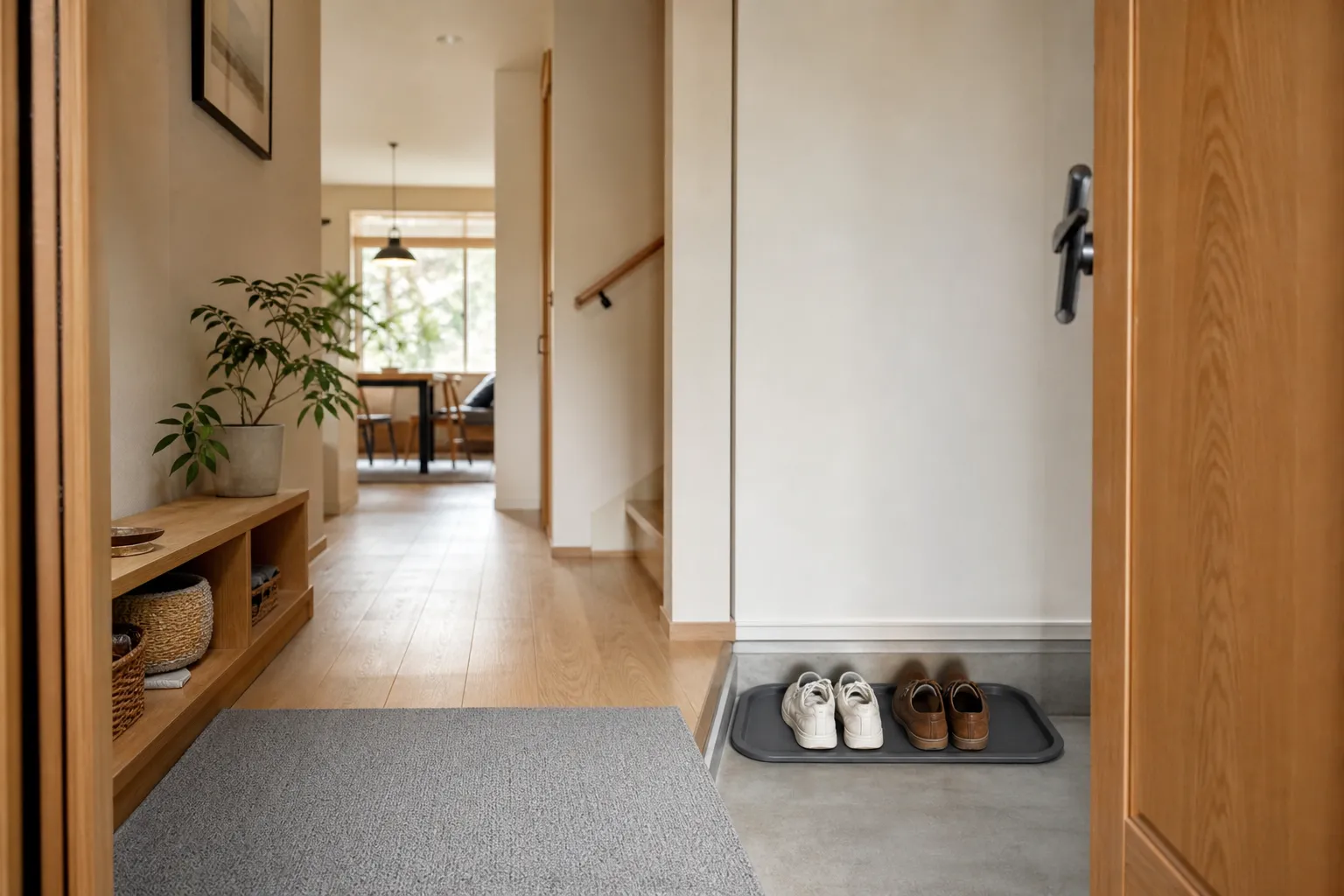
Good entryway storage for guest shoes is simple: place a visible, washable landing spot just inside the door, then add a low shelf, bench cubby, or basket nearby if you need overflow. Keep the setup outside the door swing, leave a clear walking line into the home, and make the cue obvious enough that guests do not have to ask where their shoes should go.
For most homes, the task is not to find a special cabinet. It is to answer four small questions: where guests stand, where the first pairs land, how wet soles are contained, and how easily the area can be cleaned afterward.
broader context
Parent topic
Use the broader page when you need more context before this narrower page.
Start where guests actually stop
Guest shoe storage works when it meets visitors at the moment they remove their shoes. If the rack is hidden around a corner or set too far from the threshold, shoes usually collect in a loose pile near the door instead.
A practical visitor entryway setup has three parts:
- Standing space: a clear spot where someone can pause, balance, and take shoes off.
- Landing space: a boot tray, washable mat, or other flat surface for the first pairs, especially in rain or snow.
- Storage space: a shelf, bench cubby, basket, or cabinet for dry pairs or overflow.
In a small entryway, the landing space may be the whole solution. A narrow boot tray against the wall can serve two or three guests better than a deep cabinet that makes the doorway feel tight. In a larger entry, a bench with open space below can give visitors a place to sit, set down a bag, and tuck shoes out of the main path.
Before buying anything, open the door fully and walk in as if you are carrying groceries or a weekend bag. Then imagine two guests arriving at once. If a basket, bench leg, or loose pair would interrupt that movement, the storage is either too large or in the wrong place.
Keep the doorway easy to move through
A calm entry does not have to look empty, but shoes need to stay out of the route people use to enter, turn, and continue into the home. Doorway research in mobility contexts is not a furniture guide, yet it does reinforce a practical point: door areas work better when they are open, visible, and not crowded.
Check these details before choosing between a tray, rack, cabinet, or bench:
- Door swing: the door should not hit shoes, baskets, mats, or bench corners.
- Walking path: there should be a clear route from the threshold into the room.
- Balance: guests should not have to twist around furniture to remove shoes.
- Lighting: the shoe area should be easy to see.
- Overflow: after three or four guests arrive, loose pairs should not spill into the main walkway.
For small entryway shoe storage, a slim two-tier shelf along a side wall often works better than a deep unit facing the door. If the entry opens directly into a living room, a low bench or lidded basket can quiet the view, but it still needs enough floor space in front for people to use it comfortably.
Treat the first step inside the door as shared space, not storage space. Shoes can sit beside it, under a bench, or on a tray along the wall, but they should not occupy the place where the next person needs to stand.
Open or closed guest shoe storage?
Open guest shoe storage is usually easier for visitors. They can see where shoes go, place them without opening anything, and retrieve them without asking. It also makes wet soles, mud, leaves, and grit easier to notice. The tradeoff is visual: open shelves and trays show the shoes.
Closed guest shoe storage looks quieter from a living room or dining area. A cabinet, covered basket, or bench with doors can reduce visible clutter. The tradeoff is use: guests may not know whether they are meant to open it, damp shoes may be shut away too soon, and cleaning can be easier to forget.
Guests visit often and remove shoes at the door
Better fit: open shelf or tray. Why it works: the cue is visible and quick.
Very small entry with little wall depth
Better fit: narrow tray or low rack. Why it works: uses less movement space.
Entry opens into a main sitting area
Better fit: bench cubby or closed cabinet. Why it works: keeps the view calmer.
Wet or muddy weather is common
Better fit: tray first, storage second. Why it works: contains moisture and dirt before shoes move elsewhere.
Guests may be unsure of the household custom
Better fit: visible storage plus a polite cue. Why it works: reduces awkward instruction.
Closed storage should not be the only landing place. If shoes arrive wet, start with a cleanable surface. A cabinet can hold dry shoes, house slippers, or repeat-guest pairs, but damp or muddy footwear needs a spot where drips and grit are easy to see and wipe up.
Choose surfaces you can actually clean
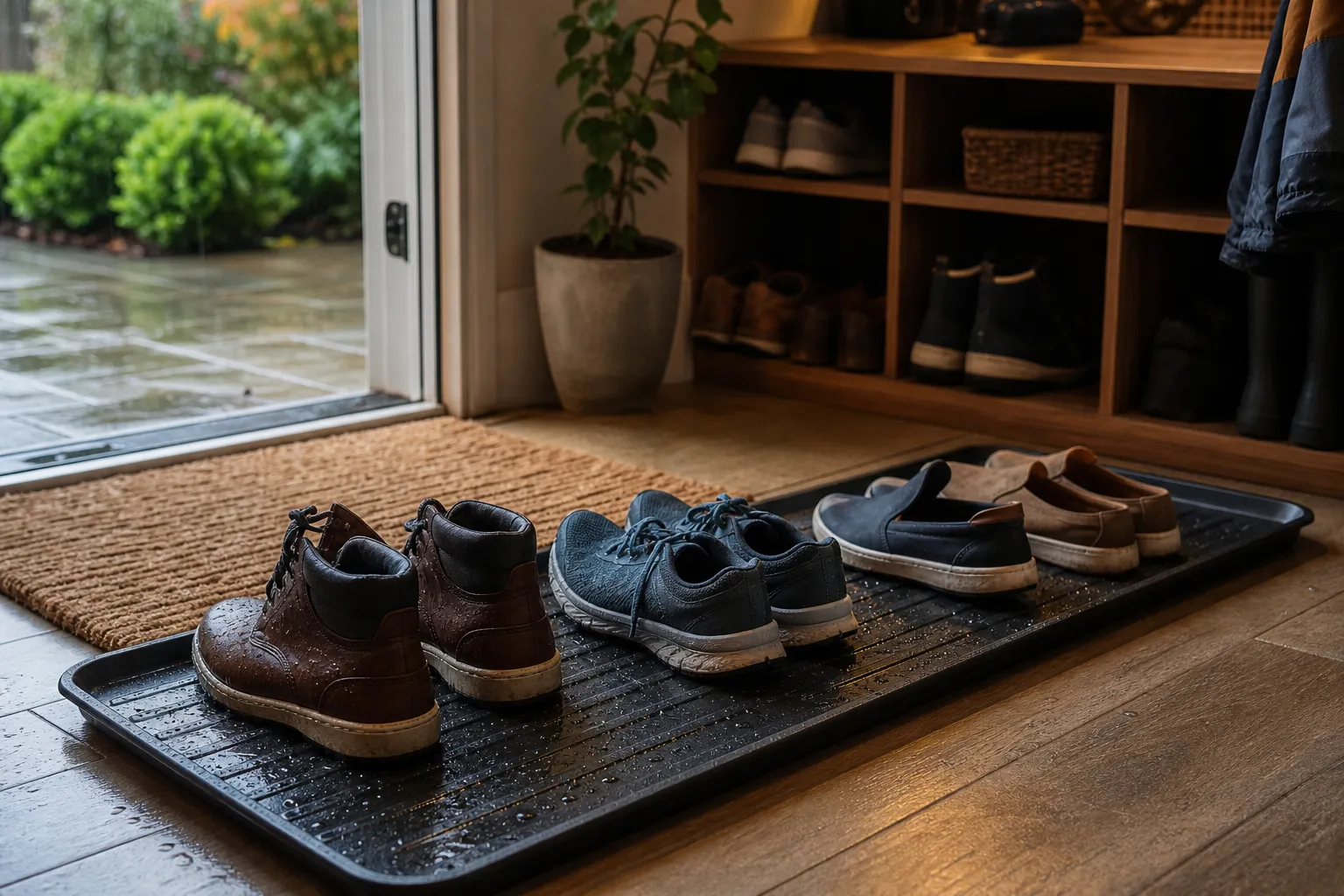
There is limited direct research on residential guest shoe storage, so it is better to stay with practical housekeeping rather than make broad cleanliness claims. One controlled study on shoes and indoor flooring found that shoe type, sole pattern, and flooring material can affect how particles are disturbed from floors. For a home entry, the modest takeaway is straightforward: give outdoor shoes a contained landing area, and choose a surface that is easy to clean.
Useful options include:
- Boot tray: good for wet shoes, muddy soles, umbrellas, and winter slush. A raised edge helps contain runoff.
- Washable mat: softer in appearance, but it should be easy to shake, vacuum, or launder according to its care label.
- Low open shelf: useful for dry pairs and repeat guests. Open sides or legs make cleaning around it easier.
- Bench with cubbies: helpful when guests need to sit, as long as shoes do not spill into the walking path.
- Basket: visually warm, but better for dry shoes or slippers. Deep baskets can make it awkward for guests to find their pair.
Avoid delicate materials for the first landing surface. Natural fiber baskets, pale unfinished wood, and fabric bins can look inviting, but they are less forgiving when soles are wet or gritty. They can still work as secondary storage if the actual landing area is a tray or washable mat.
Also check the cleanup reach. If a rack is too heavy to move and too low to clean under, dirt will gather exactly where shoes are used most. A removable tray or slightly raised shelf is often more practical than a built-in-looking piece that traps debris.
Make the shoe-removal cue polite
Shoe removal is common in many homes and cultural settings, but it is not a universal rule. Guests may come with different habits, and some may have personal reasons for keeping shoes on. The entryway should communicate the household preference without making visitors feel corrected at the door.
Visible storage does much of the work. A tray with open space, a pair of house slippers nearby, or a bench placed beside the shoe area quietly explains the routine.
Simple cues work best:
- Leave one or two open spaces on the tray before guests arrive.
- Keep household shoes tidy enough that the guest area is recognizable.
- Place offered slippers near the landing area, not across the room.
- Use a small sign only if guests often miss the cue.
- Avoid making visitors handle a complicated lid, drawer, or cabinet as their first action.
If you host elders, children, or anyone carrying bags, an entryway bench for shoes can be more hospitable than a tall rack alone. It does not need to be large. It only needs to provide a stable place to sit or pause without blocking the door.
Plan for wet weather and extra pairs
The setup that works for one dry pair may fail when four guests arrive in rain. Wet shoes need more horizontal space because pairs should not be stacked or pushed under furniture while dripping.
For rainy or snowy seasons:
- Put a tray or washable mat closest to the door.
- Leave room for at least two wet pairs without overlap.
- Move dry shoes to a shelf, bench cubby, or cabinet once guests are settled.
- Wipe the tray or floor edge after the visit.
- Let damp mats, trays, or liners dry before covering or closing them away.
Muddy shoes need an even clearer stopping point. If guests must cross a pale rug or wood floor to reach the rack, the storage is too far from the door. Bring the landing surface closer to the threshold, even if the prettier cabinet stays elsewhere.
For larger gatherings, do not expect one small rack to hold everything. A temporary second tray, folded washable runner, or clearly marked side area can keep the main walkway from becoming a shoe pile. Temporary storage is not less graceful if it keeps the room usable.
Quick check before guests arrive
Use this short check instead of overthinking the furniture category:
- Can the door open fully?
- Can two people stand inside without stepping over shoes?
- Is there an obvious place for the first pair?
- Is there a separate place for wet or muddy shoes?
- Can guests see the storage without being told?
- Can someone sit or steady themselves if needed?
- Can the tray, mat, shelf, or floor be cleaned after the visit?
- Is there overflow space for more pairs than usual?
If the answer is mostly yes, the entry is doing its job. Guest shoe storage does not need to be elaborate. It needs to be clear, reachable, cleanable, and placed with enough clearance that the doorway still feels like a welcome point.
FAQ
What is the easiest entryway storage for guest shoes?
A washable tray near the door is the easiest starting point. If you host often, add a low open shelf, bench cubby, or basket nearby for dry pairs and overflow.
Should guest shoes be hidden?
Not always. Open storage is easier for guests to understand. Closed storage can look calmer, but it works best after shoes are dry and after the landing area is already clear.
What should I do with wet shoes in the entryway?
Use a boot tray or washable mat closest to the door, with enough room for pairs to sit side by side. Move shoes to a shelf or cabinet only after they are no longer dripping.
How do I keep guest shoes from blocking the door?
Place storage along a side wall, under a bench, or beside the first step inside the door rather than directly in the walking line. Always test the door swing and the route into the room before settling on the layout.