Seasonal home reset
Autumn Cleaning Checklist Before Colder Weather Settles In
A useful autumn cleaning checklist is not spring cleaning with pumpkins added. It should help you do three practical things before colder weather settles in: clear summer dust from rooms, prepare textiles and entryways for wetter days, and check the home items that matter more once windows stay closed and heating runs more often.
Start indoors with surfaces, vents, bedding, closets, kitchen storage, and bathrooms. Then walk the edge of the home: doors, mats, shoes, drains, gutters, downspouts, and visible draft points. Finish with simple checks for HVAC filters, smoke alarms, carbon monoxide alarms, and obvious maintenance issues that should be scheduled rather than improvised.
The goal is not a perfect house. It is a home that is easier to live in when the days turn darker, colder, and more indoor.

broader context
Broader context
Use the broader page when you need more context before this narrower page.
The Short Autumn Cleaning Checklist
Use this as a printable-style fall cleaning checklist. If you want a fall cleaning checklist PDF, copy this section into a document and add dates, rooms, or initials beside each task.
Whole-home reset
- Dust ceiling fans, light fixtures, lampshades, shelves, and high corners.
- Wipe baseboards, window sills, door frames, and switch plates.
- Vacuum rugs, carpets, upholstery edges, and under movable furniture.
- Mop hard floors, especially near entryways and kitchens.
- Clean interior windows where lower autumn light makes streaks more visible.
- Clear furniture, curtains, baskets, and rugs away from vents and registers.
- Put away summer items that no longer need daily reach.
Kitchen and pantry
- Empty one pantry shelf or drawer at a time.
- Discard expired food and consolidate duplicate dry goods.
- Wipe shelves before returning jars, tins, tea, grains, spices, and staples.
- Clean the refrigerator, including door shelves and produce drawers.
- Wipe cabinet fronts, appliance handles, counters, sink edges, and backsplashes.
- Clean the microwave and oven according to appliance instructions.
- Check under or behind appliances only where you can move them safely without damage.
- Make a cold-weather cooking zone with soup pots, tea equipment, grains, broths, oils, and everyday bowls within easy reach.
Bedrooms and closets
- Wash heavier bedding before it goes back on the bed.
- Air out stored quilts, blankets, and throws if care labels allow.
- Rotate or flip the mattress only if the manufacturer recommends it.
- Vacuum under the bed and around headboards.
- Move coats, sweaters, warm socks, scarves, and indoor layers into reachable places.
- Set aside donation items only if they are clean and usable.
- Store delicate textiles in breathable containers where possible, away from damp corners.
Bathroom and laundry areas
- Scrub the tub, shower, sink, toilet, tile edges, and shower doors.
- Wash or replace a worn shower curtain liner.
- Clean visible buildup from grout lines, sink rims, drains, and corners.
- Wipe medicine cabinets and discard empty packaging or expired personal-care items according to local disposal guidance.
- Clear hair and lint from accessible drains, laundry corners, and appliance edges.
- Clean dryer lint screens after use, and arrange deeper vent attention if drying is slower than usual or the vent path is due for service.
Entryway and mudroom
- Shake, vacuum, or wash doormats.
- Sweep porches, steps, and the area just inside the door.
- Make a defined place for wet shoes before rain or slush arrives.
- Bring coats, umbrellas, hats, and bags into a clear daily-use order.
- Add a tray or washable mat for boots.
- Keep a small cloth or brush near the door for leaves, grit, and mud.
- Remove anything that blocks the door swing or crowds the threshold.
Cold-weather home checks
- Check or replace HVAC filters according to the system and filter manufacturer’s guidance.
- Dust accessible vents and registers.
- Look for furniture, curtains, or rugs blocking airflow.
- Test smoke alarms and carbon monoxide alarms according to the device instructions and local guidance.
- Check alarm age and replacement guidance; do not rely on a device past its stated service life.
- Look at windows and doors for drafts, worn weatherstripping, cracked panes, peeling caulk, loose thresholds, or sticking closures.
- Clear leaves from ground drains, basement stairwells, window wells, and visible drainage paths.
- Inspect gutters and downspouts from the ground where possible; schedule help if cleaning requires unsafe ladder work.
Room-by-Room Fall Cleaning Without Tearing the House Apart
The easiest way to finish autumn cleaning is to avoid opening every room at once. Work in a simple loop: high surfaces, middle surfaces, floor, then storage. That order keeps the home usable while you clean.
In the living room, begin with light. Autumn changes the room before the furniture changes: lower sun, longer evenings, dustier lamps, and windows that may stay closed more often. Wipe lamp bases and shades, clean window sills, dust shelves, and vacuum the edges of sofas and chairs. If you use floor cushions, wool throws, woven baskets, or low tables, lift and clean around them rather than only cleaning the open center of the room.
In the kitchen, autumn cleaning is partly about storage judgment. Summer foods, half-used condiments, picnic supplies, and scattered pantry goods can make cold-weather cooking feel harder than it is. Empty one shelf, clean it, then return only what you still use. Put daily tea, breakfast grains, broths, oils, and simple supper staples where hands naturally reach. This is not decoration; it is friction removal.
In the bedroom, keep the focus on textiles. Wash the bedding that needs laundering, air stored layers, and check care labels before washing wool, silk, down, or delicate cotton. Do not assume every blanket belongs in hot water or a dryer. Natural fibers usually last longer when handled according to their own care instructions. If a closet is crowded, remove obvious summer items first instead of trying to redesign the whole wardrobe in one afternoon.
In the bathroom, autumn cleaning is practical rather than atmospheric. Scrub the places where moisture and soap collect: shower corners, grout edges, sink rims, drains, and the base of the toilet. Replace a shower liner if it is torn, stiff, or visibly stained beyond cleaning. Check towels as objects, not just laundry: thin, sour-smelling, or frayed towels may need a better drying spot, a different washing routine, or retirement to cleaning-rag use.
Heating, Airflow, and Alarm Checks to Pair With Cleaning
A cold weather home reset should include a few checks that are easy to forget when you are focused on rooms.
For HVAC, keep the task modest: check the filter, replace it if it is due, dust accessible vents and registers, and make sure furniture or heavy curtains are not blocking airflow. ENERGY STAR frames filter changes and regular heating and cooling maintenance as part of responsible system care, but the right timing depends on the system, filter type, household conditions, and manufacturer instructions. Do not invent one universal schedule for every home.
Smoke alarms and carbon monoxide alarms belong in the same autumn pass because colder weather often means more heating use, more cooking, more closed windows, and more time indoors. For a home checklist, the step is simple: test alarms as directed, replace batteries or units when required, and check the date on the device. Use NFPA guidance for smoke-alarm placement, testing, and replacement language; use CDC guidance for basic carbon monoxide awareness around fuel-burning appliances.
Carbon monoxide needs especially plain handling. If your home has fuel-burning appliances, a fireplace, an attached garage, or portable fuel-burning equipment, follow the device instructions and keep equipment used only as intended. Never bring outdoor combustion equipment indoors. If an alarm sounds, follow the alarm instructions and local emergency guidance rather than trying to troubleshoot casually.
Keep the checks modest
This section should not turn into a technical indoor-air manual. Dusting vents, replacing a filter, or briefly airing a room can make a space feel cleaner and easier to maintain, but those small tasks should not be presented as solving complex air, moisture, soot, odor, or heating-system problems. If you notice persistent odors, repeated alarm issues, visible soot, ongoing dampness, or heating-system concerns, put that on a professional service list.
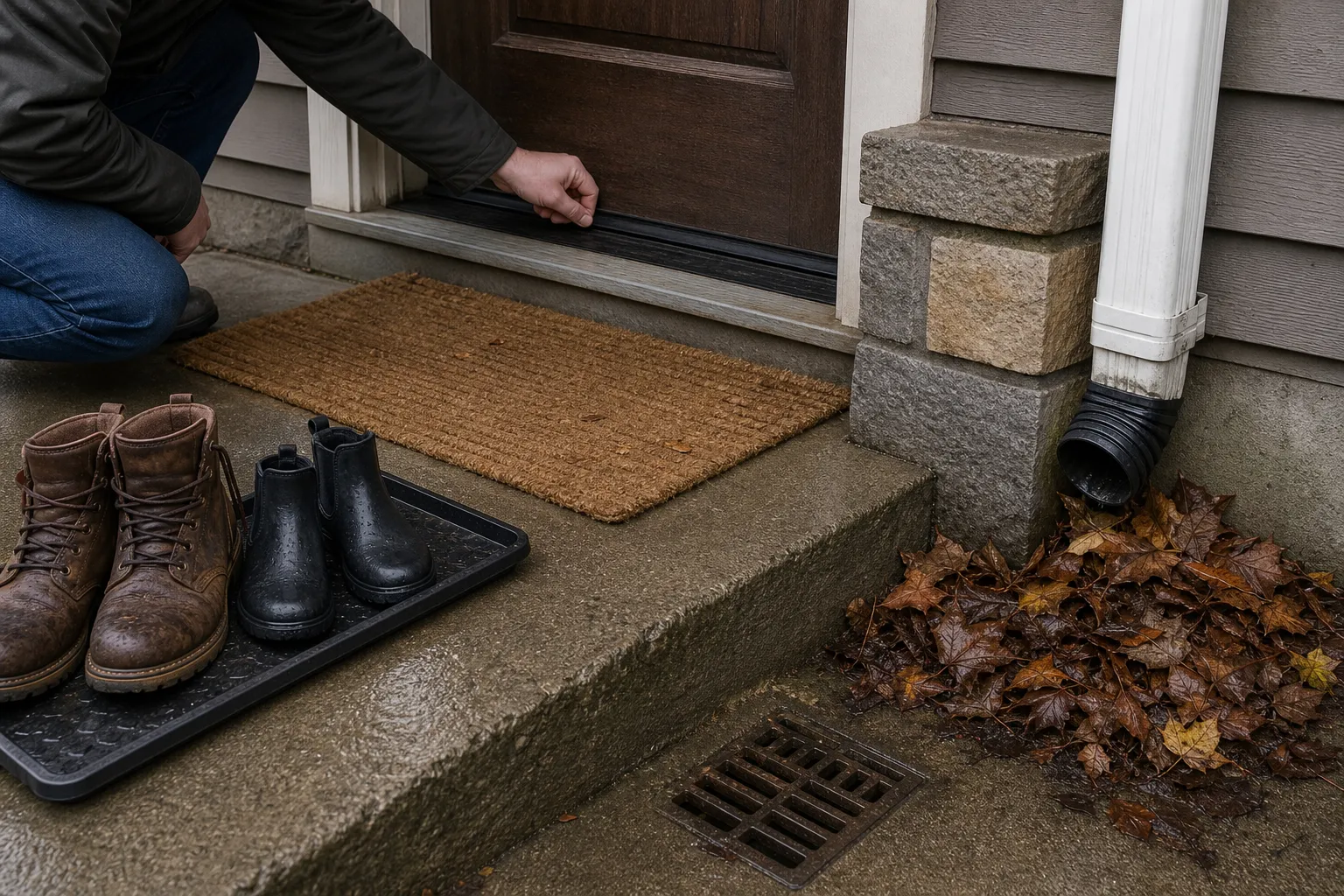
Doors, Windows, Gutters, and the Wet-Weather Edge of the Home
Autumn cleaning changes at the threshold. Leaves collect near drains. Shoes bring in grit. Mats get heavy with rain. Small drafts become more noticeable in the evening. Before colder weather settles in, walk around the home slowly and look for visible problems.
At doors, check whether the threshold sits firmly, the door closes without forcing, and the weatherstripping is torn, crushed, or missing. At windows, look for cracked glass, failing caulk, loose locks, or cold air that is obvious when the wind picks up. Minor gaps may be simple maintenance. Damaged frames, persistent leaks, uncertain repairs, or anything involving electrical, gas, roofing, or structural concerns should be scheduled with qualified help.
Outside, keep the checklist grounded in what you can observe. Are leaves piled near a drain? Are downspouts disconnected or pointed toward the foundation? Are gutters visibly overflowing or sagging? Are basement stairwells, window wells, or low paths collecting debris? University extension home-maintenance materials often include seasonal exterior checks because water needs a clear route away from the house. Still, a quick autumn check does not guarantee a trouble-free winter. It simply helps you notice obvious blockages and schedule work before weather makes access harder.
Gutter and downspout cleaning is a good example of a task with a clear line. Clearing leaves from ground-level drains or reachable debris is ordinary home care. Climbing high ladders, walking rooflines, repairing gutters, or working near ice, steep slopes, or electrical lines is different. Put those tasks on a schedule-and-delegate list rather than treating them as weekend cleaning.
What Changes the Checklist From Home to Home
A useful seasonal home maintenance checklist should bend to the house, not force one rigid order.
If you live under trees, exterior debris may need attention earlier and more than once. If your home has many textiles, start with bedding, throws, rugs, and closets before the weather turns damp. If you cook more in colder months, give the kitchen and pantry more time. If you have a small apartment, the entryway may matter more than gutters or exterior drainage. If you rent, focus on cleaning, alarm checks allowed by your lease, visible drafts, and written maintenance requests for items the landlord controls.
Climate also changes the rhythm. In a mild region, autumn cleaning may be mostly about dust, storage, and rain. In a colder region, the same checklist should happen earlier, before outdoor work becomes uncomfortable. In a wet region, mats, shoes, drainage, and bathroom ventilation may deserve more attention. In a dry, dusty region, vents, window tracks, baseboards, and fabric surfaces may feel more urgent.
The point is not to complete every possible autumn home cleaning task. The point is to prepare the rooms you actually use.
Common Confusion: Autumn Cleaning Is Not a Repair Plan
A fall cleaning checklist often gets mixed with contractor-style maintenance lists. That can be useful up to a point, but the difference matters.
Cleaning tasks
Washing bedding, wiping shelves, vacuuming edges, clearing pantry clutter, scrubbing bathroom surfaces, cleaning mats, and dusting vents.
Simple checks
Noticing drafts, testing alarms, checking filter status, and looking for visible debris in drainage paths.
Repair tasks
Electrical work, gas appliance concerns, HVAC repair, roof access, structural cracks, significant leaks, and high ladder work.
Keep those categories separate. A calm autumn cleaning day should not turn into improvised repair work. Make three lists as you walk:
- Do now: wipe, wash, vacuum, sort, clear, test.
- Buy or replace: filters, batteries if needed, worn mats, damaged shower liner, missing storage bins, weatherstripping for minor gaps if appropriate.
- Schedule: HVAC service, gutter cleaning at height, chimney or fireplace work, electrical concerns, persistent leaks, damaged exterior parts.
That separation keeps the home orderly without pretending every seasonal issue is a simple cleaning task.
A Calm One-Day Order for the Checklist
If you only have one day, use this order.
- Start with the entryway. It is the room that will carry the season first. Clean the mat, clear shoes, set up coats, and make space for wet items.
- Next, move through the living room and bedrooms with a dust-and-textile pass. Dust high surfaces, clean window sills, vacuum floors, and start bedding laundry. Do not empty every drawer.
- Then clean the kitchen storage that affects daily meals: refrigerator, pantry shelf, counters, sink, and the most-used appliances.
- After that, clean the bathroom surfaces that collect moisture and residue.
- Finally, do the cold-weather checks: HVAC filter, visible vents, smoke alarms, carbon monoxide alarms, drafts at doors and windows, and exterior debris you can handle from the ground.
End by writing down the things you did not do. Autumn cleaning becomes lighter when unfinished maintenance is named clearly instead of left as a vague feeling around the house.
A good autumn checklist does not make the home look staged. It makes the next cold week easier to enter: clearer floors, ready bedding, open vents, checked alarms, less pantry confusion, and a doorway prepared for rain, leaves, coats, and shoes.
FAQ
What should I clean first in autumn?
Start with the entryway, vents, visible dust, bedding, and kitchen storage. These areas affect daily life quickly once colder weather arrives.
Is autumn cleaning the same as seasonal home maintenance?
Not exactly. Autumn cleaning includes washing, wiping, sorting, and clearing. Seasonal home maintenance includes checks such as filters, alarms, drafts, drainage, and service scheduling. Some tasks overlap, but repairs should stay separate from ordinary cleaning.
Do I need to clean gutters myself?
Only if the work is safely reachable and within your ability. If the task requires high ladders, roof access, steep ground, ice, or working near electrical lines, schedule qualified help.
How often should I replace HVAC filters?
Follow your HVAC system and filter manufacturer’s guidance. Household conditions, filter type, pets, dust, and system use can all change the timing.
What belongs on a smoke alarm fall checklist?
Test alarms as directed, check battery or power status, look at the device age, and follow NFPA and manufacturer guidance for replacement. Add carbon monoxide alarms to the same seasonal pass where they are required or appropriate for the home.