Warm Lighting Without Yellow Walls: What Changes the Color
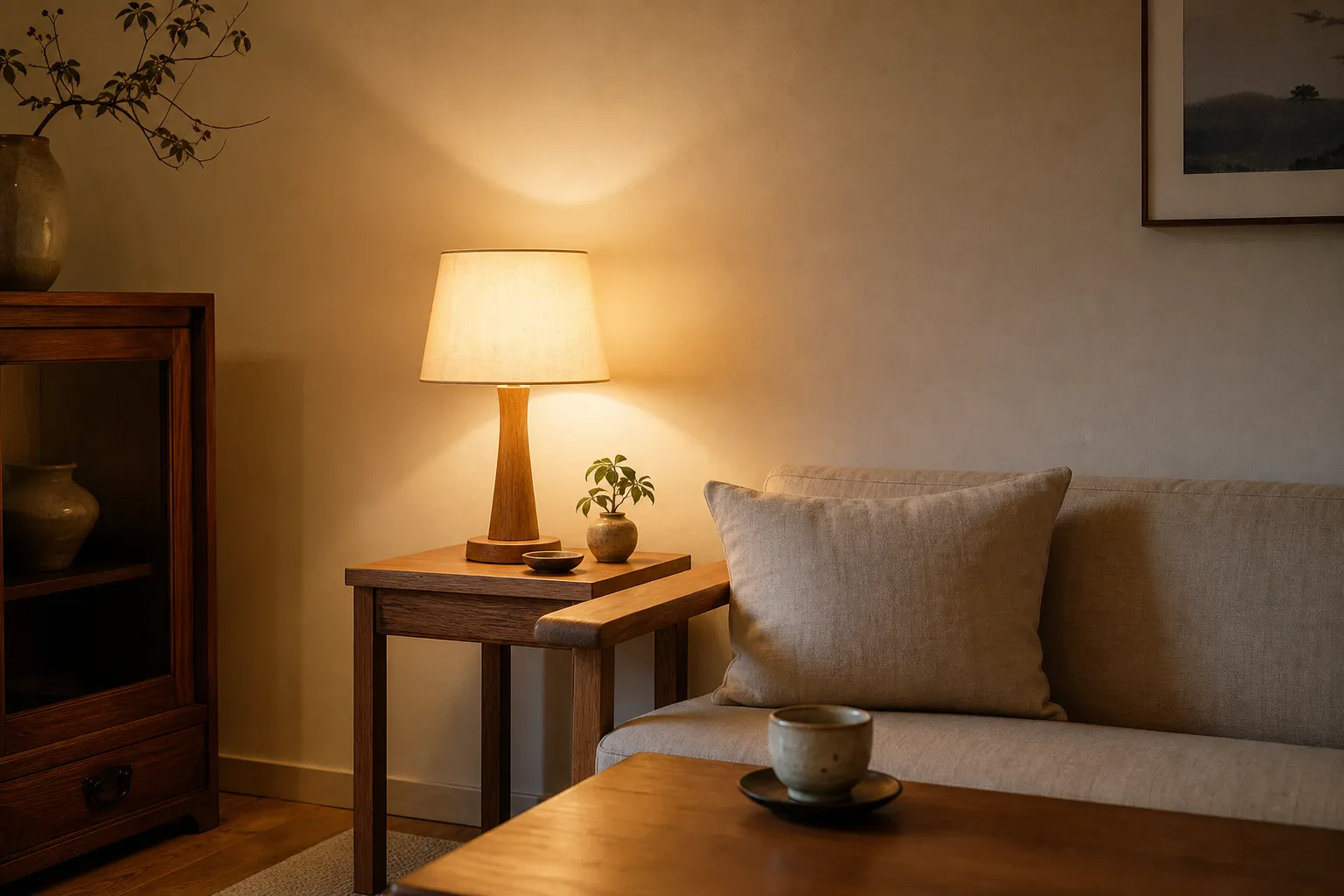
Warm lighting without yellow walls usually comes down to separating the bulb from everything the light touches. A wall can look yellow because the bulb is too amber, the room is too dim, the shade is tinting the light, the fixture is aimed at the wall, the paint has a creamy undertone, or nearby honey wood and beige textiles are reflecting warmth back into the room.
The first fix is not repainting. Read the bulb label, test the room at night and in daylight, remove or change one filter at a time, and judge the wall beside the actual furniture—not only from a paint chip.
broader context
Parent topic
Use the broader page when you need more context before this narrower page.
Start with the bulb label, but do not stop there
Many yellow lighting problems begin with one mix-up: brightness and warmth are treated as the same thing.
They are not. Consumer lighting guidance separates lumens, which describe brightness, from Kelvin / color temperature, which describes whether light appears warmer or cooler. A bulb can be bright and warm, dim and cool, bright and cool, or dim and amber. If the wall looks yellow, changing only the lumen number may not correct the color cast.
For warm white light at home, people often choose lower-Kelvin bulbs because they dislike a cold or bluish room. That can work well in a living room, tea corner, bedroom lamp, or evening dining area. But a very low, amber-heavy bulb can push cream, beige, pale stone, and off-white walls toward yellow. A bulb labeled “warm white” is also not a full guarantee; two bulbs with similar names can still look different in the same room.
When you check the label, look for:
- Kelvin / color temperature: Lower numbers generally look warmer; higher numbers generally look cooler.
- Lumens: This is brightness, not warmth.
- Dimming and fixture compatibility: A dimmed warm bulb may appear more amber, and not every LED works with every dimmer or enclosed fixture.
If the current bulb is very warm and the wall looks yellow at night, try a slightly less amber warm-white bulb before jumping to a cool daylight bulb. The aim is not to make the room blue-white. It is to keep the room visually soft while reducing the yellow cast.
Do not solve the issue by installing a hotter or higher-wattage bulb. Stay within the fixture’s rating, check LED and dimmer compatibility, and follow the manufacturer’s instructions for enclosed shades, recessed fixtures, and small lamps.
The wall is part of the color you see
A bulb does not act alone. The same wall can read differently under daylight, warm LEDs, shaded lamps, glossy paint, matte paint, wood floors, linen curtains, and nearby furniture.
That is why a paint chip can look calm in the store and yellow at home. The chip was judged under one set of lights and surroundings. Your room supplies another.
Undertone
Off-white, cream, ivory, greige, pale beige, and some light taupes may already contain yellow or warm undertones. Warm bulbs can make those undertones more visible.
Sheen
Glossier paint reflects more direct light. If a warm lamp sits close to the wall, a shinier surface may show the cast more strongly.
Texture
Limewash, plaster-like finishes, woven wallcoverings, and uneven surfaces catch light differently across the wall.
Wall position
A wall directly hit by a lamp or sconce will show the bulb’s character more than a wall lit indirectly.
Warm bulbs and wall color can work together. The problem usually appears when every element leans warm at once: amber bulb, cream shade, beige wall, honey wood, tan fabric, and evening light.
Check the shade, diffuser, and fixture direction
If you changed the bulb and the wall still looks yellow, look at what the light passes through.
A cream, tan, amber, gold-lined, rattan, bamboo, parchment, or aged fabric shade can warm the light before it reaches the wall. That may be lovely when the lamp is meant to glow softly on a table. It becomes less useful when the same lamp throws a yellow fan across a pale wall.
A white shade, clearer diffuser, or more neutral lining may make the same bulb look cleaner. A darker shade can reduce glare, but it may also lower brightness, making the room feel muddier and more amber.
Fixture direction matters too:
- Wall-washing sconces can exaggerate the bulb color on the wall.
- Upward-facing shades may warm the ceiling and upper wall.
- Downward task lamps can keep warmth on the table instead of spreading it across the room.
- Opaque shades may create a calmer pool of light with less wall color shift.
- Exposed bulbs can make both glare and color casts more obvious.
For warm lighting without yellow walls, it is often better to use several gentle light sources rather than one strong amber lamp aimed at a pale surface. A table lamp near a chair, a shaded floor lamp pulled slightly away from the wall, and a small low lamp on a shelf can feel warm without forcing one wall to carry all the color.
Daylight, wood, and textiles can change the answer by hour
A room that looks yellow at night may look balanced in the morning. A room that looks clean in daylight may turn golden after sunset. That is not a contradiction; mixed light changes what you see.
Test the wall under three simple conditions:
- Daylight with lamps off
- Evening with only the problem lamp on
- Evening with the normal mix of lamps on
Then notice what sits near the wall. Honey wood makes walls yellow more easily because it adds another warm surface into the visual field. So can straw baskets, beige curtains, tan upholstery, jute rugs, warm oak floors, brass finishes, and cream lampshades.
None of these materials is wrong. Natural wood, woven shades, and warm textiles can make a room feel grounded and quiet. But if every surrounding surface is warm, the wall may read yellower than the paint name suggests.
A quick check: hold a plain white sheet of paper against the wall in the evening. If the paper also looks yellow, the bulb, shade, or lamp direction is probably doing much of the work. If the paper looks fairly neutral but the wall looks yellow, the paint undertone or nearby materials may be more responsible.

A one-variable test before repainting
Before buying a full set of bulbs or repainting the room, change one thing at a time. If several things change at once, you will not know what corrected the color.
1. Remove the shade or diffuser temporarily, if the fixture allows it.
If the wall looks less yellow, the shade material or lining is part of the issue.
2. Try a slightly less warm bulb with similar lumens.
This separates color temperature from brightness. If the wall improves, the bulb was likely too amber for that surface.
3. Try similar color temperature with better brightness.
If the old lamp was too dim, the room may have looked muddy rather than simply warm. Keep the bulb within the fixture’s limits.
4. Move the lamp farther from the wall or turn it away.
If the yellow patch fades, fixture direction was a major factor.
5. Compare the wall beside real materials.
Place a paint sample, if you have one, near the wood floor, curtain, rug, and main lamp. A color that looked neutral in isolation may be warm in company.
6. Test at the time you use the room.
A bedroom wall should be judged when the bedroom lamps are on. A tea shelf should be judged in the evening if that is when you sit there. A dining corner should be judged with its normal pendant or lamp, not only at noon.
Often the first useful change is a bulb, shade, or lamp position—not a new wall color.
Warm yellow light vs warm white
“Warm yellow light” usually means the light visibly leans amber or golden. “Warm white” is meant to stay closer to white while feeling softer than a cool bulb. In real rooms, the line is not fixed because shade color, dimming, wall undertone, and nearby materials all shift the result.
For warm lighting without yellow walls, the better target is usually light that is:
- warm enough to avoid a stark blue-white look;
- clean enough that pale walls, paper, stone, and ceramics do not turn golden;
- bright enough for the room’s use without glare;
- filtered through a shade that does not add extra amber;
- placed so it does not paint one wall with a concentrated yellow beam.
If the wall itself is already light yellow, the question changes. You are not trying to remove all warmth; you are trying to keep it from becoming heavy. Natural wood can still work, but very honey-toned wood beside yellow walls and amber bulbs may intensify the effect. Softer neutrals, muted greens, stone, off-black accents, warm white ceramics, or cooler woven greys can give the space more balance. Test them in the room’s real light before committing.
What the sources can and cannot settle
The reliable source base helps with the mechanics, not with a universal home formula. ENERGY STAR and the U.S. Department of Energy clarify that lumens and color temperature are separate. NIST supports the broader point that color appearance changes with illumination, surface, and viewing conditions. Lighting studies add limited support for the way daylight, blinds, electric light, and light-source qualities interact.
What they do not provide is one Kelvin number that prevents yellow walls in every home. They also do not turn warm lighting into a guaranteed effect on mood, sleep, productivity, or wellbeing. For this room-level question, the useful answer is simpler: your wall color is shaped by the bulb, the surface, the shade, the direction of light, the surrounding materials, and the time of day.
If the wall looks yellow, do not assume all warm light is the problem. First remove extra amber filters, separate lumens from color temperature, check the paint undertone, and notice whether honey wood, beige textiles, or evening daylight are adding warmth. Change one variable, observe the same wall again, and only then decide whether the room needs a different bulb, shade, lamp position, or paint color.