Entry Table Setup
Seasonal Entry Table Decor Without Blocking Daily Drop Zones
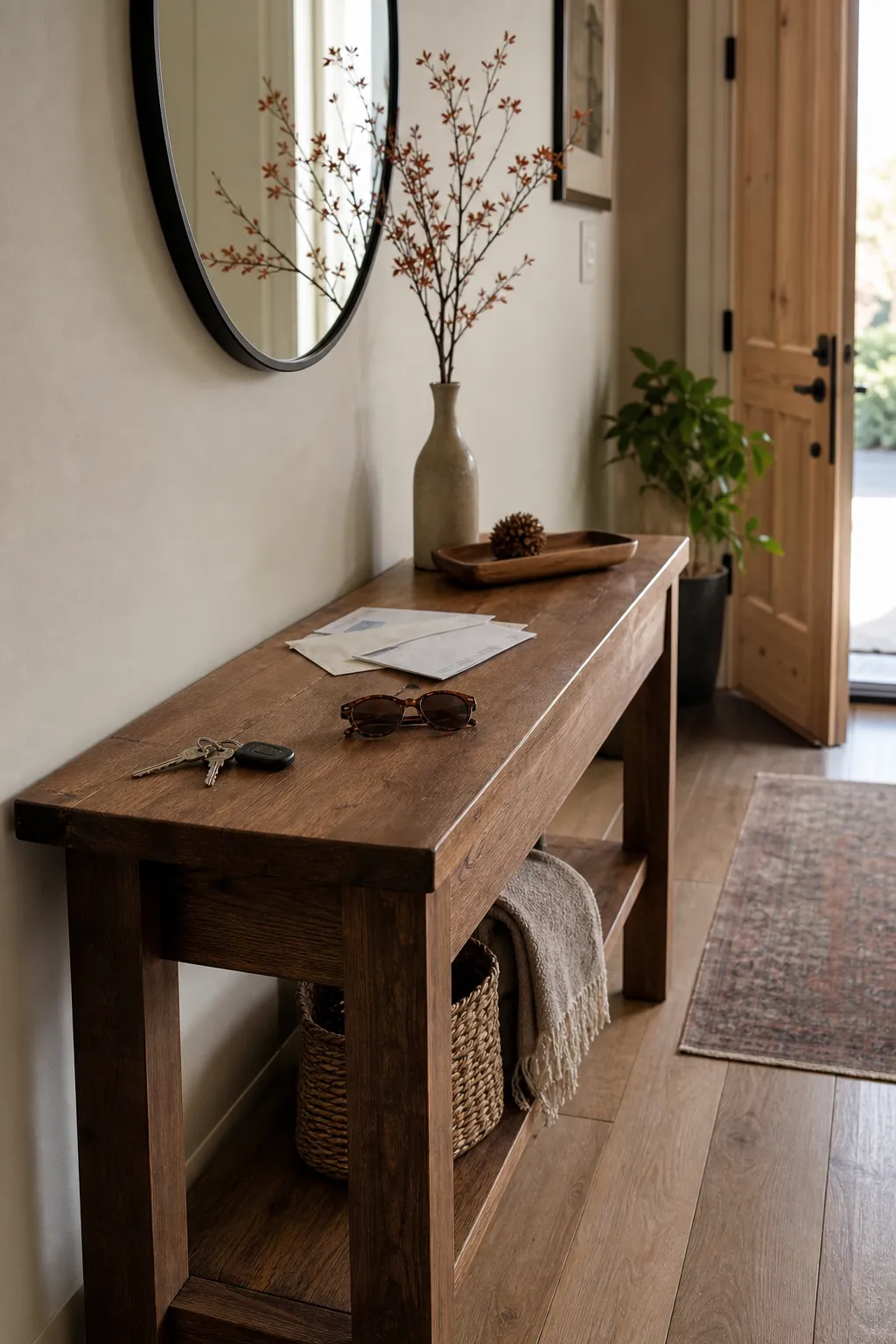
Seasonal entry table decor works best when the table keeps its first job: holding the things people carry in and out every day. Reserve a clear landing zone for keys, mail, sunglasses, wallets, leashes, and outgoing items. Then place the seasonal layer in one contained area, usually toward the wall or back edge, using a tray, shallow bowl, small vase, narrow basket, framed print, or vertical arrangement.
A good entry table can look seasonal at a glance without spreading decor across the whole surface, blocking the door swing, crowding the walking path, or making daily objects look misplaced. Think of it as two zones: one active, one seasonal. If those zones are not obvious, the decor is doing too much.
broader context
Broader context
Use the broader page when you need more context before this narrower page.
The Simple Layout That Usually Works
A low-clutter entry table needs a visible pause point. That does not mean the table must be bare. It means the useful part of the surface should still be easy to recognize when someone arrives with wet shoes, mail in hand, a bag on one shoulder, and no patience for rearranging objects.
A practical split is:
- One open landing zone for daily use
- One contained seasonal grouping
- One storage support for overflow, such as a drawer, hook, basket, or lower shelf
The landing zone can be an empty rectangle of tabletop, a tray reserved for keys and mail, or a shallow bowl paired with flat space for envelopes. The important part is that it stays available. A tray is not helping daily use if it is already filled with pinecones, paper leaves, small ceramics, dried flowers, or holiday pieces.
The seasonal grouping should usually be smaller than the working zone. A compact vase with branches, a small ceramic object, a folded textile runner at the back edge, or one framed seasonal print can be enough. In an Eastern-inspired home, restraint often feels more natural than a full tabletop scene: natural texture, negative space, and one well-placed object can carry the season without turning the entry into a display shelf.
For a narrow hallway entry table, keep the arrangement especially shallow. Wide bowls, leaning signs, layered garlands, and bulky baskets can project into the route people use to move through the doorway. If the table sits close to the door, check whether the door can open fully and whether coats, umbrellas, and bags still move through the area without catching on anything.
Plan Around What Lands There First
Before choosing entryway seasonal decor, list what actually lands on the table during a normal week. Common items include keys, mail, wallets, sunglasses, transit cards, earbuds, dog leashes, gloves, small packages, umbrellas, and outgoing returns. The table may also collect things that are not meant to stay there, such as receipts, school papers, hair ties, or loose change.
That list decides how much surface can honestly be decorative.
If the table receives only keys and one envelope, a small seasonal console table styling moment may be easy. If it receives mail, bags, pet items, and packages, the decorative area should be limited, and storage matters more than styling. In that case, keep the tabletop for the most immediate daily items and move the seasonal cue upward or sideways: a small wreath on a nearby hook, a narrow vase at the back, a framed print above the table, or branches that rise vertically rather than spread outward.
Table depth also matters. A deeper console can hold a rear seasonal layer and a front landing space. A shallow table may only have room for one tray and one vertical accent. An object that looks small in a shop or photo can still crowd the surface once keys, mail, and sunglasses arrive.
The simplest test is to place the daily items first.
Put down the key bowl, the mail tray, the wallet spot, and anything that must be grabbed on the way out. Only then add the seasonal object. If the decor only looks good when the daily objects disappear, it is not suited to this table.
Use Containment Instead of Scatter
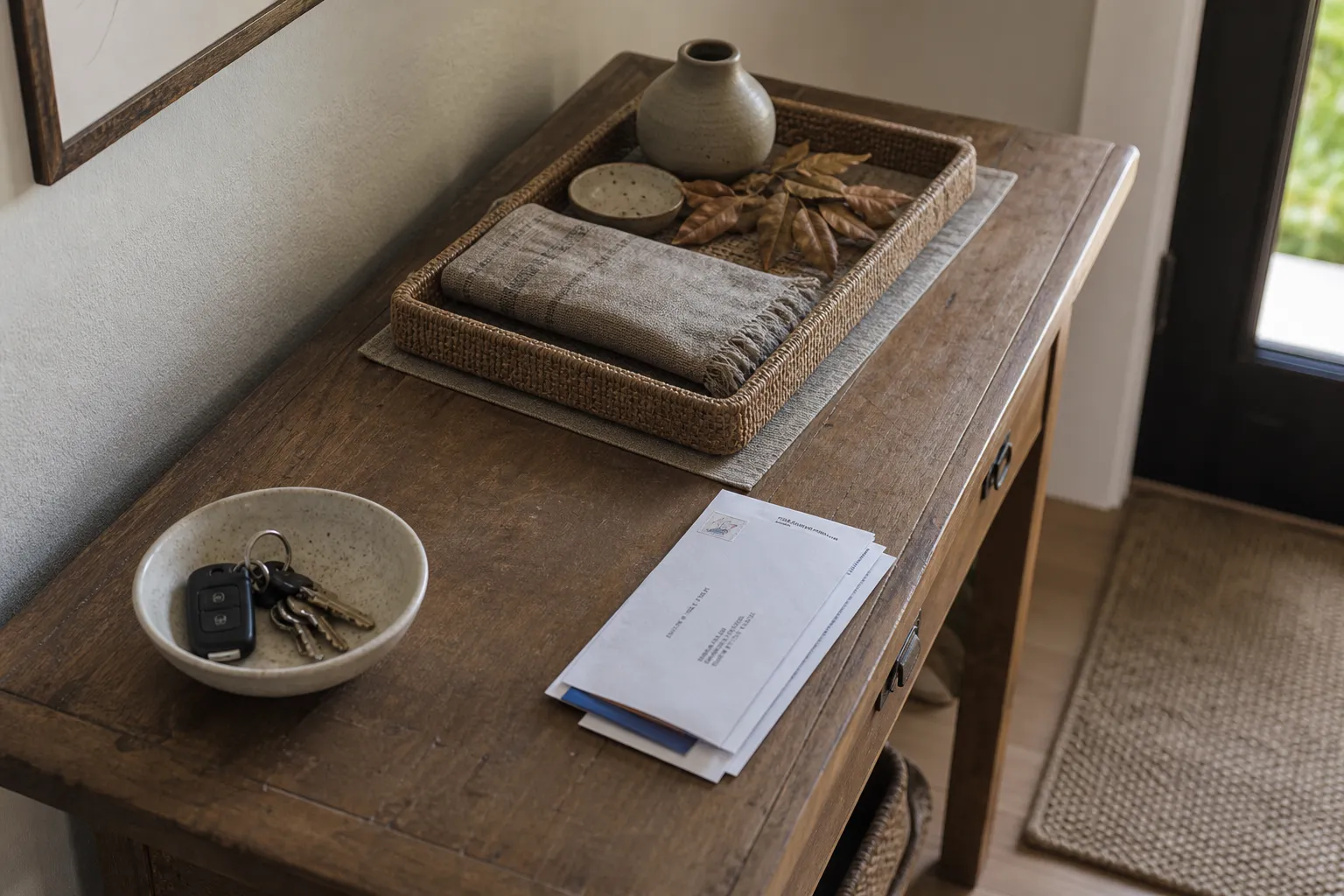
Contained seasonal decor is easier to live with than loose decorative scatter. A tray, low basket, ceramic dish, or narrow runner gives the eye one defined area and keeps small objects from drifting into the working zone. It also makes cleaning easier because the whole group can be lifted when the surface needs wiping.
Useful contained options
- A small tray with one ceramic object and a seasonal stem
- A shallow bowl that holds only decorative items, not keys
- A narrow basket at the back of the table
- A folded textile under one vase or lamp
- A single low dish with seasonal natural material
Roles to keep separate
Avoid mixing daily storage and decor in the same container unless the roles remain clear. A key bowl filled with seasonal objects stops being a key bowl. A mail tray under a vase becomes awkward to use. A basket meant for gloves becomes less useful if it is staged with decorative branches.
Vertical seasonal accents often work better in small entries. Branches, slim vases, hanging elements, framed paper, or wall-adjacent objects can show the season without using much tabletop depth. Keep the height practical: it should not block a mirror, cover a switch, catch on sleeves, or make the entry feel crowded from the doorway.
Surface protection is worth handling at the same time. Natural materials, ceramics, metal bowls, candles, water-filled vases, and dyed textiles can mark some finishes if they trap moisture, shed material, or scrape the surface. Use a coaster, liner, felt pad, washable tray, or folded cloth when the object sits on a surface that stains or scratches easily.
Seasonal Cues That Stay Low-Clutter
The easiest way to keep a low-clutter entry table is to rotate one or two cues, not rebuild the whole table. The season can come through color, texture, plant material, ceramic shape, paper, or textile weight.
Spring and summer
Spring might be a small vase with fresh or dried branches, a pale cloth, or one light ceramic dish. Summer might be a bare surface with a woven tray, a small bowl for sunglasses, and a simple vertical stem.
Autumn and winter
Autumn might use a warmer textile, a shallow bowl with one type of natural material, or a small earthy vessel. Winter might be a darker ceramic, a compact evergreen cutting, a plain candleholder used decoratively, or a framed print with quieter tones.
The point is not to create a complete seasonal scene. The point is to let the entry acknowledge the season while still working as an arrival and departure station.
If you use scented objects, candles, incense, or diffusers, keep them optional and modest. They can be unpleasant or impractical near coats, paper mail, children, pets, or busy doorways. If flame or heat is involved, keep it away from flammable materials, do not leave it unattended, and do not place it where bags, sleeves, or mail can brush against it. In many entries, an unscented object or simple branch arrangement is the better everyday choice.
Natural materials also need a little realism. Dried grasses can shed. Fresh branches may drop leaves. Water in a vase can mark a surface if spilled. Pine needles, seed pods, sand, and soil can migrate into the key tray. Choose materials that match the amount of cleaning and maintenance the entry can absorb.
What Changes the Answer
The right amount of seasonal entry table decor changes with the entryway, not with a fixed styling formula.
Narrow hallway or wider foyer
A narrow hallway needs stricter edges. Keep the tabletop shallow, avoid anything that extends into the walking path, and preserve clear movement around shoes, bags, and the open door. A wider foyer can handle a broader decorative group, but it still needs an empty landing zone.
Drawers or no drawers
A table with drawers can carry more visual quiet because daily items can disappear quickly. Keys, sunglasses, stamps, dog bags, and loose change can live inside the drawer while the surface stays simpler. A table without drawers needs more visible organization: trays for daily items, a bowl for keys, hooks nearby, or a lower basket for leashes and umbrellas.
Children, pets, guests, and weather
A household with children, pets, or frequent guests usually needs sturdier choices. Lightweight vases, loose seasonal scatter, dangling cords, and fragile objects near the table edge can become annoying in daily use. Heavier ceramics, wall-mounted accents, soft baskets, and fewer loose parts are often easier to manage.
A table near strong sunlight, an exterior door, or a damp entry may also need different materials. Paper may curl, textiles may collect dirt, and certain natural pieces may dry out or shed faster. If the entry sees wet umbrellas, muddy shoes, or winter gloves, preserve more working space and choose objects that can be moved or cleaned without fuss.
Common Confusion: Styled Does Not Mean Filled
A common mistake is treating the whole tabletop as the decorative area. This often comes from looking at still images where keys, mail, bags, leashes, and outgoing packages have been removed. A photographed console can look balanced because real daily objects are absent. A working entry table has to remain useful when those objects return.
Another confusion is assuming that more seasonal pieces create a stronger seasonal feeling. In practice, too many small objects can make everyday items look messier. A key ring beside one small vase looks intentional. A key ring dropped among five decorative pumpkins, a garland, a candleholder, and a stack of themed objects looks lost.
There is also a difference between a seasonal table and a storage station with seasonal color. If your entry handles a lot of traffic, let storage lead. Use a tray, basket, hook, or drawer first, then add one seasonal material or color. The result may be quieter, but it will usually hold up better through real arrivals and departures.
A Quick Check Before You Leave It in Place
After styling the table, use it for a normal entry-and-exit sequence before deciding it is finished.
Walk in with keys, mail, a bag, and whatever you usually carry. Put everything down without moving the decor. Then pick up what you need to leave again. Open the door fully. Check the mirror or switch if you use one. Reach for the leash, umbrella, or outgoing package.
If any step requires shifting a vase, lifting a decorative tray, or balancing mail on an edge, edit the arrangement. The best seasonal setup is usually the one that survives this test with little drama: a clear drop zone, a contained decorative area, protected surfaces, and enough walking clearance for the entry to keep doing its everyday work. Seasonal decor should mark the moment, not compete with the movement of the home.