Living Room Decision
Low Sofas vs Floor Cushions for a Calm Living Room
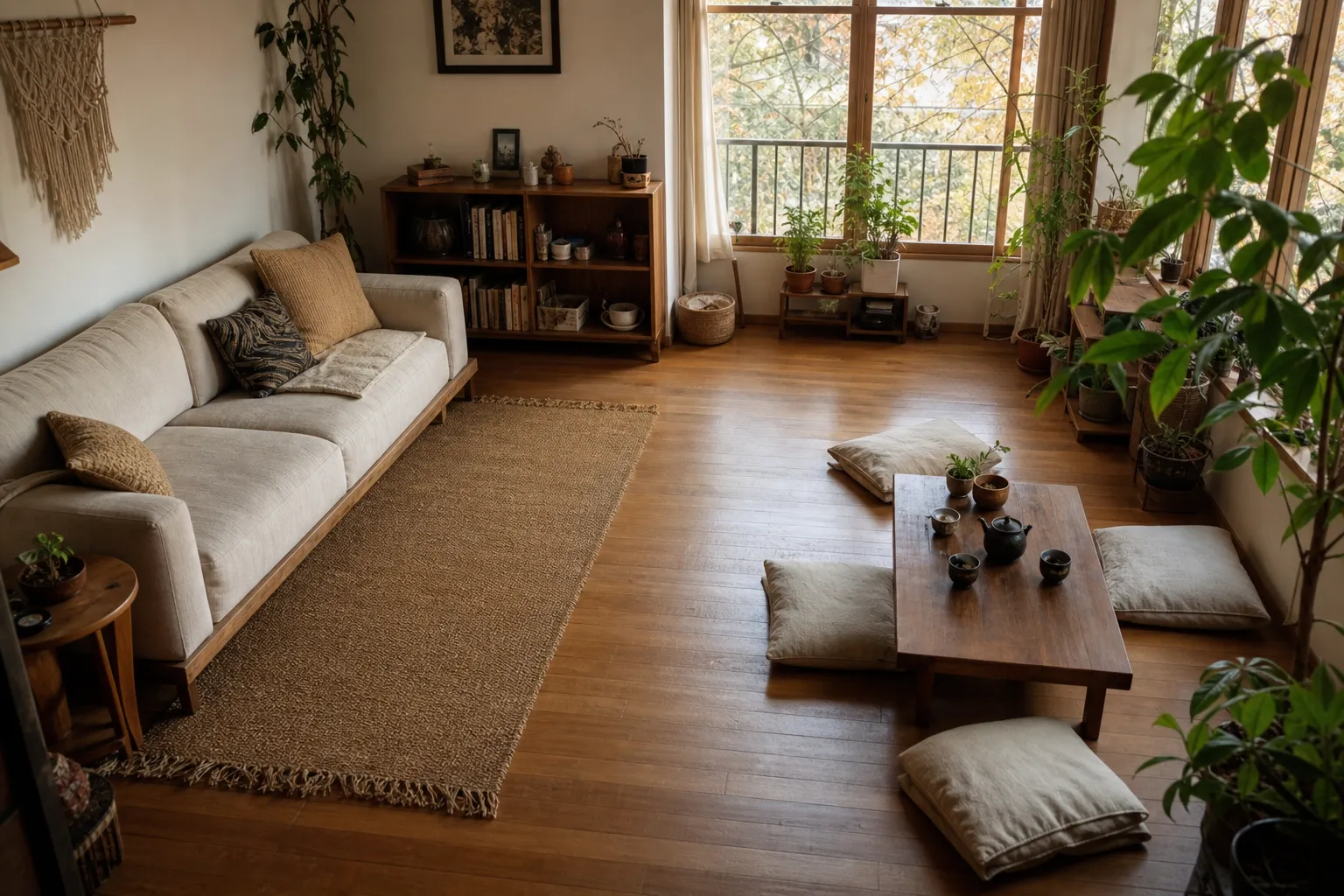
For most living rooms, a low sofa is the easier everyday choice. It gives the room a steady center, works for guests, and stays ready without much resetting. Floor cushions are better when the room needs to stay flexible, the floor is pleasant to use, and the household is happy to move, stack, clean, and store seating often.
The practical answer to low sofa vs floor cushions is not about which one looks quieter in a photo. It depends on how people enter the room, how easily they get down and up, where loose cushions go after use, how much cleaning access you need, and whether the seating should feel fixed or changeable.
A calm living room usually comes from fewer small conflicts: fewer awkward paths, fewer objects without a home, fewer pieces that look good but make daily use harder.
broader context
Parent topic
Use the broader page when you need more context before this narrower page.
The Short Decision
Choose a Low Sofa When
The living room needs a clear center, regular back support, predictable guest seating, and a piece of furniture that stays ready. It suits rooms where people read, talk, watch something, drink tea, or sit for longer stretches without thinking much about the floor.
Choose Floor Cushions When
The room is small, multipurpose, or used in shorter, informal sessions. They suit a space where seating can disappear after use, open floor area matters, and regular users are comfortable sitting close to the ground.
The simplest test is this: if the seating needs to be ready whenever someone walks in, a low sofa usually wins. If the room shifts between sitting, children’s play, tea, reading, floor work, or open space, floor cushions may fit better.
Neither option automatically makes a room feel settled. A low sofa can look heavy if it blocks movement. Floor cushions can look relaxed in theory but messy in practice if there is no storage plan, no cleaning habit, or too many loose pieces.
What Changes the Answer in a Real Room
Getting Down and Getting Up
Floor seating asks more from the body than a low sofa. That is not a judgment about age or fitness; it is a practical household check. Some people enjoy sitting close to the ground for short periods. Others find it inconvenient, especially when carrying a drink, holding a plate, wearing fitted clothing, or standing up repeatedly.
If older relatives, pregnant visitors, guests with limited mobility, or people with knee, hip, or balance concerns often use the room, floor cushions should not be the only seating. A low sofa gives the room a more predictable option.
A useful compromise is to keep a low sofa as the main seat and add one or two floor cushions for flexible use. That keeps the soft, low look without requiring every visitor to use the floor.
How Long People Actually Sit
A floor cushion can be pleasant for a short tea break, a casual conversation, or a quiet corner. For longer sitting, many people want a backrest, arm support, or more room to shift position. Some floor cushions work well beside a wall, platform, or low table, but that still depends on the room.
A low sofa is usually better if the living room is where people spend an evening. It gives the seating area a known shape: seat, back, table, lamp, rug, and path. Floor cushions work better when the room’s use is lighter, shorter, or more changeable.
Before buying either, picture the longest ordinary use, not the most attractive moment. If the room is mostly used for ten-minute pauses, cushions may be enough. If it holds two-hour conversations, a low sofa is easier to live with.
Traffic Paths
Low furniture can make a room feel open, but only if it does not cut across the natural path. A low sofa still has a fixed footprint. It should leave enough space to walk around the table, reach shelves, open doors, and move through the room without turning sideways every time.
Floor cushions seem smaller, but they spread during use. One cushion beside a tea table, another near the window, and another at the rug edge can quickly interrupt movement. If people must step over cushions to cross the room, the arrangement will not feel calm for long.
Mark the seating footprint before deciding. Use folded towels, paper, or existing pillows to map the size. Walk through the room as if carrying cups, books, laundry, or a tray. The better option is the one that leaves the daily path simple.
Cleaning Access
A low sofa creates a cleaning question underneath and behind it. Very low bases can trap dust where a vacuum or mop does not fit easily. A sofa with visible legs may be easier to clean under, though it may look less grounded than a base close to the floor.
Floor cushions create a different routine. They need to be lifted, shaken, moved, aired, and kept away from spills, pet hair, damp floors, and crumbs. If they stay on the floor all week, they become part of the floor-care routine. If they are stored after each use, the room may look simpler, but the habit takes more effort.
For households with pets or children, fabric care matters more than the seating category. Removable covers, washable textiles, darker weaves, and fewer loose pieces can make either option easier. If the room sees snacks, muddy paws, craft materials, or daily play, do not choose a pale, delicate floor cushion simply because it photographs well.
Storage
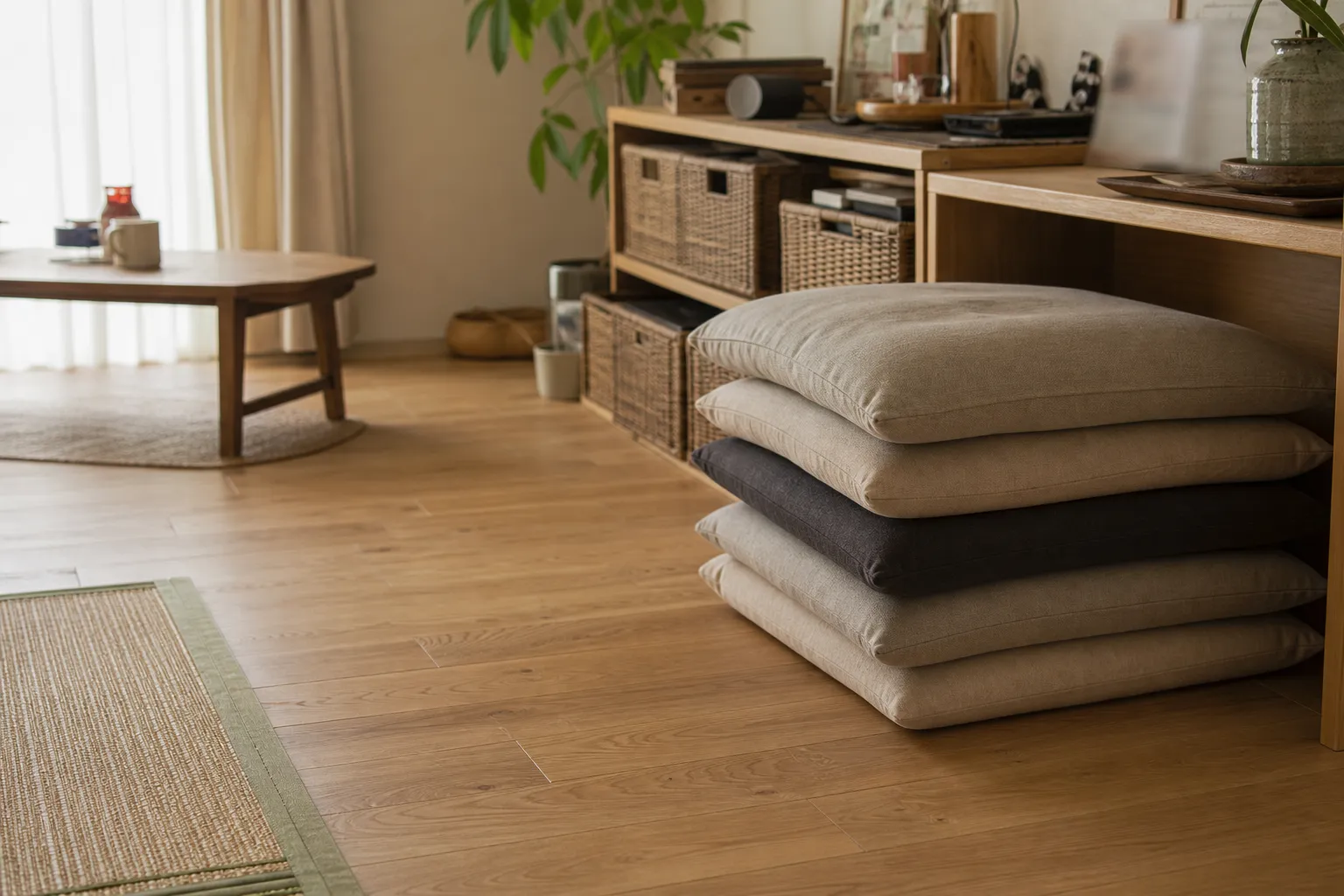
Floor cushions need a home when they are not being used. Without storage, they often end up stacked in a corner, pushed under a table, or scattered around the rug. That may be fine in a casual room, but it can work against the quiet atmosphere people often want.
Good cushion storage can be simple: a low bench, a basket large enough for the actual cushion size, an open shelf, or a dedicated stack beside the wall. The important point is that storage must be easy enough to use every day.
A low sofa does not need storage, but it does require commitment. Once chosen, it sets the room’s layout. If you like changing the room often, that fixed presence may feel limiting.
How Each Choice Shapes the Room
A Low Sofa Anchors the Living Room
A low sofa gives the eye a stable horizontal line. It can make the seating area feel settled, especially with a low table, woven rug, warm lamp, or simple side table. In a long room or open-plan space, that anchor can be helpful because it shows where gathering happens.
The tradeoff is weight. Even a low sofa can feel bulky if the arms are thick, the upholstery is dark, or the back blocks a window. In a compact apartment, a sofa that is too deep may consume the room’s breathing space.
For a calm low sofa living room, look for proportion before style. The seat should not crowd the table. The back should not cut off the view across the room. The fabric should fit the household’s cleaning reality. A low sofa is not automatically quiet; it works when it leaves enough air, light, and movement around it.
Floor Cushions Keep the Room Flexible
Floor cushions can make a living room feel more open because they do not permanently define the room in the same way. They can be pulled near a low table, moved toward a window, stacked for storage, or used only when needed. In a small room, that flexibility can be valuable.
The tradeoff is discipline. A floor cushions living room needs fewer pieces than people often expect. Too many cushions create visual noise. Cushions in many sizes, colors, and fabrics can make the room feel unsettled unless the rest of the space is very restrained.
A good floor-cushion arrangement usually starts with one clear surface: a rug, mat, or clean section of floor. Then add only the number of cushions the room truly uses. If there are six cushions but only two people sit there most days, the extra four are storage objects, not seating.
Floor Seating vs Couch Is Also About Social Ease
A couch gives guests an obvious invitation: sit here. Floor cushions require more reading of the room. Some guests will enjoy them; others may hesitate, especially if they are unsure whether shoes are allowed, where to place a bag, or how formal the gathering is.
If the living room is mainly private, floor seating can work well as a personal preference. If the room often hosts people who do not know the household well, a low sofa is more legible. It reduces the need to explain how the room works.
This does not mean a floor-based room is wrong for guests. It means the host should provide choice. A low chair, bench, or compact sofa can keep the room welcoming without giving up the low, grounded feeling.
A Practical Comparison
Does the room need a fixed center?
Low sofa: strong choice.
Floor cushions: works only with careful placement.
Is seating used for long periods?
Low sofa: usually easier.
Floor cushions: depends on support and habits.
Do guests visit often?
Low sofa: more predictable.
Floor cushions: best with another seating option.
Is open floor space important?
Low sofa: takes a permanent footprint.
Floor cushions: can be moved or stored.
Is cleaning under furniture difficult?
Low sofa: check base height and access.
Floor cushions: lift, air, and wash covers as needed.
Are pets or children common users?
Low sofa: choose durable fabric.
Floor cushions: expect more floor-level mess.
Does the room change function often?
Low sofa: less flexible.
Floor cushions: strong choice.
Is visual simplicity the priority?
Low sofa: simple if well proportioned.
Floor cushions: simple only with storage discipline.
This comparison is not a rule. It is a way to reveal the hidden work each option creates.
Common Misunderstanding: Lower Does Not Always Mean Calmer
Many people connect low seating with a quieter visual mood. That can be true in a simple arrangement, but height is only one part of the room. A low sofa in a crowded layout still feels crowded. Floor cushions in clashing fabrics still feel busy. A low table surrounded by too many objects can make the floor feel cluttered rather than open.
The calmer choice is usually the one that reduces friction in the room’s actual use.
If people constantly drag cushions from another room, the floor-cushion setup may be too demanding. If everyone avoids the sofa because it is too deep, too soft, or awkwardly placed, the low sofa is not serving the room. If cleaning becomes difficult, both options lose their appeal quickly.
A useful rule is to choose the seating that needs the least explanation. When the room’s use is obvious, people settle into it more easily.
When to Choose a Low Sofa
A low sofa is likely the better fit when:
- The living room is used every day by more than one person.
- Guests need seating without special instructions.
- Someone in the household dislikes getting up from floor seating.
- The room needs a visual anchor for the rug, table, and lighting.
- You want fewer loose pieces to move before cleaning.
- The seating must work for reading, conversation, and longer evening use.
Keep the profile low, but do not choose only by silhouette. Check seat depth, fabric, leg clearance, and whether a vacuum or mop can reach around it. In a calm room, an easy-to-maintain sofa is often more successful than a visually perfect one that is hard to live with.
When to Choose Floor Cushions
Floor cushions are likely the better fit when:
- The room is small and open floor space matters.
- Seating is used casually or for shorter periods.
- The household is comfortable sitting close to the floor.
- Cushions can be stored without clutter.
- The floor surface is clean, dry, and pleasant enough for floor-level use.
- You want the room to shift between sitting, play, tea, reading, or open space.
Choose fewer cushions than you think you need. Give them a storage place before buying more. If covers are removable, check how they are cleaned before assuming they will be easy to maintain. A floor cushion is simple only when the routine around it is simple.
The Best Middle Path
For many homes, the best answer is not a pure choice. A low sofa can hold the room, while floor cushions add flexible seating when needed. This works especially well when the sofa is visually quiet and the cushions repeat one material, tone, or shape already present in the room.
The combination also solves the main weakness of each option. The sofa gives guests and longer sitting a clear place. The cushions keep the room adaptable. The key is restraint: one sofa, one low table, one or two cushions, and enough empty floor to let the arrangement breathe.
If the room is very small, consider a compact low loveseat or armless bench instead of adding many cushions. If the room is larger, cushions can sit near the table or window without becoming the main seating.
Final Check Before You Decide
Stand in the room and answer these five questions:
- Who sits here most often, and for how long?
- Can every regular user get down and up comfortably?
- Where will loose cushions live when the room is reset?
- Can the floor, fabric, and spaces under furniture be cleaned easily?
- Does the seating clarify the room’s path, or interrupt it?
If most answers point to daily readiness, guest ease, and a stable layout, choose a low sofa. If most answers point to flexibility, short use, open floor space, and easy storage, choose floor cushions. If the room needs both steadiness and softness, let a low sofa anchor the room and use floor cushions as occasional seating rather than the whole plan.
The right calm living room seating is not the lowest, trendiest, or most minimal option. It is the one that leaves the room easier to enter, easier to clean, easier to share, and easier to reset at the end of the day.