Evening Room Care
How to Reset a Living Room at the End of Each Day
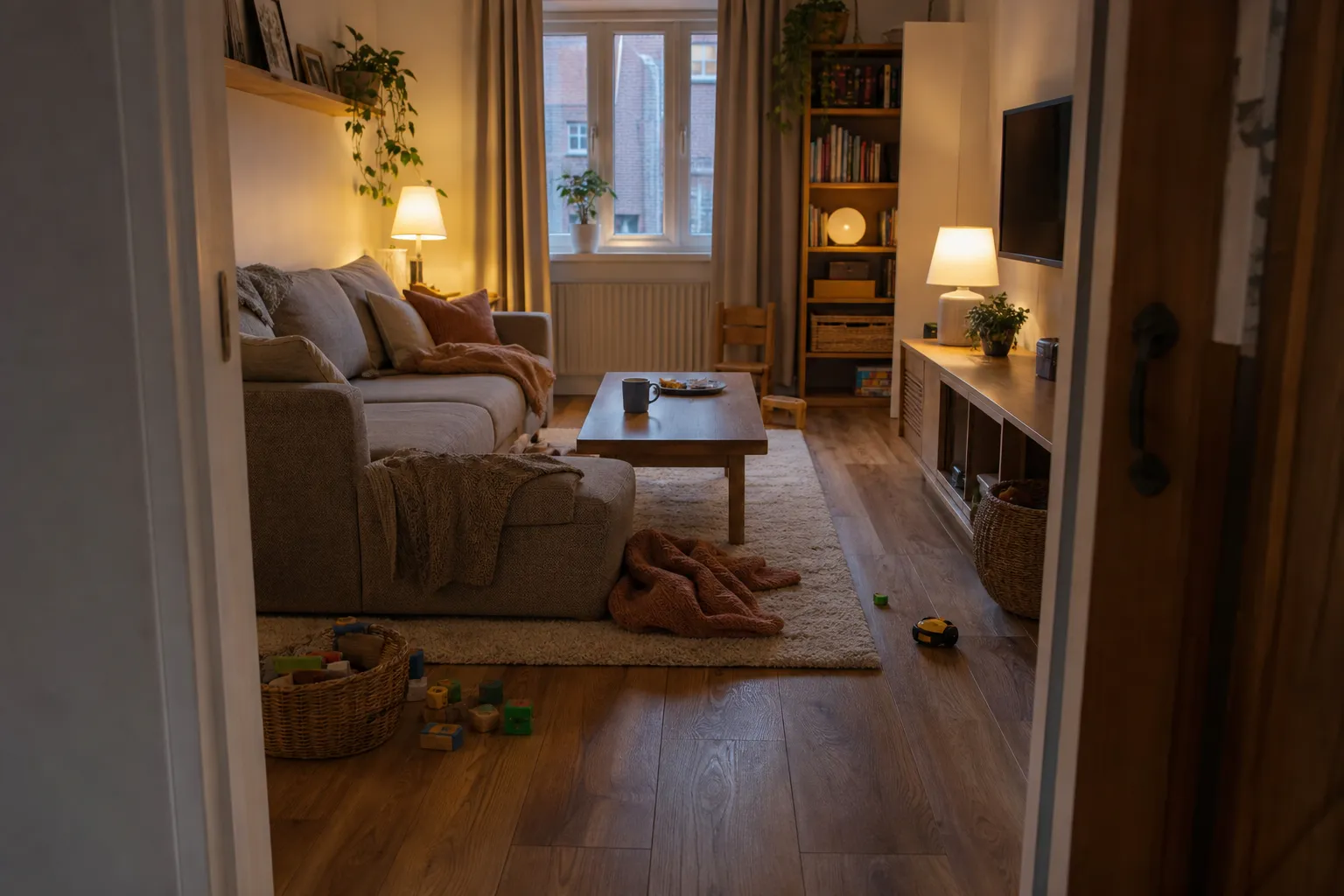
The easiest place to begin is the doorway, where the room shows what the day left behind: a cup on the coffee table, a throw on the floor, toys in the walking path, a remote tucked under a cushion. A practical living room reset routine is a short end-of-day tidy, not a deep clean. Its job is to return the shared room to a usable baseline: trash removed, dishes taken out, common objects returned, textiles settled, surfaces usable, and the main path open.
For most homes, 10 to 15 minutes is enough. A small or lightly used room may take five. A room used by children, pets, guests, snacks, tea, or work may need the full 15 minutes, but the reset should still stay bounded. Stop when the room can be used again.
broader context
Broader context
Use the broader page when you need more context before this narrower page.
The End-of-Day Living Room Reset
Start where you usually enter the room. Notice what interrupts use first, then move through the room in a simple order.
- Remove trash and dishes. Pick up wrappers, tissues, delivery packaging, empty bottles, snack plates, cups, and mugs. Trash goes out; dishes go to the kitchen. This changes the room quickly without pulling you into sorting.
- Return shared objects. Put remotes in their tray, books on their shelf or stack, game controllers in a basket, children’s toys in one bin, chargers in their usual place, and mail or packages in the household drop zone. Do not sort every paper at night. Keep the living room from becoming storage.
- Reset sofa pillows and throws. Lift cushions back into place, set sofa pillows upright, and check the seat for small items. Fold a throw loosely over one arm, place it in a basket, or lay it flat where it belongs. Natural textiles do not need sharp hotel folds; they need a repeatable resting place.
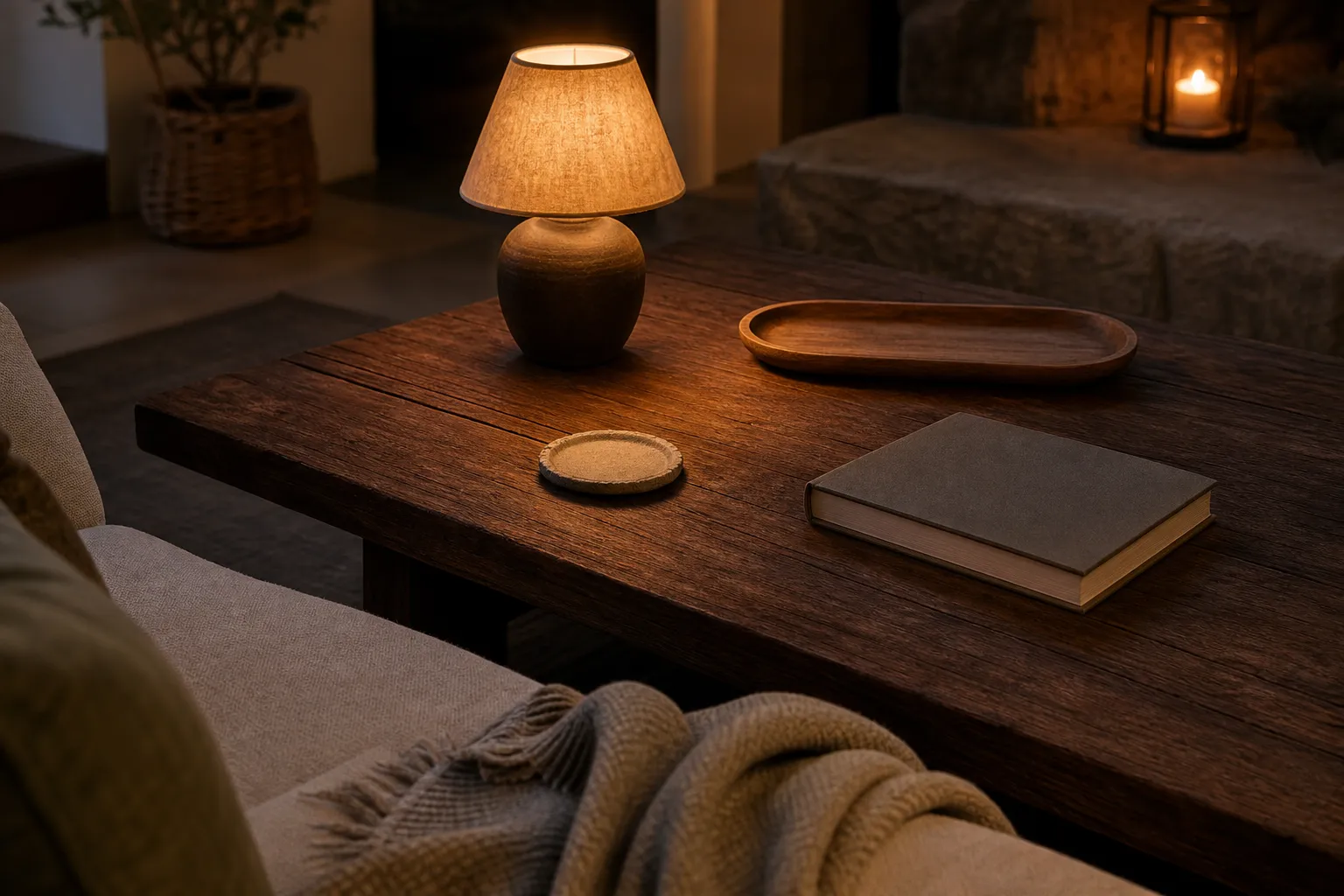
- Clear the coffee table and side tables. Leave only what belongs there at night, such as a coaster, a lamp, a small tray, or one current book. If there is a fresh spill or sticky ring, wipe that spot with a cleaner suited to the surface. Save polishing, stain work, and full dusting for another day.
- Check the main floor path. Shoes, bags, pet toys, floor pillows, and cords should not sit where people walk in low light. Move them to their places, or gather them in one temporary basket if the household is tired.
- Set one next-day cue, if useful. This might be an empty tray for morning tea, a clear chair near the window, or a folded blanket on the sofa. One cue is enough.
A daily room reset succeeds when people can sit down, place a cup, find common objects, and walk through the room without negotiating yesterday’s clutter.
What Makes the Reset Faster or Slower
A quick living room reset depends less on the clock than on how many decisions the room asks for. Ten minutes works when objects already have homes. Fifteen minutes is more realistic when the living room also serves as a play area, homework spot, pet zone, tea corner, or evening dining overflow.
The slow part is usually not mess; it is uncertainty. A tray for remotes, a low basket for toys, a lidded box for cables, and one shelf for current books reduce the number of choices at night. This is where Object Soul becomes practical: the object earns its place by use and care, not by being displayed everywhere.
Shared rooms need shared expectations. One person can remove dishes, another can handle toys, another can reset textiles, and someone else can check the path. In a smaller household, the same sequence can be done alone, as long as it does not expand into a larger cleaning session.
Children and pets change the baseline. Pet toys, washable throws, snack crumbs, and small plastic parts may need a daily look. That does not mean nightly vacuuming. It means the reset catches what affects use now, while deeper cleaning stays on a separate cadence.
Daily Tidy Versus Deep Clean
A daily tidy handles visible interruption. A deep clean handles buildup, embedded dirt, and maintenance. Confusing the two is why many evening routines become too heavy to repeat.
Daily living room reset
- Remove trash, cups, and plates.
- Put away remotes, toys, books, and packages.
- Reset sofa pillows and throws.
- Clear coffee and side tables.
- Wipe a fresh spill or sticky spot.
Weekly or periodic cleaning
- Vacuum under furniture.
- Dust shelves, lamps, frames, and electronics.
- Clean upholstery according to care labels.
- Wash windows or clean blinds.
- Treat stains, polish wood, or move furniture.
The useful question is simple: can the room function tomorrow morning? If yes, stop. If no, choose the one task blocking use. A blanket on the floor, a cluttered table, or scattered toys may need attention tonight. Dust behind the media cabinet does not.
Household cleaning guidance often supports dividing chores into manageable schedules rather than treating every task as urgent every day. For this page, that means the evening living room routine should stay light.
Surface Care, Scent, and Air Boundaries
An end-of-day tidy should not become product-heavy. Use cleaning products only when the room actually needs them, such as for a spill, sticky table mark, or food residue. Choose a product suited to the surface, follow the label, avoid mixing cleaners, and ventilate when the label calls for it.
Fragrance is optional. Room sprays, air fresheners, scented cleaners, candles, and incense are often sold as part of an evening atmosphere, but they are not required for a living room reset checklist. EPA materials discuss indoor particles from combustion sources and volatile compounds from some household products, so it is sensible to use smoke, spray, and scent with restraint rather than making them the center of the routine.
In an Eastern-inspired room, restraint often works better than layering. A clear table, a folded textile, a clean cup removed from the room, and a lamp switched off do more for room order than adding another scented object. Incense belongs with air, timing, and restraint.
Common Confusion: Reset Does Not Mean Perfect
The word “reset” gets used for many tasks: Sunday resets, whole-home cleaning systems, seasonal decluttering, social media clean-with-me routines, and professional checklists. This page is narrower. It is about an end of day living room tidy, not a house-wide project.
A living room reset should not require matching baskets, new storage furniture, a checklist app, or a spotless sofa. The goal is not a staged room. It is a room that is easy to enter and use again.
There is also a difference between visual clutter and meaningful use. A tea tray drying near the kitchen, a book left open for tomorrow, or one folded throw on the sofa may belong in a lived room. The reset should remove friction, not erase signs of use. Zen Spaces begin with the path through the room; they do not require every surface to be empty.
If you keep abandoning the routine, make it smaller. Choose three anchors: trash and dishes, sofa textiles, and the main table. That smaller version can still return the room to a usable living room baseline.
A Short Checklist for Tonight
Use this version when the room is ordinary messy, not deeply dirty:
- Take dishes, cups, and mugs to the kitchen.
- Throw away wrappers, tissues, receipts, and packaging.
- Put remotes, chargers, books, toys, and games back where people expect them.
- Reset sofa pillows, seat cushions, and throw blankets.
- Clear the coffee table and side tables enough for use.
- Wipe only fresh spills or sticky spots.
- Move shoes, bags, toys, cords, and floor pillows out of the walking path.
- Leave one practical cue for morning, such as an empty tray or clear seat.
For a 10 minute living room reset, move in that order and skip anything that belongs to weekly cleaning. For a 15 minute living room reset, add one small catch-up task, such as returning a stack of books or gathering loose toys into their bin. Do not add vacuuming unless the floor condition truly affects use.
When to Skip or Change the Routine
Skip the full reset when the household is unusually tired, guests have just left late, or the room has a spill or broken item that needs a different kind of attention. In those cases, handle only the practical minimum: food out, trash contained, walking path clear, fragile objects protected.
Change the routine with the season. In colder months, throws and cushions may need more attention because they are used more often. In warmer months, open windows, sandals, picnic bags, or outdoor toys may drift into the living room. Seasonal observation before seasonal decoration keeps the room honest: reset what the room actually used today.
A good evening living room routine is small enough to repeat and plain enough for others to understand. Return the objects, settle the textiles, clear the table, check the path, and stop there.