Practical room check
Lamp Placement Behind a Sofa: When It Works and What to Check
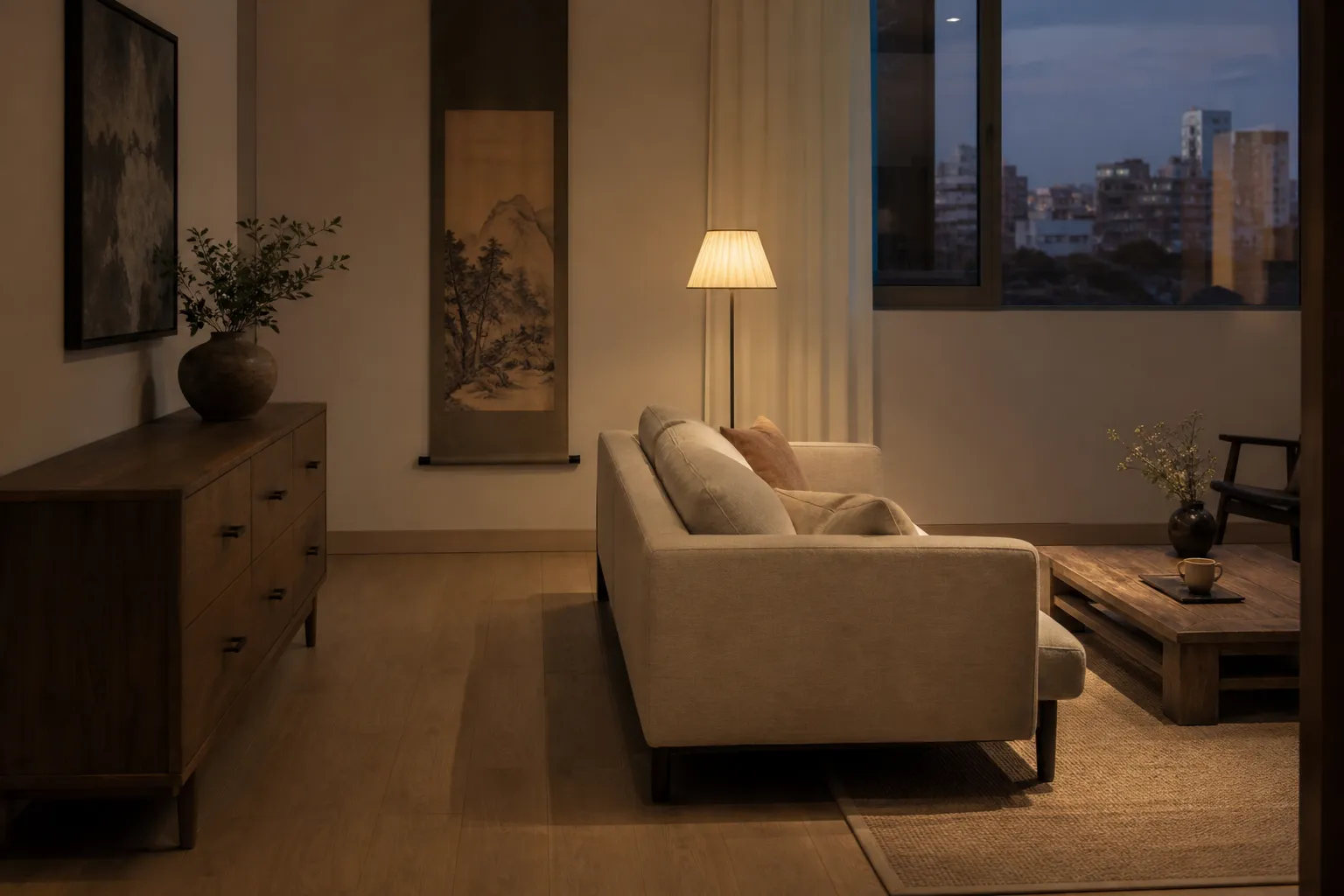
A lamp behind a sofa can work well when it adds usable light without crowding the walkway, shining into seated eyes, trapping cords, or making the room feel visually heavy. It usually works best when the sofa floats slightly away from the wall, has a console table behind it, or needs a quiet pool of light for reading, tea, conversation, or evening use.
It works less well when the sofa is tight to the wall, the outlet is awkward, the lamp base is easy to bump, or the shade sits at seated eye level and creates glare.
Before choosing this placement, check the room in person: clearance, switch reach, cord route, shade height, plug access, and whether the sofa blocks the light you actually need.
broader context
Broader context
Use the broader page when you need more context before this narrower page.
When a Lamp Behind a Sofa Works
Behind-sofa lighting works best when the lamp has a clear job. It should support one of three things: soft background light, a reading spot, or a visual anchor behind a long sofa.
A floor lamp behind couch seating can work especially well when the sofa floats in the room instead of sitting flat against a wall. The lamp helps define the seating area from the back and may give height to a low arrangement without adding another large object in front of the sofa.
A console table changes the answer. If the table is deep and steady enough, a table lamp may feel more settled than a narrow floor lamp squeezed into a gap. It also gives the light a useful surface around it: a tray, a few books, or a small seasonal object can make the setup look intentional rather than hidden.
A lamp behind a sofa is less convincing when it has no room to breathe. If the sofa nearly touches the wall, the lamp may push the furniture forward, pinch the cord, or make cleaning difficult. If people walk directly behind the sofa, a tall lamp or wide shade may become something they brush against every day.
The Checks That Decide the Placement
Use these checks before buying a new lamp or moving one from another room. They are practical room checks, not fixed design rules.
Sofa clearance for lamp
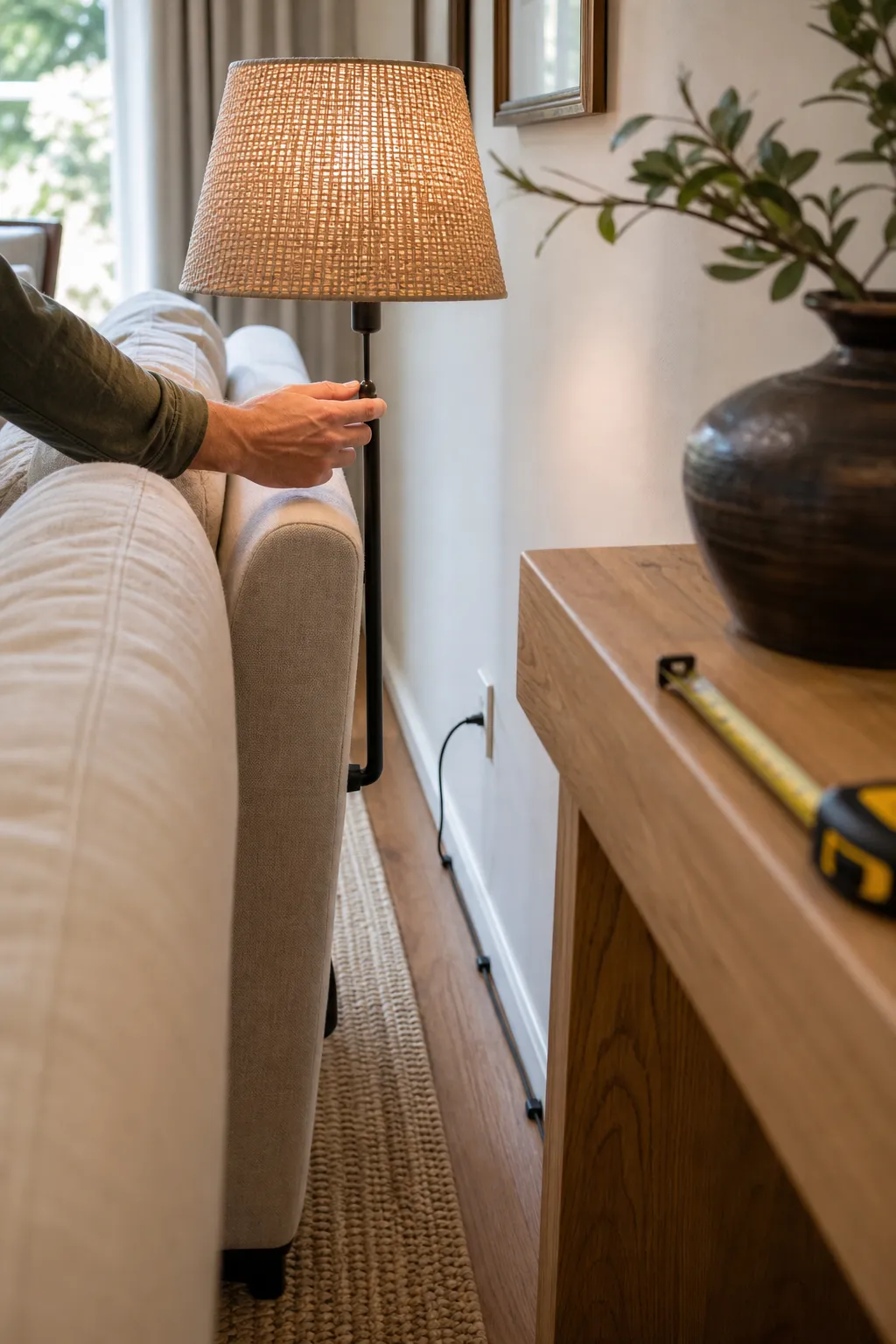
Look for space for the base, pole, shade, and cord without forcing the furniture. If the lamp only fits by pressure, choose another spot.
Lamp base stability
The base should sit flat and not wobble when someone passes or the sofa moves. A narrow or top-heavy lamp may not suit a busy path.
Cord routing behind sofa
The cord should not cross a walking route, stretch tightly, or sit under furniture legs. If the cord has to bend sharply or disappear under weight, rethink the outlet plan.
Plug access behind sofa
You should be able to reach the plug without moving heavy furniture every time. A hidden plug makes simple checks and changes harder.
Lamp shade height
The shade and bulb should not sit in a normal seated eye line. If you see the bulb or a bright shade edge, adjust the height or position.
Bulb and shade clearance
The bulb, shade, sofa back, curtains, and wall should not be crowded together. Follow the lamp’s instructions for bulb type, shade use, and placement limits.
Switch reach behind sofa
You should be able to turn the lamp on and off from a natural standing or seated position. A lamp that is annoying to control will be used less.
Traffic flow around sofa
People should be able to move around the sofa without bumping the lamp. If the path narrows too much, use wall lighting or a smaller lamp.
Sofa blocking lamp light
The sofa back should not hide the light from the room or task area. If the light disappears into upholstery, the lamp is mostly decorative.
The most useful test is simple: place the lamp, turn it on at night, then sit in every normal seat. Look for glare, dark patches, awkward reaching, and any spot where the cord or base feels in the way.
Choosing the Lamp Type
Different lamps solve different behind-sofa problems.
A slim floor lamp works when there is a narrow but clear gap behind or beside the sofa. The base should sit fully on the floor, not half-hidden under the sofa in a way that makes it hard to inspect or easy to disturb. This type is usually better for background light than precise reading unless the head or shade can direct light where needed.
An arc lamp can reach over a sofa from behind or beside it, but it needs more room than many people expect. The base is often substantial, and the arm projects into the seating area. Check it over the actual sofa, not just on an empty floor.
A table lamp on a console behind the sofa can be the most natural option when the table is already part of the room. The shade should not crowd the wall or compete with the sofa back, and the cord should drop cleanly toward the outlet.
A wall sconce may be better when the floor is tight, the sofa is against the wall, or cord routing would be messy. It keeps the floor clear, though it is less flexible than a movable lamp and may need installation planning.
A small accent lamp can add a low evening glow behind a sofa, but it should not be expected to light a book, a tea tray, or a full seating area. Treat it as one soft layer, not the room’s main working light.
What Often Goes Wrong
The common misunderstanding is that “behind the sofa” is one simple position. A lamp behind a low floating sofa in an open room behaves very differently from a lamp behind a tall sofa against a narrow apartment wall.
Glare is one of the first problems to check. It happens when the bulb, shade edge, or bright inner surface sits in your line of sight from the sofa. The room may look warm from the doorway but feel uncomfortable from the seat where someone reads or talks. Try a taller lamp, a lower-output bulb appropriate for the fixture, a more diffused shade, or a different position.
The sofa can also block the light. A tall back may absorb much of the glow, especially if the lamp is short or the shade sits below the top of the sofa. Turn the lamp on after dark and check whether the light reaches the surface, corner, or seat you intended.
Cord routing is easy to underestimate. A cord behind a sofa should not be stretched tight, pinched under furniture, or left where feet pass. If the outlet is too far away, the cleaner-looking arrangement may not be the better one.
Scale is quieter but just as visible. A large shade behind a compact sofa can make the seating feel crowded. A tiny lamp behind a long sofa can look accidental. The calmest setup lets the lamp relate to the sofa’s height and length without drawing more attention than the room needs.
Quick Room Examples
Floating sofa
If the sofa floats in the middle of the room, a floor lamp or console-table lamp behind it can work well. Keep the walking route clear, and choose a lamp that looks finished from the back if the sofa is visible from the dining area or entry.
Sofa against a wall
If the sofa sits against a wall, place the lamp with more caution. A floor lamp may fit better at one end of the sofa than directly behind the middle. If the wall gap is too narrow, a wall-mounted light or side-table lamp may be cleaner.
Narrow room
If the room is narrow, protect the path first. A lamp that steals several inches from the only walkway may make the room feel more crowded, even if the light itself is pleasant.
Reading corner
If the sofa creates a reading corner, test the light from the actual reading seat. The light should fall on the page or lap area without exposing the bulb to your eyes. If you have to sit in one exact position for it to work, the placement may be too fussy for daily use.
If the goal is evening atmosphere, a lamp behind the sofa can be enough as one layer, especially with a warm-toned shade and uncluttered surfaces. It still needs to be reachable, steady, and easy to clean around.
A Simple Decision Rule
Use a lamp behind the sofa when all five of these are true:
- There is real clearance for the base, shade, cord, and nearby furniture.
- The lamp sends light into the room or onto the task area instead of hiding behind the sofa.
- The shade and bulb do not create glare from normal seated positions.
- The switch and plug remain reasonably accessible.
- The lamp does not narrow the walking path or make the room feel crowded.
Choose another placement when two or more of these fail. A side-table lamp, wall sconce, corner floor lamp, or console-table lamp may serve the room better than forcing a floor lamp behind couch seating.
What This Page Cannot Verify
No public reference links were supplied for this article’s research pack, so this guidance should be read as practical room-check advice rather than formal electrical or lighting-design instruction. For a specific lamp, follow the manufacturer’s directions for bulb type, shade use, clearance, assembly, indoor placement, and care.
A cautious setup is straightforward: keep cords out of walking paths, avoid pinching them under furniture, leave the plug reachable, and move the lamp if it feels unstable, crowded, unusually warm, or easy to knock.
A lamp behind a sofa is a good idea only when it improves the room in use. The best version is quiet: light where you need it, a clear path around the furniture, a steady base, a reachable switch, and no sense that the lamp has been wedged into the room for appearance alone.