Daily tea decision
Gaiwan vs Teapot: Which Is Easier for Simple Daily Tea
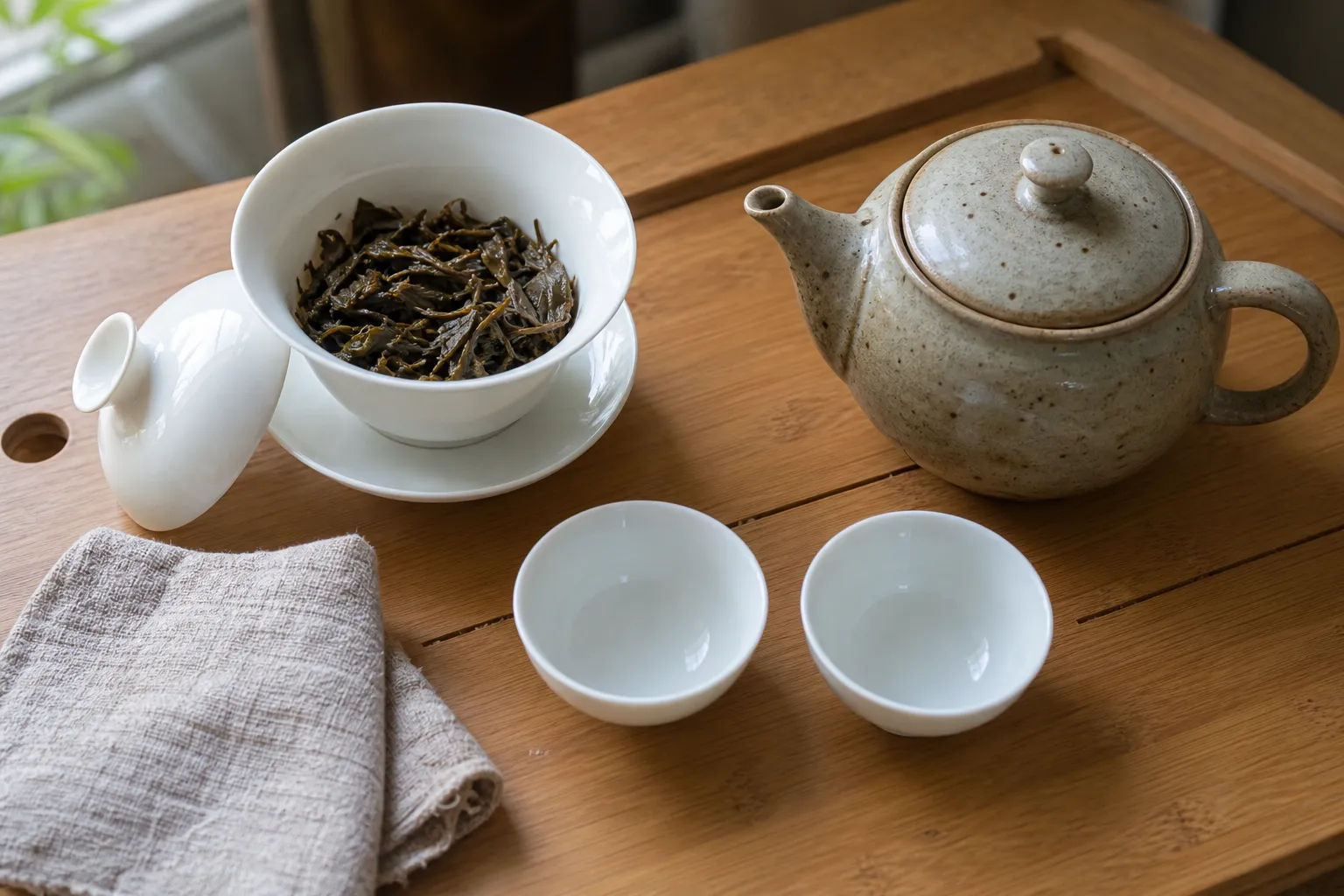
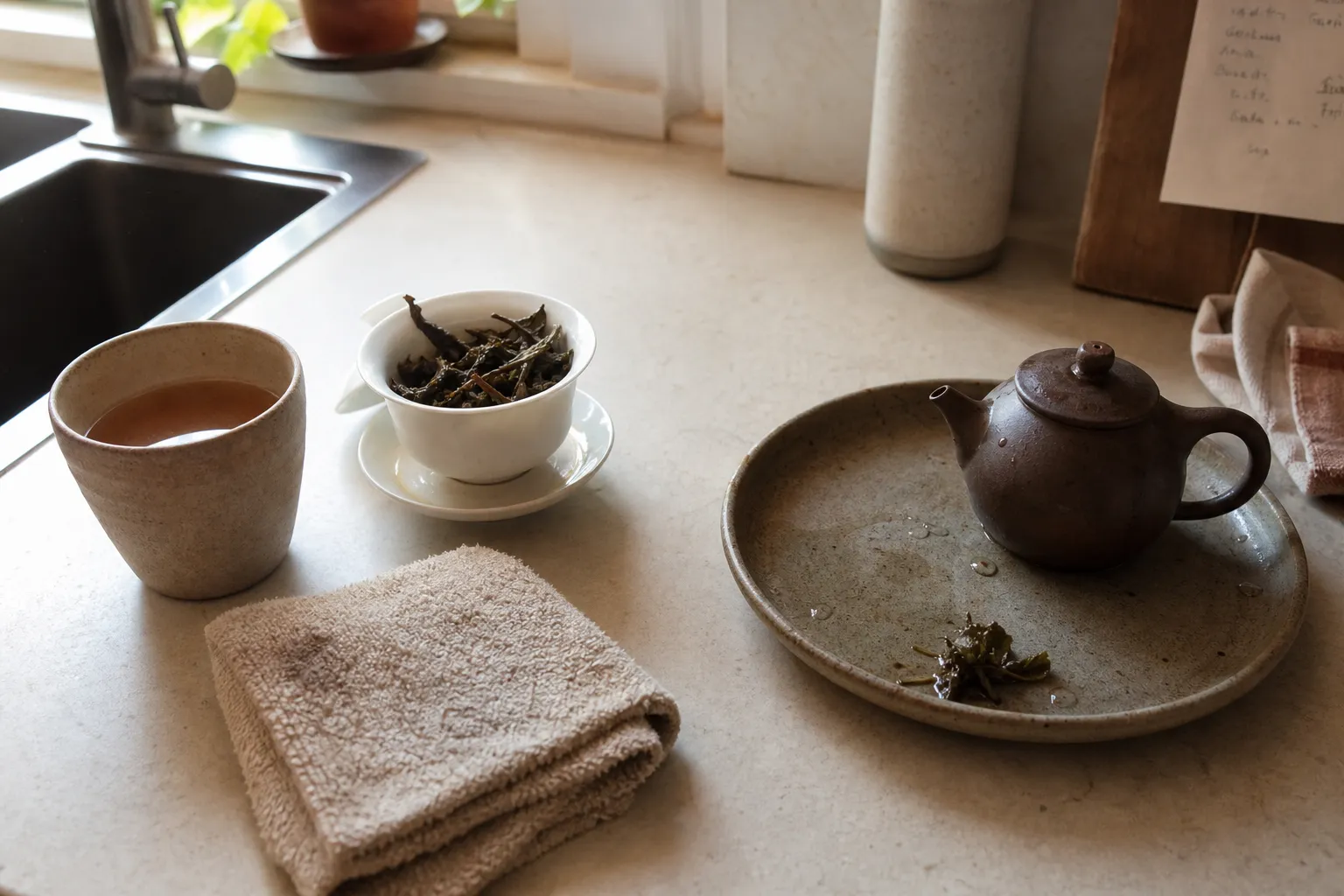
A small tea table changes once the water is hot: wet leaves, a warm rim, one waiting cup, and a sink close enough for rinsing. For gaiwan vs teapot, the easier choice depends on the part of tea making you want to simplify.
For simple daily tea, a gaiwan is usually easier if you want quick cleaning, visible leaves, fast leaf disposal, and several short infusions in a compact space. A teapot is usually easier if you want a handle, a larger serving, longer steeping, fewer repeated pours, and less attention while the tea sits. Neither vessel is the easier choice for every home. The right answer is the one that fits your hand, your cup size, and the amount of attention you want to give the tea.
broader context
Parent topic
Use the broader page when you need more context before this narrower page.
The Short Decision: Choose by Your Daily Habit
A gaiwan is a Chinese lidded bowl, commonly understood as a bowl, lid, and saucer. It is often used in gongfu-style tea preparation, where leaves are steeped briefly and poured out in repeated rounds. For daily use, that open shape is its practical strength. You can see the leaves, watch the liquor color, rinse the bowl quickly, and remove spent leaves without reaching into a narrow pot.
Choose a gaiwan if daily tea looks like this
- You drink one small cup, or several small cups, rather than one large mug.
- You like multiple short infusions and do not mind returning to the tea table.
- You want a small tea brewing vessel that resets quickly between teas.
- You prefer glazed porcelain, glass, or another neutral surface for varied teas.
- You like seeing the leaves open before deciding when to pour.
Choose a teapot if daily tea looks like this
- You want one larger serving instead of several short pours.
- You prefer longer steeping and fewer interruptions.
- You want a handle between your hand and the hot vessel.
- You often make tea while reading, working, or preparing breakfast.
- You want the vessel to hold warmth more steadily for a slower cup.
A teapot becomes easier when daily tea is less about repeated attention and more about one settled serving. The handle gives many beginners more pour confidence. A small pot can make enough tea for a relaxed mug or for sharing, without repeating the same motion again and again.
The easier vessel is the one that removes the task you dislike most.
Cleaning and Leaf Removal: The Gaiwan Has the Simpler Shape
At the sink, a gaiwan has an obvious advantage: it opens completely. The lid lifts off, the bowl is wide, and spent leaves can be tipped or rinsed out without much searching. If you switch between green tea, oolong, black tea, white tea, or herbal infusions, a glazed gaiwan also feels general-purpose because it does not ask you to dedicate the vessel to one tea style.
That is why many daily drinkers describe the gaiwan as easier to clean. This is a shape-based judgment, not a formal test result. A wide bowl is simply easier to inspect than a closed pot. You can see whether a stem is stuck near the rim, whether fine leaves have gathered at the bottom, and whether the vessel is ready for the next tea.
A teapot can still be easy to clean, but the details matter more. Look at the lid opening, shoulder shape, spout filter, and interior. A wide-mouthed glass, porcelain, or glazed ceramic teapot is usually easier to rinse than a narrow pot with a small opening and a built-in filter that traps leaves. If the pot has a deep curve under the shoulder, spent leaves may need more water and patience to remove.
For cleaning alone, the gaiwan is usually the easier daily object. For lower-attention brewing, the teapot may still win.
Handling, Heat, and Pour Confidence
A gaiwan asks more from the hand. You hold the bowl by the rim or saucer, tilt the lid slightly to strain the leaves, and pour while keeping the lid in place. When the water is hot, the rim can feel too warm, the lid can slip, and the first few pours can be awkward. A beginner may spill not because the gaiwan is complicated, but because the motion is exposed.
Good gaiwan fit is personal. The rim should feel comfortable, the lid should move cleanly without too much wobble, and the bowl should not be so wide that your fingers strain. A small gaiwan can feel nimble; an oversized one can feel unstable. Before buying, imagine lifting it wet, warm, and full enough to pour. If possible, test the empty motion with your hand.
A teapot gives a more familiar handling pattern. The handle separates your fingers from the hot body, the lid stays in place if it fits well, and the spout directs the pour. This can support beginner handling confidence, especially for someone who wants tea without learning a new grip.
The tradeoff is that teapot design varies. A slow spout, loose lid, cramped handle, or heavy body can make a teapot less easy than it looks. Heat behavior also changes the answer: thinner walls tend to cool faster, while thicker bodies usually hold warmth longer. In daily terms, a gaiwan often suits quick steeps and fast resets, while a teapot with more mass can suit longer steeping and a slower cup.
If hot handling makes you tense, choose the vessel that gives your hand more confidence.
Serving Size and Attention: Small Rounds or One Relaxed Cup
The quiet difference between a gaiwan and a teapot is not only shape. It is rhythm.
A gaiwan usually fits a small-volume way of brewing. You add leaves, pour hot water, wait briefly, decant, and repeat. This can be satisfying when you are sitting near the tea table and want to notice each infusion. It also keeps the leaves visible, so you can adjust by observation: a shorter steep when the liquor darkens quickly, a longer one when the leaves slow down.
That rhythm is not always easier. If you want one mug beside a laptop, a gaiwan may feel like too many small tasks. You may need a separate sharing pitcher or cup, and you may need to pour again sooner than expected. The gaiwan is easy to clean, but it asks for attention while the tea is happening.
A teapot gives a different kind of ease. It can hold a larger serving, keep the leaves contained, and let the tea steep while your hands do something else. For breakfast tea, a shared small pot, or a reading chair cup, fewer repeated pours may matter more than visible leaves.
Still, size should stay close to your real habit. A very large pot can make more tea than you want, and delicate leaves may sit too long if you forget them. For simple daily tea, a small teapot that matches your usual cup volume is often easier than a large pot bought for occasional guests.
Choose the rhythm you will actually repeat.
Material Neutrality and Dedicated Vessels
For varied daily tea, material neutrality matters more than status. Glazed porcelain, glass, stainless steel, and many glazed ceramic vessels are commonly chosen because they rinse easily and do not ask for a dedicated tea identity. This is useful if one vessel must handle oolong in the afternoon and black tea the next morning.
A glazed gaiwan is often treated as a general-use vessel for this reason. Its open form also makes it easy to notice residue and rinse between teas. For a small home tea corner, that simplicity can be more useful than owning several specialized pieces.
Teapots need a little more sorting. A glazed teapot, glass teapot, porcelain teapot, or stainless pot can also be general-use. An unglazed porous clay pot is different; tea drinkers often reserve that kind of pot for a narrower range of teas. That does not make it wrong, but it does make it less simple if your goal is one everyday teaware piece for many teas.
Buying language can also blur the decision. Some product pages suggest that certain vessels produce a more desirable aroma or flavor. This page does not need to turn those claims into certainty. A more useful home question is plainer: can you clean it, see what is happening, pour it confidently, and use it for the teas you actually drink?
For one flexible daily vessel, choose a cleanable material sold for food and drink use before chasing specialization.
Common Confusion About Gaiwan vs Teapot
A gaiwan looks simple, but the pour takes practice
It has only a bowl, lid, and saucer, but fingers sensitive to heat or a loose lid can make it feel less easy at first.
A teapot is not always more formal
A small, wide-mouthed teapot with a comfortable handle can be the least fussy option for one relaxed mug.
Yixing-style advice is not every teapot advice
Specialized unglazed clay vessels have their own care habits and dedication logic, unlike many glazed, glass, porcelain, or stainless teapots.
Cultural context is not pressure
A gaiwan has a long place in Chinese teaware culture, but that context explains the object rather than requiring every home tea drinker to prefer it.
Use tradition as context, not as a ranking.
A Simple Home Check Before You Choose
Set a cup, a towel, and your usual tea tray or counter space in front of you. Then ask five practical questions.
- How much tea do you usually want at one time? If the answer is one larger mug, a teapot is probably easier. If the answer is several small cups, a gaiwan may fit better.
- Do you want to watch the leaves? If visible tea leaves and liquor color help you decide when to pour, the gaiwan gives more information at a glance.
- How steady is your pour? If you want a handle and a spout, choose a teapot. If you enjoy a compact vessel and can practice the lid angle, a gaiwan can become quick.
- How much cleaning do you tolerate? If you dislike trapped leaves, narrow openings, and hidden corners, the gaiwan has the cleaner shape. If the teapot has a wide opening and simple interior, it can still be easy.
- What material are you comfortable using every day? Choose teaware sold for food and drink use. Be cautious with unknown older pieces or decorative ceramics, and when buying handmade work, ask whether the glaze is intended for drink use. The available public sources for this page support basic gaiwan context more than ceramic composition details, so this point stays as a modest buying check.
The right small tea brewing vessel is the one that survives your ordinary morning.
Final Answer
For most varied, hands-on daily tea, the gaiwan is easier to clean, easier to inspect, and better suited to multiple short infusions. For a relaxed mug, a larger serving, longer steeping, steadier warmth, and fewer repeated pours, the teapot is easier.
If you are buying only one piece, choose a glazed gaiwan when you value quick rinsing and visible leaves. Choose a small, wide-mouthed teapot when you value a handle, volume, and lower-attention brewing. The decision is not about which object is superior; it is about which one makes your daily tea table simpler to use and easier to care for.