Home Tea Practice
Common Misconceptions About Simple Tea Practice at Home
Simple tea practice at home is often made harder than it needs to be. The usual misconceptions are that you need rare objects, formal training, a special room, expensive tea, or a certain state of mind before the practice “counts.”
A more useful answer is plain: a home tea practice can be a repeatable way to prepare tea, pour it, drink it while it is still pleasant, clean what you used, and return a few objects to their place. Most simple tea practice misconceptions come from treating tea as either a performance or a product setup. In real rooms, the routine usually depends on smaller decisions: a clean surface, a safe way to heat water, a cup you like using, tea you will actually drink, and a cleanup step you can repeat.
Because no public reference set is available for this draft, the guidance below stays narrow. It covers observable home choices, object care, setup friction, and expectation-setting rather than making health, cultural, or product claims that would need stronger sourcing.
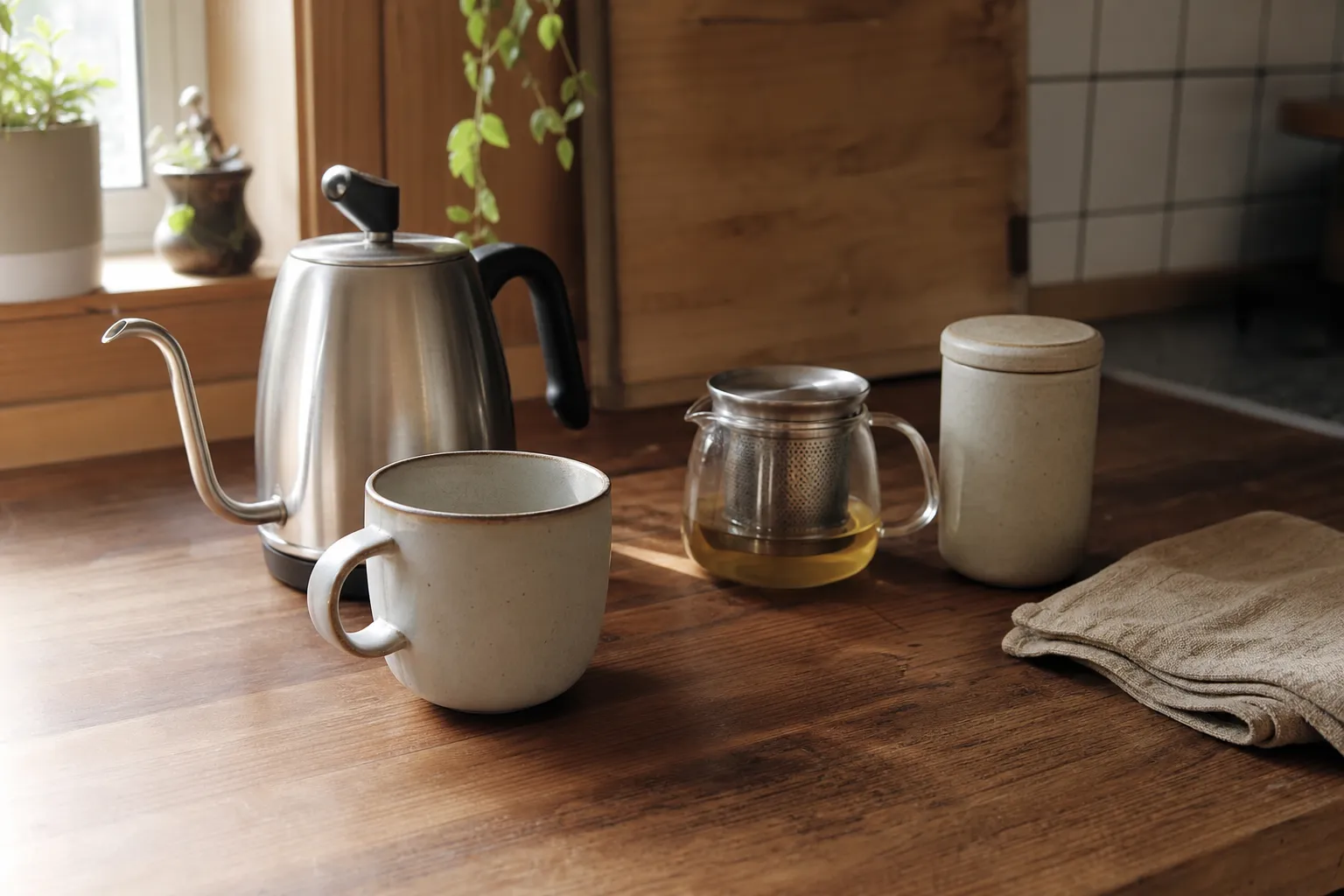
broader context
Parent topic
Use the broader page when you need more context before this narrower page.
Misconception 1: You Need a Full Set of Special Tea Objects
A common beginner assumption is that a simple tea practice at home starts with buying the “right” tray, pot, cup set, scoop, cloth, kettle, jar, and storage shelf. Those objects can be useful and meaningful in the right setting, but they are not the starting requirement for an everyday tea practice.
The better first question is not “Do I own the complete set?” It is “Can I make tea cleanly, pour it comfortably, drink it before it cools, and clean up without making the room harder to use?”
A small working set might be enough
- A kettle or other reliable way to heat water.
- One cup or bowl that feels comfortable in the hand.
- A small teapot, infuser, or direct-in-cup method.
- A dry place to keep tea.
- A cloth or towel for small spills.
- A clear surface that can handle ordinary use.
Too many objects can make tea feel fragile. If the tray is difficult to move, the pot is awkward to wash, or the cups feel too precious for daily handling, the routine may happen less often. Objects should reduce friction, not create a display you feel nervous using.
There is also a cultural respect point here. Borrowing from East Asian tea traditions should not mean treating visible objects as costume pieces. If a tool has a specific historical or ceremonial role, approach it with curiosity and restraint. At home, usefulness and respect can sit together: choose fewer objects, learn what they are for, and avoid pretending that ownership equals understanding.
Misconception 2: A Home Tea Practice Has to Look Formal
Another everyday tea practice myth is that the routine must look composed from the outside. Many people picture quiet lighting, a low table, arranged ceramics, and a long pause before the first sip. Those scenes can be beautiful, but they are not the only form of home tea practice.
A realistic routine may happen at a kitchen counter, beside a work table, near a window, or on a small tray carried to a chair. It may take ten minutes. It may happen after dishes are done, before reading, or during a short afternoon break. The key is repeatability, not theatrical stillness.
Three plain actions
- Set out only what you need.
- Make tea in a way you can repeat without strain.
- Clean and return the objects before they become clutter.
This is where tea practice room setup becomes practical rather than decorative. The surface should be steady. The path from kettle to cup should be short. The cup should have a resting place. If there are children, pets, laptops, papers, textiles, or narrow walkways nearby, the setup should adjust to that room reality.
The room does not have to be silent or styled. It does need to support hot water, breakable objects, small spills, and a few minutes of attention. A plain kitchen table may serve better than a beautiful corner that is too cramped, too dark, or too far from water.
Misconception 3: Simplicity Means No Care
Some beginners swing from over-formality to the opposite assumption: if the routine is simple, object care does not matter much. That can make the practice less pleasant over time. Simple does not mean careless. It means the care steps are small enough to repeat.
Visible care habits
- Empty leaves or bags promptly instead of leaving them for hours.
- Rinse or wash the vessel in a way that fits the material.
- Let objects dry before closing them away.
- Keep tea away from steam, strong smells, and messy containers.
- Notice cracks, chips, unstable handles, or lids that no longer sit well.
This article should not pretend to give complete material-care rules. Porcelain, glazed stoneware, unglazed clay, glass, metal, bamboo, lacquered surfaces, and wood may all need different handling. If an object came with maker guidance, shop instructions, or material notes, follow those before general internet advice.
The practical correction is modest: choose objects you are willing to care for. If a cup needs careful hand washing but you know it will end up in a crowded sink, it may not be the best everyday cup. If a pot stains easily and that bothers you, choose a different brewing method. If a tray needs drying after every use, keep a cloth nearby so the care step belongs to the routine.
Care is not about making the practice precious. It is about keeping ordinary objects usable.
Misconception 4: More Expensive Tea Makes the Practice More Meaningful
A home tea practice can include fine tea, seasonal tea, or carefully sourced tea. Price alone does not make the routine better. For most practical home tea decisions, a tea that fits your taste, budget, storage habits, and preparation style is more useful than a tea you feel obligated to admire.
Expensive tea can become another pressure point. A beginner may save it for the “right” moment, worry about wasting it, or buy accessories to match its perceived status. That can turn a simple home tea routine into a performance problem.
A better question is: what tea will you actually prepare on an ordinary day?
This does not mean all teas are interchangeable. Different teas may call for different water temperatures, leaf amounts, steeping times, or vessels. But if those details are not yet familiar, the answer is not to perform expertise. Start with a forgiving routine, notice what tastes pleasant, and adjust gradually.
The same applies to tea practice objects. A handmade cup may bring texture and attention to the moment. A plain mug may be exactly right for weekdays. A small pot may help with repeated pours. A basket infuser may be easier to clean. The best object is not always the most visually refined one; it is the one that supports the tea you will actually make.
Misconception 5: Tea Practice Should Produce a Specific Inner Result
This is one of the most important home tea practice misconceptions to correct carefully. Tea can be part of a quieter room rhythm. It can mark a transition in the day. It can give the hands something simple to do. Many people find those qualities pleasant. But a home tea practice should not be framed as a guaranteed way to change health, mood, or personal outcomes.
The reliable part is observable
- You choose a time.
- You set out objects.
- You heat water and prepare tea.
- You sit, stand, or move through the routine.
- You clean up.
- You decide whether the setup made the day easier or harder.
That is enough.
When tea is marketed with large promises, the routine can become burdened by expectation. If the cup does not create the feeling you imagined, you may think you did it wrong. If the room is noisy or the day is uneven, you may feel that the practice failed. A simpler view is kinder and more realistic: the routine is a small domestic action, not a test.
This also helps with cultural references. Tea traditions can carry long histories, formal methods, regional aesthetics, and social meanings. Those contexts deserve respect, not casual borrowing as proof that a home routine will deliver a certain personal result. If you are inspired by a tradition, treat that inspiration as a reason to learn more, not as a shortcut to authority.
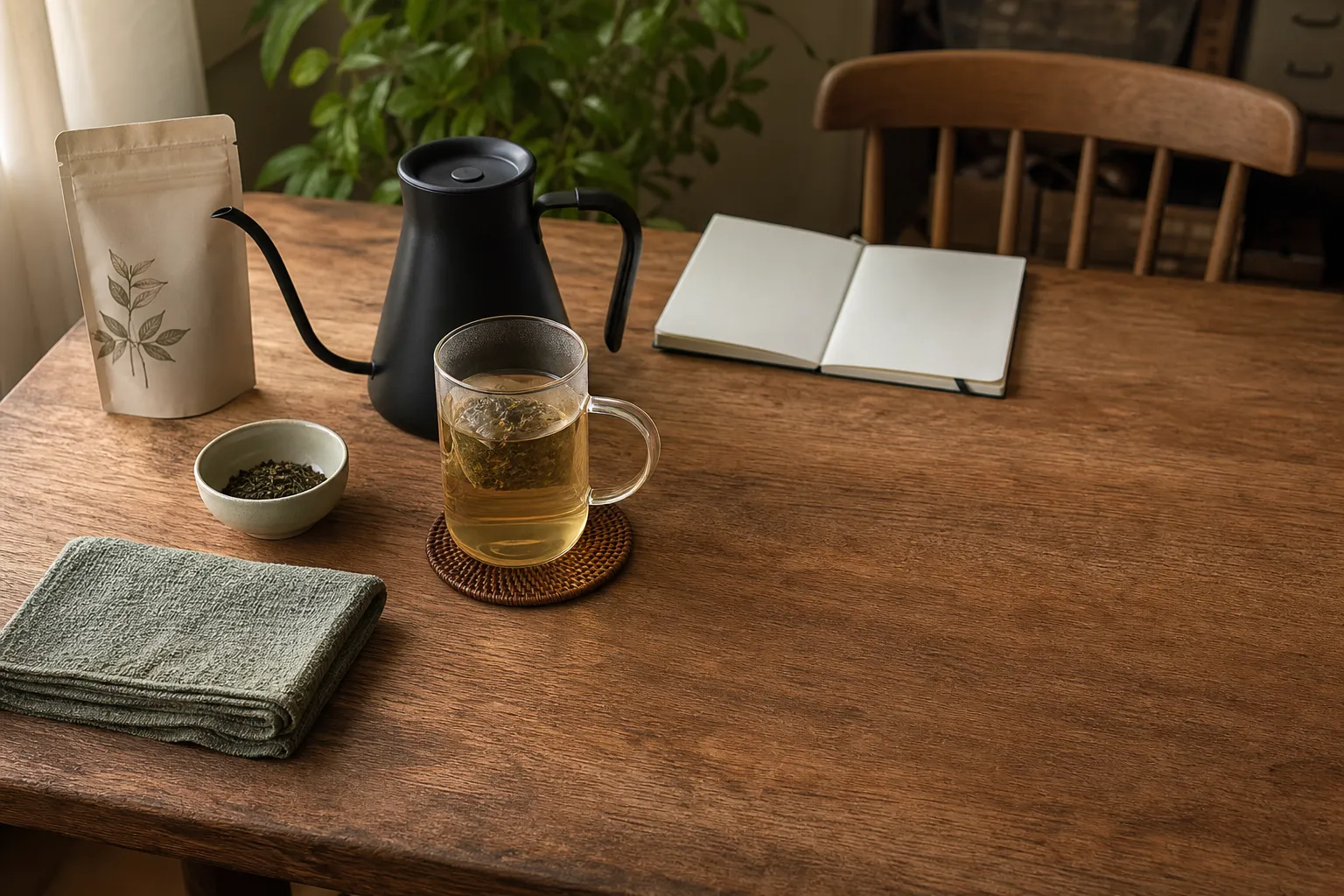
What Actually Changes the Answer at Home
The best correction for common tea routine misconceptions is to look at the room, the objects, and the time available. A simple practice is not one fixed setup. It changes according to ordinary conditions.
Time changes the routine.
A five-minute cup before leaving home needs different objects than a slow pot shared after dinner. If you usually have only a short window, choose fewer steps.
Space changes the routine.
A small apartment kitchen may need a tray that moves easily. A dining table may need a cloth or mat to define the tea area. A bedside or desk setup may be a poor choice if it brings hot liquid too close to papers, electronics, or unstable surfaces.
Hands and movement change the routine.
Heavy pots, tiny cups, slippery trays, and tight lids may look appealing but feel awkward in daily use. Comfort matters. A cup that is easy to hold and a pot that pours predictably can do more for everyday use than a more elaborate set.
Storage changes the routine.
If tea is hard to reach, exposed to kitchen clutter, or stored in containers you dislike opening, you may use it less. Keep the daily tea where the routine begins, not where it looks best in a photograph.
Cleanup changes the routine.
A practice that creates wet leaves, stained strainers, and scattered cups may be too much for a weekday. That does not mean abandoning the practice. It means simplifying the method until cleanup belongs to the same small action.
A Practical Reset for Beginner Tea Practice Assumptions
If tea has started to feel more complicated than useful, reset the practice for one week. Do not buy anything first. Remove the idea that the routine has to be visually complete. Use what you have, and watch where the friction appears.
Try this small check
- Pick one tea you already own or can buy without pressure.
- Use one cup and one brewing method.
- Keep the surface clear enough for the kettle, cup, and wet object.
- Stop adding objects unless they solve a real problem.
- Clean up immediately after drinking.
- Notice whether the routine feels easier on the third or fourth use.
This is not a test of taste, discipline, or cultural knowledge. It is a way to see what your home actually supports. If the cup is too large, change the cup. If the tea is fussy, choose a simpler tea. If the tray is annoying to wash, remove it. If the routine only works when the room is perfectly quiet, make a shorter version for ordinary days.
A good simple tea practice does not need to impress anyone. It needs to be repeatable without strain, respectful without performance, and cared for without becoming another household burden.
FAQ
Do I need a teapot for simple tea practice at home?
No. A teapot can be useful, especially for repeated pours or shared tea, but it is not required. A mug with an infuser, a small cup, or another simple brewing method may be enough if it is easy to use and clean.
Is a tea tray necessary?
Only if it solves a real problem. A tray can define the tea area, catch small spills, or help move objects from one room to another. If it is hard to wash, heavy, or mostly decorative, it may add more work than value.
Can a simple tea routine use ordinary mugs?
Yes. An ordinary mug can be the right choice if it feels good in the hand, holds the amount you want, and fits your cleanup habits. More specialized cups may be enjoyable, but they are optional.
What is the easiest way to make the routine stick?
Keep the setup small. Use one tea, one cup, one brewing method, and one clear surface for a few days. Add objects only when they remove a real inconvenience.
The Bottom Line
The most useful way to correct simple tea practice misconceptions is to lower the performance level and pay closer attention to ordinary details. You do not need a complete set, a formal room, expensive tea, or a promised personal result. You do need a workable surface, comfortable objects, careful handling of hot water, tea you will drink, and a cleanup habit that fits your home.
Until stronger sources are added, the answer should stay intentionally modest: make the routine small enough to repeat, plain enough to maintain, and respectful enough not to turn tea culture into decoration or marketing language.