Object care
Is Darkening on Natural Home Objects Patina, Dirt, or Staining
Darkening on natural home objects is best judged by pattern, feel, transfer, and recent history—not by color alone.
If the darker area is even, gradual, dry, and sits where the object is naturally handled or worn, it may be patina or normal aged surface darkening. If it sits in grooves or lifts onto a dry white cloth, it is more likely surface dirt. If it follows a spill, plant pot ring, drip line, oil mark, smoke path, metal contact, or cleaning product, it is more likely staining. If the object is valuable, painted, lacquered, fragile, inherited, or unknown, the better first step is usually to dust gently—or leave it alone until you know more.
broader context
Broader context
Use the broader page when you need more context before this narrower page.
Start with the pattern, not the cleaning product
Look at the object before touching it. Natural materials change through handling, light, moisture, dust, finish wear, and contact with nearby objects. Several causes can look similar from across the room.
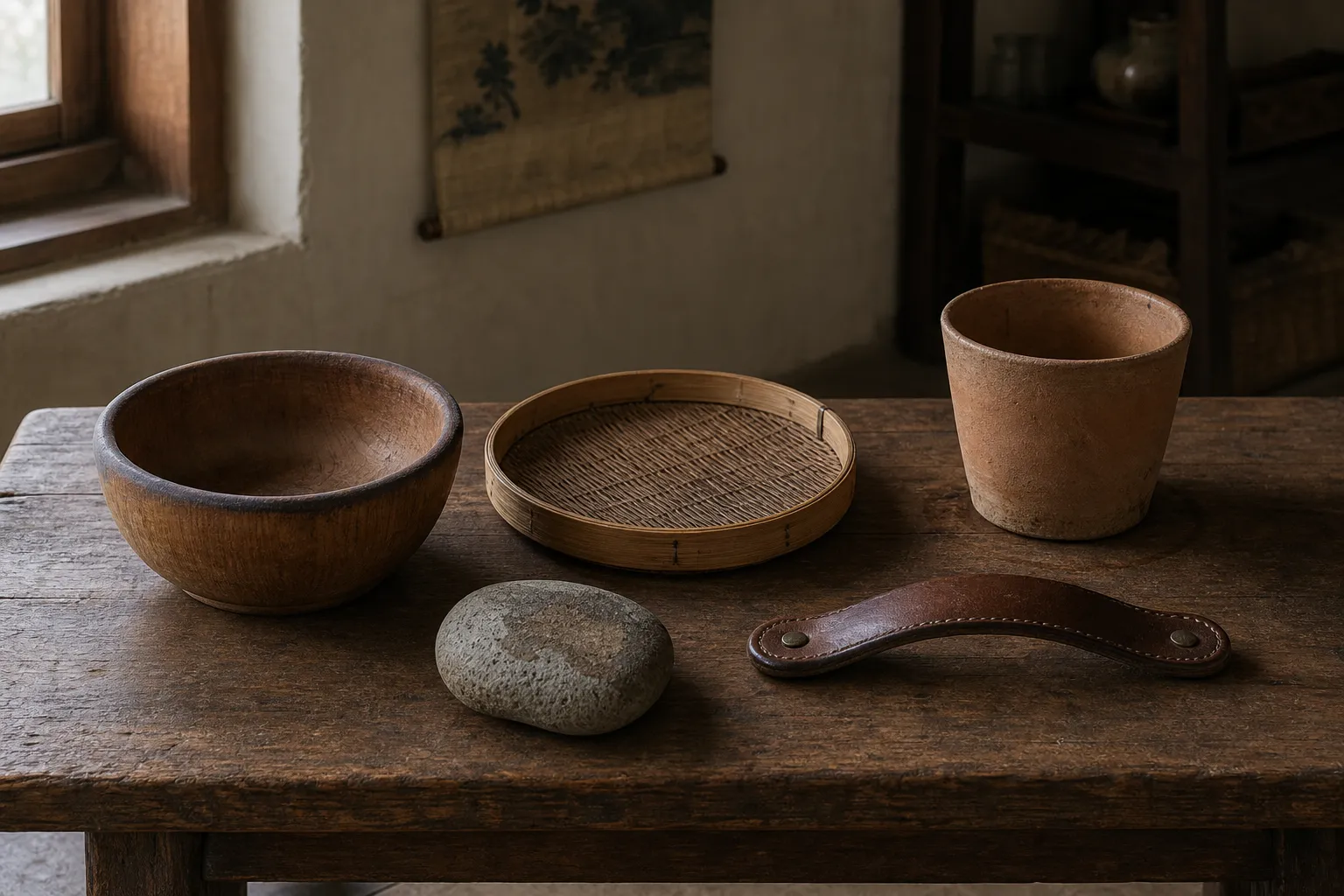
A wooden bowl may darken around the rim where hands and food touch it. A bamboo tray may have one darker corner where tea water sat. A stone object may show a gray patch in a porous area. A clay plant pot may develop a moisture line. A leather handle may darken exactly where fingers grip it.
The location is your first clue:
Handling areas often point to use: hand oils, friction, polish, or ordinary buildup.
Under a plant pot, vase, cup, incense holder, kettle, or damp cloth suggests moisture or contact staining rather than all-over aging.
Grooves, woven joints, carved lines, cracks, and textured grain often collect dust and fine particles.
One sun-facing side may indicate uneven light exposure, finish change, or ordinary aging.
Finished and unfinished surfaces also behave differently. A waxed tray, lacquered box, oiled bowl, painted clay figure, glazed ceramic, sealed stone, and raw rattan basket should not be treated as the same material simply because they look “natural.”
Patina vs dirt vs stain: the useful distinction
Patina
Patina is not just any old-looking mark. In home-object language, it means surface character that develops through age, use, oxidation, handling, rubbing, or mellowing of the material. Aged brass, worn wood edges, softened leather grips, and gently darkened stone may all have patina when the change is stable and visually integrated.
Dirt
Dirt is material sitting on or near the surface: dust, soil, soot-like residue, crumbs, fibers, hand grime, or particles lodged in texture. It may look dull, gray, greasy, powdery, or uneven. It may transfer when lightly touched.
Staining
Staining is usually a mark caused by something entering, reacting with, or strongly marking the material or finish. Tea, cooking oil, plant water, rust from nearby metal, incense residue, candle soot, cosmetics, ink, food, and cleaning products can leave marks that are not just surface dust. On porous objects, a stain may sit below the top surface, which is why hard rubbing can make the area look worse without actually lifting the mark.
A very small dry cloth check
A surface dirt transfer test can help, but keep it small and dry.
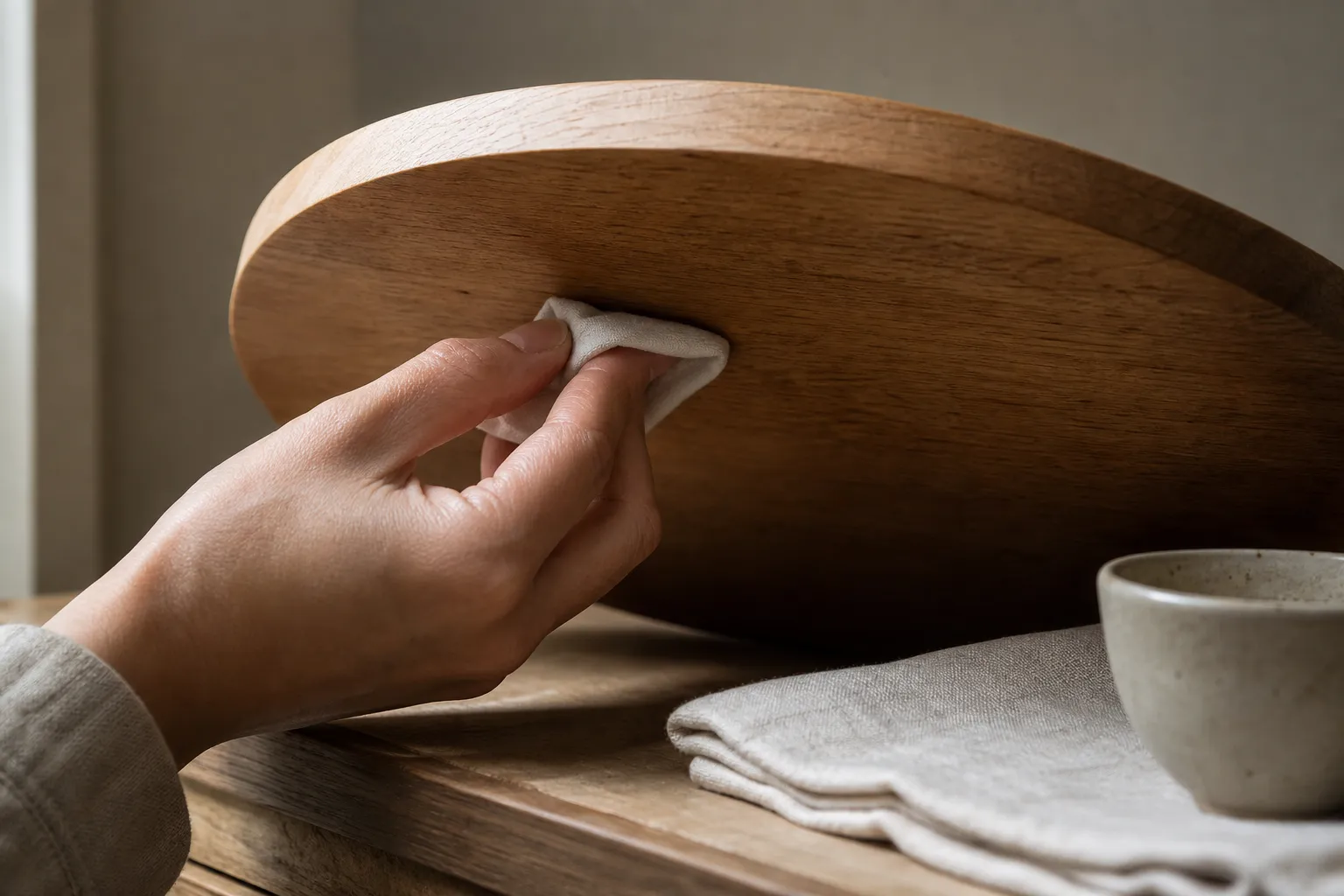
Use a clean, soft, white cloth or cotton pad. Choose a hidden spot: the underside of a tray, the back edge of a bowl foot, the hidden side of a handle, or a small area behind the visible display face. Touch lightly.
Do not add water, vinegar, baking soda, oil, polish, alcohol, solvent, or cleaner. Do not rub hard.
If gray, brown, black, or greasy material transfers immediately, the darkening includes something loose or mobile on the surface. That does not prove it is only dirt. It simply tells you the surface is giving something up. On a sturdy, non-flaking object, light dry dusting may be enough. On a painted, gilded, lacquered, waxed, powdery, or unknown surface, transfer is a reason to stop.
If nothing transfers, the darkening may still be patina, staining, a changed finish, embedded soiling, or a mark below the top layer. A clean cloth does not prove the object is clean; it only means that tiny dry contact did not lift the mark.
If the cloth catches, the surface turns dull, color shifts, or the finish feels softened, stop. Texture changes matter as much as color changes.
Clues that change the answer
Moisture history
Moisture-related darkening deserves caution because water can move unevenly through porous materials, finishes, joints, fibers, and plant pot surfaces. A plant pot staining a shelf, a stone saucer darkening at the base, or a clay vessel showing a tide line is not the same as gradual aging.
Move the object away from the moisture source and let the area dry in a well-aired place. Watch whether the color stabilizes. Avoid repeated wet wiping unless you know the material and finish can tolerate it.
Odor with darkening
Odor does not identify the cause by itself, but it can change how careful you should be. A musty, smoky, sour, chemical, or rancid smell alongside darkening suggests that the mark may involve more than normal patina.
Do not perfume, oil, or seal the object to hide the smell. Separate it from nearby textiles or porous surfaces, improve airflow, and avoid spreading residue while you decide whether it needs closer examination.
Finished vs unfinished surfaces
Many cleaning mistakes begin when a natural object is treated as if it were bare material. The finish may be the part that has darkened, softened, worn through, trapped dirt, or reacted to contact.
If you do not know whether the object is waxed, oiled, lacquered, painted, sealed, glazed, or raw, assume the surface is more delicate than it looks.
Smoke, heat, and room placement
Darkening near handles, rims, lids, and touch points often reflects repeated use. Darkening above a candle, incense burner, fireplace, stove, or smoking area may include airborne residue. Darkening under felt pads, metal feet, wet leaves, fruit, or stored objects may follow contact and pressure.
These patterns help connect the mark to a likely source. They still do not guarantee a cleaning method.
When to appreciate it, clean lightly, move the object, or stop
Appreciate it
Appreciate it when the darkening is stable, dry, gradual, pleasant to your eye, and consistent with how the object is used. A tea tray with softened edges, a wooden stool with a darker hand-worn rail, or a metal fitting with even mellowing can carry a lived-in quality. Wabi-sabi-adjacent design language can be useful here as appreciation, not as proof that every dark mark should stay.
Clean lightly
Clean lightly when the object is sturdy, the mark appears to be loose dust or surface dirt, and a very light dry touch shows removable residue without changing the surface. “Lightly” means dusting, not scrubbing. If the object looks better after gentle dusting, stop there rather than chasing a perfectly uniform surface.
Change the environment
Change the environment when the darkening points to a cause around the object: a damp plant pot, leaky vase, hot cup, kitchen residue, smoke path, harsh sun patch, or crowded shelf. Use a dry saucer under plants, keep wet vessels off porous trays, rotate display objects out of strong light, and avoid setting oily or damp items directly on natural surfaces.
Stop
Stop when the object is valuable, unknown, inherited, painted, lacquered, gilded, cracked, powdery, sticky, flaking, or emotionally important. A small home test can remove original surface, finish, pigment, or aged character. For objects you cannot replace or identify, ask a conservator, restorer, or qualified material specialist to look at it in person.
Common misunderstanding: old-looking is not always patina
Decorating language often uses words like aged, weathered, vintage, natural finish, and patina loosely. Those words may describe a look, but they do not identify the cause of darkening.
A stain can look beautiful and still be a stain. Dirt can make an object look antique. Finish failure can look like age. Moisture can create attractive darkening before it becomes a practical problem. At the same time, not every darkened surface needs correction. Some older surfaces should be left alone because the aged surface is part of the object’s appearance and history.
The useful question is not “Is this good or bad?” It is: Is the change stable, cleanable at the surface, caused by an active condition, or too uncertain to touch?
Quick decision check
Before cleaning, ask:
Where is the darkening? Touch zones, spill paths, plant pot rings, sun-facing areas, and textured crevices point to different causes.
Does it transfer to a dry white cloth? If it transfers, treat it as loose or unstable material and proceed with restraint.
Has the texture changed? Raised, sticky, powdery, rough, swollen, softened, or flaking areas should not be scrubbed.
What was nearby? Water, oil, smoke, metal, food, soil, cosmetics, heat, and cleaning products can all explain a mark.
Do you know the material and finish? If not, do less. Unknown finished surfaces are where confident cleaning advice becomes unreliable.
The bottom line
Darkening on natural home objects is likely patina when it is gradual, dry, stable, and integrated with normal use. It is more likely dirt when it sits in texture or transfers lightly during a small dry check. It is more likely staining when it follows moisture, plant pots, spills, oils, smoke, metal contact, or a sharp boundary. It is uncertain when the surface feels changed, smells unusual, transfers strongly, or belongs to a valuable or unknown object.
For everyday pieces, begin with looking, not cleaning. Dust gently if the surface is sound. Change the room condition if moisture, smoke, light, or repeated contact is the likely source. For objects you cannot replace, identify, or risk altering, leave the darkening alone and get material-specific help.