How Placement Affects Patina, Fading, and Wear on Natural Objects
Placement changes how a natural object ages because each spot in a room gives it a different mix of light, touch, dust, heat, airflow, and accidental contact. A sunny windowsill may speed fading and drying. A shaded shelf usually slows visible change. A high-touch table encourages smoothing, darkening, and hand wear. An entryway adds bump and abrasion exposure.
That is why placement affects patina as much as age or material does. The practical question is not “How do I stop all change?” It is “Which changes belong to this object, and which ones would I regret?”
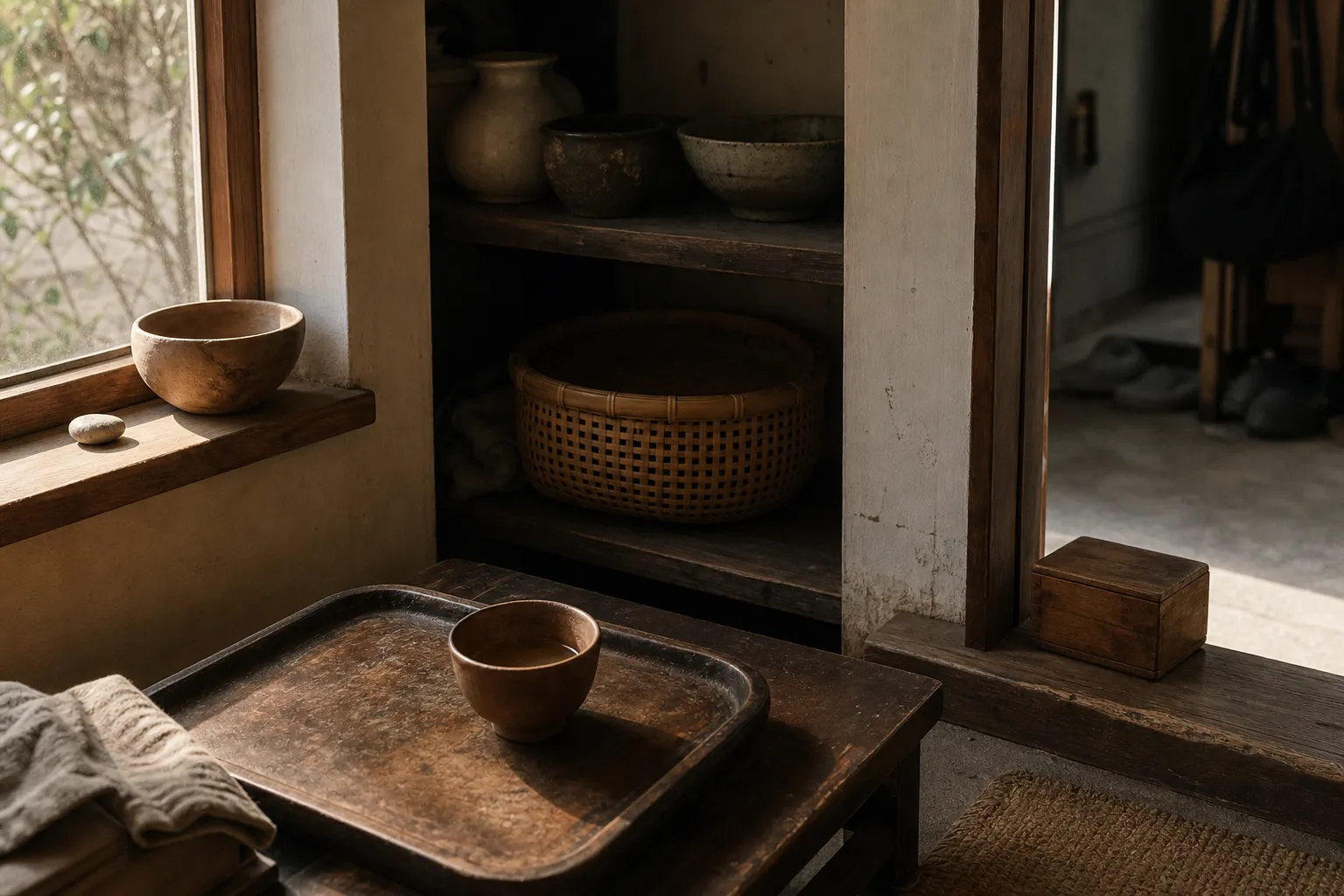
In a lived-in room, some surface change can be welcome. A tea scoop, wooden tray, stone rest, bamboo basket, leather cord, clay cup, or hand-worn box may look better when it shows careful use. But fading, cracking, grime buildup, heavy abrasion, and breakage are not the same as patina.
broader context
Broader context
Use the broader page when you need more context before this narrower page.
Patina, fading, wear, and damage are different changes
Patina
Patina is the visible record of time, touch, air, and use. It may show as softened edges, gentle darkening, a smoother feel, or a mellowed surface. This kind of change often suits objects meant to be handled: tea tools, trays, baskets, worn stone, carved wood, and everyday ceramics.
Fading
Fading is a loss or shift of color, often linked to light exposure. Conservation guidance commonly treats light damage as cumulative: brightness matters, but so does the length of exposure and the sensitivity of the material. Ultraviolet radiation is one concern, and window glass does not make every object immune.
Research on Baltic amber, for example, has found that daylight behind window glass can still affect surface color and chemistry. That does not give a predictable home timeline for every amber-like object, but it does explain why “indoors” is not the same as “protected from light.”
Wear
Wear is the trace of contact. Daily handling can smooth, polish, darken, abrade, or soil a surface depending on the material and finish. For a daily-use object, that may be acceptable. For a fragile display piece, the same handling may be too much.
Damage
Damage is the kind of change most people try to prevent: cracking from heat or dryness, chips from a crowded ledge, rubbed corners from an entry table, stains from residue, or a pale patch caused by the same sunbeam landing every afternoon.
A good placement decision begins with one simple choice: is this object meant to be touched, viewed, or both?
The four room conditions that shape object aging
Most natural object placement issues come from four forces: light, touch, traffic, and room exposure. You do not need museum equipment to notice them. You need to watch where the object actually sits across the day and through the season.
1. Light: windowsill versus shaded shelf
Direct sun exposure is the clearest warning sign. Objects in a bright window zone receive stronger and longer light than objects on a deeper shelf, inside a shaded alcove, or on a wall away from the sun path.
Sun fading on objects is not always immediate. It may show slowly, especially when one side faces the window for months. Color-sensitive and organic materials deserve the most caution: dyed fibers, paper-like materials, plant-based objects, leather, dried botanicals, some resins, and certain pale or porous surfaces. Some minerals can also shift color under UV testing, though that should not be turned into a universal rule for all stones.
A shaded shelf placement does not freeze an object in time, but it removes one major source of visible change. If an object looks best near a window, keep it outside the direct beam, use a deeper sill, or rotate it occasionally if uneven fading would bother you.
2. Touch: when use becomes patina
A high-touch table object ages differently from a display piece. A small wooden tool handled after tea, a smooth stone picked up often, or a tray used every day may develop darker contact points and a softer surface. That can be the kind of patina people enjoy.
The same placement is less suitable for fragile display pieces. Shell, bone, thin bamboo, delicate dried plant material, brittle leather, powdery surfaces, lifting finishes, or fine textile details may not tolerate frequent handling well. The response depends on material, age, finish, and condition, so avoid neat rules such as “wood always darkens” or “stone never changes.”
A better rule: if the object is delicate, cracked, dyed, thin, flaking, or meaningful enough that loss would matter, keep it out of casual hand range.
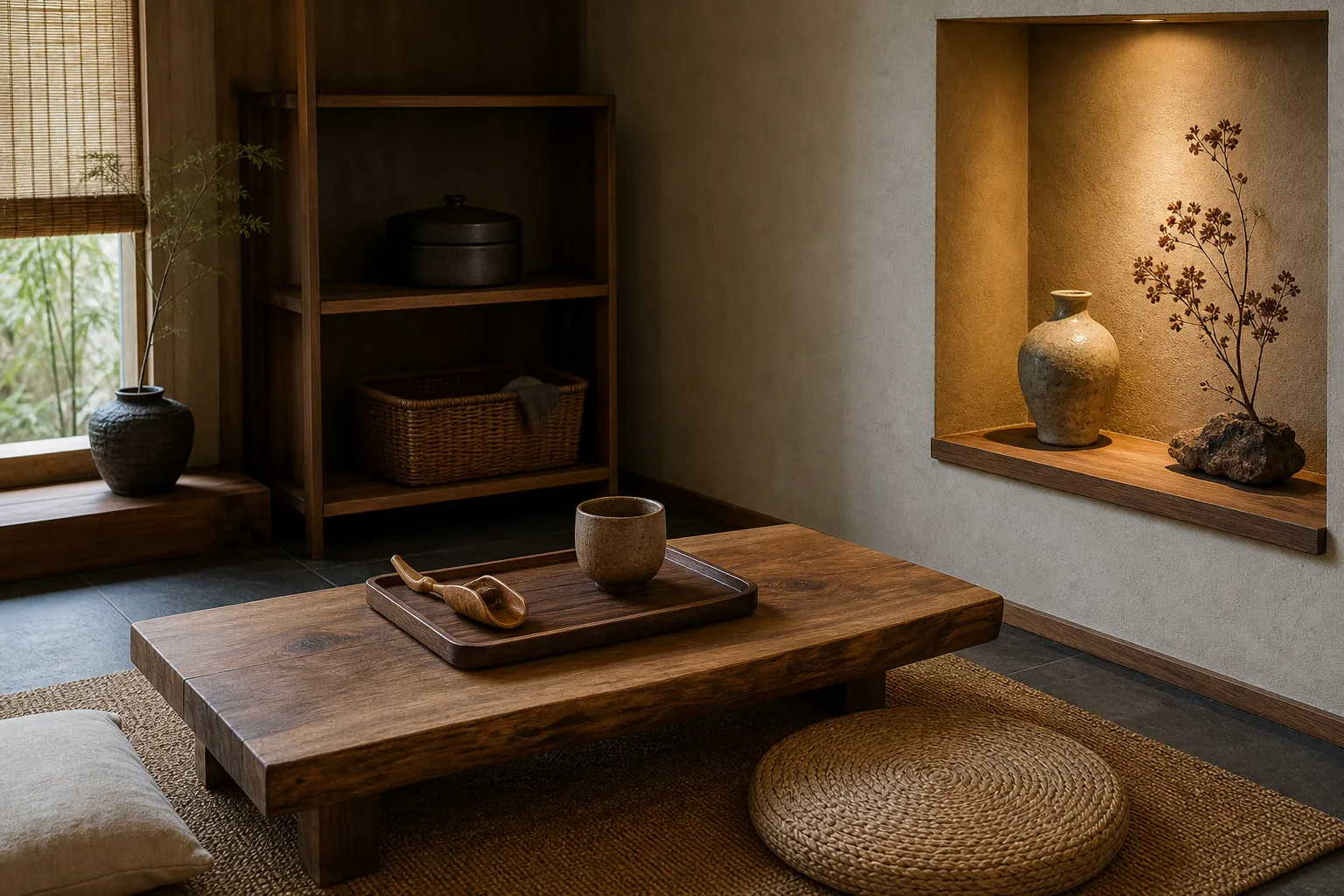
One practical approach is to keep a small group of touch-friendly objects on a tea table, low shelf, or tray, and place more vulnerable pieces higher, deeper, or behind a cabinet door.
3. Traffic: the quiet alcove versus the entryway
Entryway traffic damage is often less dramatic than fading, but it is common. A console by the front door collects keys, bags, sleeves, umbrellas, and quick gestures. A hallway shelf catches elbows. A low table near a sofa meets knees, cups, books, and cleaning cloths.
Natural objects with uneven edges, soft surfaces, open weave, carved corners, or brittle projections do poorly in these zones. They may not fade, but they can chip, snag, crack, or lose small details.
Be especially careful with objects that look stable but are not: rounded stones on shallow shelves, narrow vases, tall branches, stacked baskets, small ceramics, and anything placed near a swinging door, curtain, or busy chair.
A quiet corner, deeper shelf, or wall niche can still give the object presence without asking it to absorb daily movement.
4. Heat, smoke, residue, and cabinets
Heat changes the aging pattern. Mantels, radiators, heater vents, sunny glass, and hot lamps can dry or stress some natural materials. Smoke, incense, cooking vapor, and scented residue can also settle on surfaces, especially where airflow is poor.
If scent, tea, incense, or cooking are part of the room, treat them as placement conditions: allow ventilation, keep distance from porous or pale objects, and make sure the object can be dusted without rough handling.
An enclosed cabinet can reduce dust and accidental touch, but it is not automatically better for every piece. Tight enclosures may trap moisture, odors, or emissions from new finishes, adhesives, or wood products. For ordinary home use, a cabinet that opens regularly, stays dry, is not crowded, and does not smell strongly of new materials is usually more sensible than a sealed box with unknown conditions.
Quick placement guide for ordinary rooms
This table is a placement filter, not a promise. If the object is rare, valuable, unstable, inherited, or already damaged, choose the more conservative location: less sun, less heat, less handling, and fewer bumps.
How to decide what belongs where
Start with the object’s role.
Daily-use object
For a daily-use object, allow some wear. A tea tool, tray, small basket, stone rest, or hand-held wooden piece may belong where it can be used naturally. Place it where hands approach slowly, where clutter will not push it, and where it can dry or air after use if needed. The goal is not pristine condition. It is steady use without careless abrasion.
Occasional-use object
For an occasional-use object, choose a place that makes access easy but not constant. A middle shelf, sideboard, or tray can work well. The object can be reached when needed, but it is not in the path of every sleeve, key, or cup.
Display-only object
For a display-only object, reduce the forces that age it fastest. Keep it away from direct sun, heat, smoke residue, and bump zones. If it is visually important, let lighting, wall color, and empty space do the work instead of placing it in the brightest or busiest spot.
A useful home test is to watch the object’s place at three moments: morning, midday, and late afternoon. Then check again when the season changes. A shelf that is shaded in winter may receive a strong summer sun patch. A corner that feels still in summer may sit near dry heater airflow in winter.
Seasonal object placement matters because sun angle, curtain habits, heating patterns, and room use all shift.
Common misunderstandings about natural object placement
One misunderstanding is that patina is only about age. In practice, two similar pieces may age very differently if one is handled daily and the other sits in a shaded cabinet.
Another misunderstanding is that fading is random. It often follows exposure: one side faces the window, one edge catches the sun, one shelf receives more afternoon light. A pale band, bleached side, or sharper color difference on the window-facing surface often points back to placement.
A third misunderstanding is that preservation is always the goal. In a home, not every natural object needs museum-like conditions. A basket used every day may become more beautiful through use. A tray may gain depth from careful handling. A stone touched often may become smoother. The important distinction is whether the change fits the object’s role.
The final misunderstanding is that a beautiful display spot is always a good care spot. A mantel, windowsill, entry table, or sunlit shelf may frame an object beautifully while also adding heat, light, bumps, dust, or residue.
Good placement balances appearance with the kind of aging you are willing to accept.
A simple seasonal check
Once or twice a year, look at your natural objects as if they had just arrived in the room.
Ask:
- Does direct sun touch this object for part of the day?
- Has one side faded, dried, darkened, or dulled more than the other?
- Is this piece handled because it is meant to be used, or only because it is within easy reach?
- Could a sleeve, bag, door, pet, child, or cleaning cloth knock it over?
- Is it near heat, smoke, cooking vapor, or a dusty airflow path?
- Would I be comfortable if this exact surface change continued for another year?
If the answer is no, move the object before the change becomes more visible. A small shift from windowsill to shaded shelf, from entryway to quiet alcove, or from open table to cabinet can be enough to reduce unwanted fading and wear.
The best placement lets the object age in the way you actually value: touched when touch is part of its life, shaded when color matters, visible without being vulnerable, and close enough to belong in the room without being sacrificed to the room’s busiest forces.