Material care
How Humidity and Sunlight Affect Natural Materials Indoors
Humidity and sunlight affect natural materials indoors in two main ways: humidity can make plant- and animal-based materials absorb or release moisture, while sunlight can fade, discolor, dry, or weaken exposed surfaces over time. In a lived-in room, humidity and sunlight natural materials concerns often show up as sticking drawers, seasonal gaps in wood, warped panels, faded textiles, brittle paper, dry leather, loosened woven fibers, or one side of an object aging faster than the other.
Some change is normal. Wood moves. Fibers soften and tighten. Colors mellow. The larger concern is repeated stress: harsh direct sun on vulnerable pieces, a humidifier too close to paper or wood, a cabinet pushed against a damp wall, or recurring moisture from leaks, condensation, wet corners, or poor airflow.
broader context
Broader context
Use the broader page when you need more context before this narrower page.
The short answer for a real room
Natural materials are not inert. Wood, paper, leather, cotton, linen, wool, bamboo, rattan, and plant-fiber baskets all respond to their surroundings, though not in the same way.
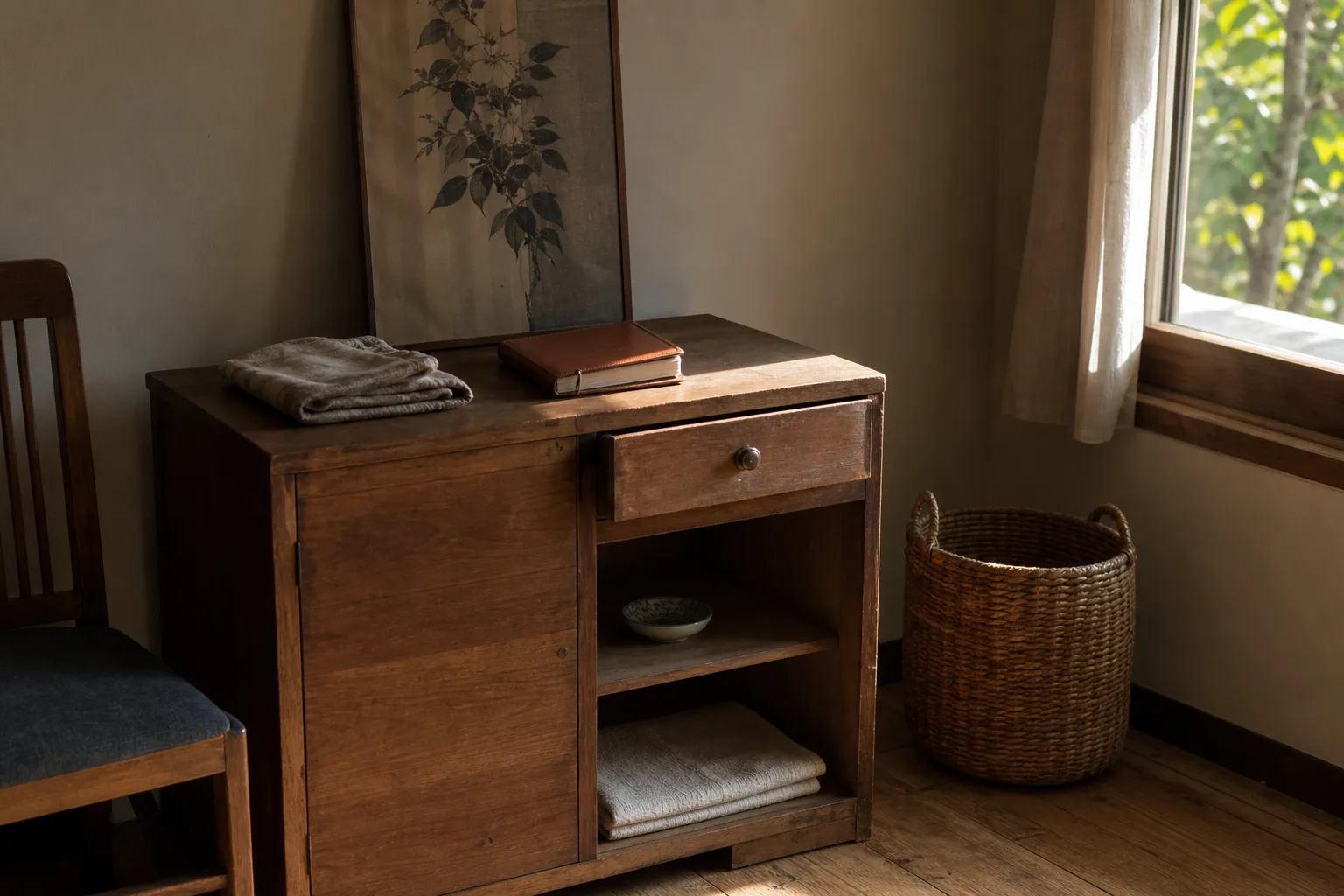
Wood is the clearest example. The USDA Forest Products Laboratory describes wood as hygroscopic, meaning it takes up and gives off moisture as surrounding conditions change. As that moisture content changes, wood can swell or shrink. Indoors, that may look like:
- A drawer that slides in winter but sticks in a humid season.
- A tabletop that develops a slight cup or uneven feel.
- Small gaps opening or closing between boards.
- A cabinet door rubbing at one edge.
- A veneer edge or panel line showing more movement than before.
Sunlight creates a different pattern. Light and ultraviolet exposure are recognized by conservation sources as causes of gradual change in many organic materials. At home, this often appears as color shift: a textile is brighter on the hidden underside, a mat has a pale rectangle where an object once sat, a wooden tray darkens unevenly, or paper near a window becomes faded or brittle.
The useful response is not to treat every natural object like a museum piece. It is to place valued pieces with more care: keep them out of harsh direct sun, avoid damp walls and wet corners, allow some airflow, and check the same objects when the season changes.
Humidity: why wood moves and damp corners matter
Humidity is not the same as a spill. A table, screen, shelf, tray, or cabinet can change shape even when no liquid water has touched it. Relative humidity describes how much water vapor is in the air compared with how much the air could hold at that temperature. For hygroscopic materials such as wood, changing relative humidity can change moisture content inside the material, which can lead to movement.
That is why wood moisture movement indoors often feels seasonal. In a damp period, wood may swell. In a dry period, it may shrink. The movement is not always even because wood has grain direction, joins, coatings, panels, veneers, and different thicknesses. A solid board, a framed door, and a veneered surface may not respond in the same way.
For an ordinary home, the better first question is not “What exact humidity number is perfect?” There is no single household number that fits every natural material, object, finish, and room. Start with what you can see and feel:
- Does a drawer or cabinet door stick only during one season?
- Do gaps open and close with the weather?
- Is a board cupping near a heat source or damp wall?
- Is veneer lifting at an edge?
- Are woven fibers loosening or becoming misshapen in a humid corner?
- Does paper curl, ripple, or feel limp in one part of the room?
Microclimates matter. A room can feel comfortable while one shelf or corner is hard on materials. A windowsill can be bright and hot. The wall behind a cabinet can be cool and damp. A bathroom-adjacent hallway may hold moisture. A radiator-side table may dry quickly. A humidifier placed too close to wood, paper, leather, or woven objects can create a small zone that behaves differently from the rest of the room.
Pay closest attention to natural materials placed near:
- Exterior walls, especially cold or shaded ones.
- Bathrooms, kitchens, laundry areas, and basements.
- Window frames with condensation.
- Radiators, fireplaces, heating vents, or strong air-conditioning paths.
- Humidifiers and dehumidifiers.
- Closed cabinets or storage boxes with limited air movement.
- Corners with musty odor or past water staining.
A small seasonal fit change is often part of living with wood and plant-based materials. Persistent dampness is different. If a corner stays damp, materials feel wet, condensation returns, a musty odor remains, water stains spread, or visible mold appears, address the moisture source. The EPA’s home moisture guidance emphasizes controlling moisture, drying wet materials, and fixing leaks or recurring dampness. Moving a basket or restyling a corner will not solve that underlying condition.
Sunlight: fading is usually cumulative
Direct sunlight fading is easy to miss because it often happens slowly. A room may look gentle in the morning but still expose one shelf, chair arm, textile, print, or tray to repeated light every clear day. Over time, that exposure can create uneven color, yellowing, dullness, fading, or increased brittleness in vulnerable organic materials.
The Canadian Conservation Institute identifies light, ultraviolet radiation, and incorrect relative humidity as deterioration concerns for collections materials, including many organic materials. A home is not a storage room or archive, but the principle translates well: reduce unnecessary exposure before the change becomes obvious.
Look for sun fading home materials in places such as:
- South- or west-facing windows with long afternoon sun.
- Low shelves where a sun patch lands for part of the day.
- Windowsills used for trays, baskets, books, paper decor, or small wooden objects.
- Chair backs, cushions, rugs, and mats receiving sun from one side.
- Paper screens, prints, calligraphy, or photographs near bright glass.
- Leather handles, seats, or boxes in direct light.
- Bamboo, rattan, or plant-fiber pieces that are both sunlit and dry.
A simple check is to move an object and look underneath it. If the covered area is darker, brighter, or less yellowed than the exposed surface, the room has already recorded a light pattern. Textiles often show this clearly at a hidden fold, underside, or back edge.
Sunlight damage is not only about heat. Heat can contribute to drying or distortion in some situations, but light and UV exposure are concerns on their own. A cool but bright window can still fade vulnerable material. A warm windowsill can combine light, heat, and moisture swings, making it a poor place for valued paper, leather, delicate textiles, or finely finished wood.
The practical response can be simple: use curtains, woven shades, blinds, or filtered placement. Move valued objects a little farther from the glass. Rotate display pieces so one side does not take all the exposure. Keep the most light-sensitive paper and textile pieces away from direct sun if their color or surface condition matters to you.
A quick indoor material check
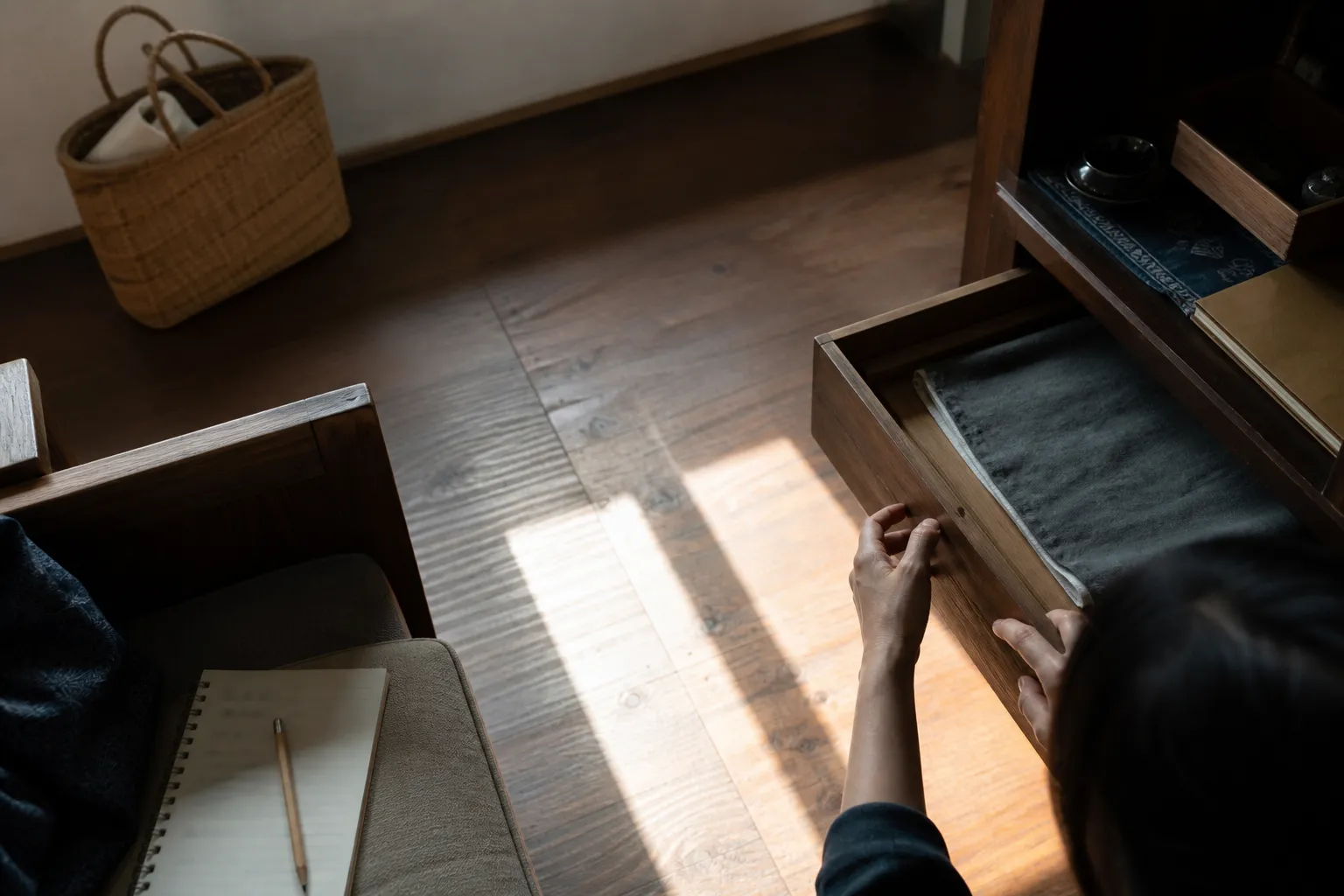
A good indoor material check is quiet and visual. You do not need to turn a home into a controlled storage space. Walk the room when sun is strongest, and again after a damp spell, a dry heating period, or a change in humidifier use.
Start at the window
Watch where the sun lands on shelves, cushions, screens, low tables, wall art, and floor mats. Direct sun on stone or glazed ceramic may be mostly an aesthetic or heat-comfort issue. Direct sun on wood, paper, leather, textiles, lacquered or painted surfaces, and woven plant fibers deserves more care.
Check behind furniture
Leave some breathing room behind cabinets, shelves, and storage chests on exterior or damp-prone walls. If a wall feels cool, smells musty, shows stains, or has condensation nearby, avoid storing paper, textiles, baskets, or leather there until the moisture issue is understood.
Open drawers and doors
Sticking drawers can be useful humidity clues. If a drawer swells every humid season and eases later, that may be ordinary wood movement. If it stays swollen, smells damp, or shows staining, look beyond the drawer and check the surrounding wall, floor, and air movement.
Look for uneven aging
One faded chair arm, one pale rug edge, one yellowed paper strip, or a ghost mark under a vase tells you where light has been acting. Adjust shade or rotate objects before the contrast becomes stronger.
Touch lightly, do not force
If a wooden drawer sticks, forcing it can damage joints or runners. If paper curls, leather cracks, or woven material loosens, move the object to a steadier location rather than trying to flatten, oil, soak, or tighten it without suitable care information.
Repeat seasonally
Natural material movement is easiest to read at seasonal edges: humid summer into dry heating season, rainy weeks into dry weeks, or after a change in ventilation, heating, or humidifier use. A short seasonal check is more useful than constant worry.
This kind of care fits rooms built around restraint: a wooden tray kept out of the strongest sun, a paper screen given soft side light, a woven basket moved off a damp floor, a tea shelf placed away from a radiator, a textile rotated before one edge fades. The point is not to freeze materials in a perfect state. It is to let them age with fewer avoidable stresses.
Common misunderstandings
“Only direct water damages natural materials.”
Spills and leaks matter, but ordinary indoor humidity changes can also affect wood and other hygroscopic materials. A cabinet may shift even in a room that looks clean and dry.
“Sun damage only happens when something feels hot.”
Bright exposure, including UV, can contribute to fading and surface change over time even when the object is not hot to the touch. Heat can make some situations worse, but it is not the only factor.
“All natural materials behave the same way.”
They do not. Wood movement is strongly described in wood science sources. Paper, leather, and textiles are broadly recognized as vulnerable to light and humidity problems in conservation guidance, but they do not swell and shrink in the same visible pattern as a solid wood board. Stone, unglazed clay, glazed ceramic, shell, metal fittings, and lacquered surfaces each have their own care concerns.
“Shade can fix a damp corner.”
Shade helps with light exposure. Better spacing can help air move. But recurring condensation, leaks, wet materials, water staining, musty odor, or visible mold calls for moisture-source attention, drying, ventilation where appropriate, and suitable help if the problem keeps returning.
A simple placement rule
For everyday natural-material care, keep vulnerable objects away from extremes, and check the places where extremes hide.
Avoid placing valued wood, paper, leather, textiles, baskets, and woven plant-fiber pieces in direct sun, against damp exterior walls, on wet-prone floors, beside radiators, in strong vent paths, or next to humidifiers. If an object is sturdy, replaceable, or meant to weather, you may accept more patina. If it is handmade, antique, sentimental, delicate, or difficult to repair, give it a steadier place.
A practical room arrangement might look like this:
- Wood furniture set slightly away from damp walls and strong heat.
- Paper art placed in bright indirect light rather than direct sun.
- Baskets lifted off basement floors or bathroom-adjacent corners.
- Leather boxes or seats kept out of hot window patches.
- Textiles rotated or shaded before one edge fades.
- Tea trays, low tables, and shelves checked when the season turns.
- Air allowed to move behind larger pieces instead of sealing them tight to a wall.
Preventive care guidance from institutions such as the National Park Service and the Canadian Conservation Institute is written for collections, not ordinary decorating. Still, the broad lesson is useful at home: light and moisture changes are easier to reduce early than to undo later. For a lived-in room, that becomes a modest habit—observe, adjust placement, shade what needs shade, improve airflow where dampness gathers, and let normal aging remain visible without ignoring warning signs.